A useful handoff tells the next person what they can actually use, where physical materials are and which decisions remain open. “Everything sent” is too vague when a brief, a sample and a service deliverable are at different stages.
Identify what is being handed over
Business offices produce different things. A property-management message, a design concept, a sample loan and a final client file do not become complete through the same action. Record the actual item and its purpose before choosing a status word.
ECCO’s published process separates discovery and a proposal from design documentation and construction coordination. A conversation about a project is not the same deliverable as its later documents. Faith Sheridan’s process identifies a main contact and decision maker, presents concepts with samples, and separately describes purchasing, receiving and installation coordination.
These examples illustrate distinct service stages; they are not instructions for approving architectural work or a universal office procedure. Use the provider’s actual scope and professional records. An administrative handoff should identify the current document, who has each physical item and the question the next person must resolve.
For a digital file, “sent” identifies an action by the sender. Check whether the intended colleague can open the correct version through the approved project channel. For a physical sample, name its identifier and actual holder or location. For a decision, record whose answer is needed and what that answer covers. Do not turn receipt into approval or an approved concept into authorization for unrelated work.
A filled handoff: one brief, one folder and one borrowed sample
In fictional case C22, a Cadence coordinator is taking over preparation for a client discussion. The outgoing colleague has emailed “brief and materials sent.” A closer check produces three different entries:
C22 — Handoff to the incoming coordinator
Brief V3: the current brief is in the approved project folder. The incoming coordinator has opened it. It records the client’s requested neutral palette; the final material choice remains undecided.
Presentation folder: the shared link currently returns an access error for the incoming coordinator. File receipt is not confirmed. The outgoing colleague will correct access through the existing project channel; no one should describe the package as ready for the client discussion yet.
Fabric sample C7: borrowed by the fictional client after the previous meeting. It is not on the library shelf. The coordinator will ask about its return using the existing private correspondence and update the sample record when it is actually received.
That short handoff does more useful work than marking the entire package “complete.” It identifies a usable input, a blocked input and an item held elsewhere. It also gives the incoming coordinator a specific next action for each unresolved item.
Do not order replacement samples merely because a shelf position is empty. First check the existing loan record and current holder. Equally, do not promise that C7 will be available for another appointment until its return and condition have been checked. A promised return date and a physical return are different events.
Explain the gap without presenting an undecided choice as approved
The C22 client asks whether the studio has everything needed for the next discussion. A complete response can identify the actual gap without exposing internal access details unnecessarily:
We have your current V3 brief and have recorded the neutral-palette request. Your final material choice remains open. We are checking the presentation materials before confirming they are ready for the discussion. Our record also shows that you still have fabric sample C7. Please reply through this thread to arrange its return, or let us know if that record is incorrect. We will confirm the discussion materials once the outstanding items are resolved; this message does not record approval of a final selection or place a purchase order.
The message is fictional, not a statement about any cited studio. In a real case, report the relevant status accurately and use the existing authorized channel for client documents. Do not move private briefs or property details onto a public counter card.
Suppose C7 is later handed back. The receiving colleague should update the actual event: “C7 received at the studio; condition checked and returned to its recorded library position.” If something is missing or damaged, describe that observation and the person following up instead. Record only checks actually made.
A colleague should be able to find the usable file and physical item from the handoff. Preserve earlier versions with their status, keep source labels intact and resolve ambiguity before using a sample to represent a final selection. A new label or printed guide cannot establish professional approval, file usability or an item’s location.
Keep the public prompt separate from the project record
If visitors repeatedly ask whom to contact about borrowed materials, a stable desk prompt may help. First check whether the existing studio information already answers that question. The individual loan, due arrangement and client decision still belong in their own records.

A flat material-enquiry card
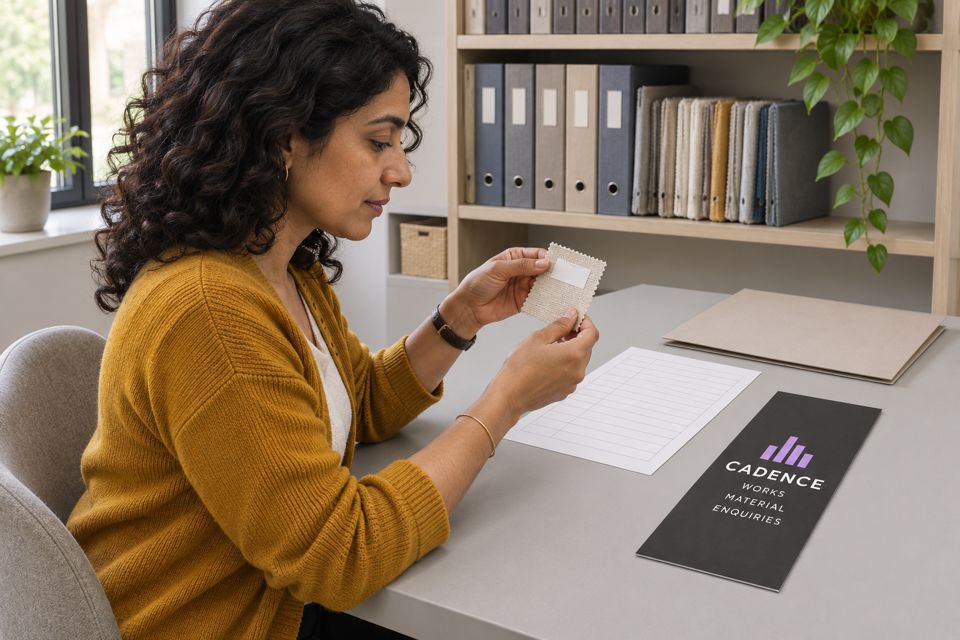
These flat rack cards for material enquiries list a 3.74 × 8.27 inch format with 14pt standard stock. The minimum is currently 50 cards. That print quantity says nothing about the number of samples or clients.
Compare custom rack card formats and give DecentCustom the approved public enquiry route and selected configuration. A separate holder is not assumed to be included. The charcoal Cadence artwork is an AI concept, not a sample-tracking system or production proof.
Use a new prompt only where there is a real information gap. Repairing access, finding an existing record or confirming physical receipt may solve the problem without buying anything.
Sources checked November 11, 2026, UTC. Cadence Works, C22 and its participants are fictional. No client handoff, sample condition, technical approval, physical print performance or business result was verified.