Before adding branded packaging, identify what the existing pieces do. A comic sleeve, a pen insert, a gift wrap and a rental-return label serve different purposes; a new outer bag does not replace those functions.
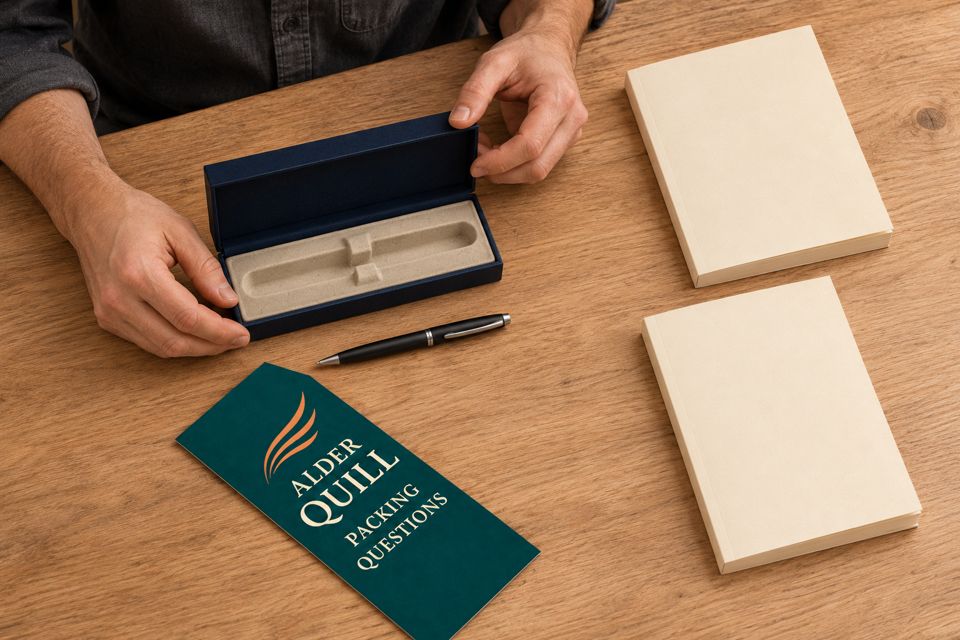
Original protection and presentation are separate decisions
Start with the actual item and the pieces already supplied for it. Check their purpose, condition and any instructions before removing, covering or replacing them for a more consistent branded appearance.
Midtown Comics’ packaging FAQ describes a supplied comic bag and board, with exceptions for clearance books, grab bags and odd-sized comics. That is a specific retailer’s arrangement. Check the actual item; do not assume every book or comic already has the same protection.
A general shopping bag is not a substitute for a comic’s fitted sleeve and backing board. Nor should a shop transfer a specialist supplier’s preservation claims to an ordinary branded bag or label. If the original piece is missing or unsuitable, obtain the appropriate item-specific answer rather than treating the logo as the solution.
For a pen, identify whether its actual order includes a box, sleeve, insert or other components. Keep the relevant pieces together until the recipient’s needs and the supplier’s instructions are clear. A presentation choice is another question: Fountain Pen Hospital’s corporate-pen page describes gift wrapping as optional. Optional wrapping does not establish that every pen has the same box, or that decorative paper supplies transport protection.
A useful review can therefore produce different outcomes: retain a suitable comic sleeve and board; keep a pen with its actual insert and components; or decline an extra outer carrier because the existing package already serves the intended handoff. Do not claim that any of those choices proves protection from damage, moisture or long-term deterioration.
Return information belongs to the actual rental
A rental return also needs the correct order and provider instructions. Keep relevant item identifiers, included components and the current return information together. A purchase-return page, a rental reminder and an old shipping label may concern different transactions.
During this review, the old rental-help address in our research redirected to a general company homepage when opened in a browser. Cached instructions were still searchable. We did not treat those cached instructions as a current return procedure. Use the provider’s current route for your own rental, and ask when an instruction or label is unclear.
Fictional example R31 assumes that its provider has already confirmed two specified books may be returned in one eligible parcel using one single-use label. Those are invented conditions for the example, not rules supplied by a cited bookstore.
R31 — Confirmed instruction in this fictional case
Items: the two books identified in the return record, with their required components checked against that record. Authorized arrangement: one parcel, one single-use label. Printing a second copy of the same label does not create authorization for a second parcel. A separate item or another rental record is not automatically covered.
Before applying any such arrangement to a real return, confirm that it actually appears in your current instructions. Do not combine books from different accounts, providers or return records merely because they fit in one box. Obtain the correct packaging and identification requirements from the responsible provider; a generic carry bag does not settle them.
Keep preparation separate from completion. Having the books and a label ready does not show that the carrier has accepted the parcel or that the provider has processed the return. Retain the relevant handoff evidence and check the actual record instead of marking the transaction complete from a packing note.
Ask the specific question before changing the package
Suppose R31’s customer later finds another book and asks whether to add it. The coordinator can send this complete enquiry through the existing provider channel:
Our current R31 instruction identifies two books for one parcel using one single-use label. We have found an additional book, but have not confirmed that it belongs to this return record. Please confirm which items and components this label covers and whether the additional item requires a separate return instruction. We have not added it or treated a reprinted copy of the same label as authorization for another parcel. Please direct us to the current packaging and handoff requirements before we proceed.
This fictional message does not request a refund, accept a fee or establish a return deadline. In a real case, provide the relevant identifiers privately and ask the provider about the actual uncertainty. Do not publish a customer’s label, address or rental details on a general shop sign.
For a pen presentation question, be equally specific: identify the selected item, the packaging actually included and the intended handoff. Ask what an optional wrap adds. An extra bag should have a defined job; it should not conceal a missing original component or be described as tested protection without evidence.
A public card can route the question, not replace the packaging
If customers repeatedly need to find the right coordinator, a stable packing-enquiry prompt may be useful. Keep provider-specific return labels and changing order details in the original records. Reuse an existing clear prompt where it already works.
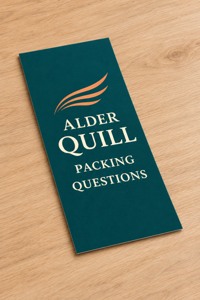
A flat packing-enquiry card
These flat rack cards for packing enquiries list a 3.74 × 8.27 inch format and 14pt standard stock. The current minimum is 50. They are paper information cards, not shipping labels, protective inserts or proof that any package is suitable.
Compare custom rack card formats and give DecentCustom the approved public enquiry route and configuration. Do not assume a separate holder is included. The Alder Quill artwork is an AI concept, not a checked production sample.
Decide whether another supply is needed only after preserving the useful function of what you already have. No new packaging remains a valid outcome.
Sources reviewed November 11, 2026, UTC. Alder Quill and R31 are fictional. No actual rental instruction, parcel acceptance, component condition, packaging protection, cost saving or business outcome was verified.