A design studio may arrange printed materials for a client while also buying supplies for itself. Keep those jobs identifiable: the same purchaser or paper format does not give them the same brand, approval or delivery instruction.

Production for a client is different from stock for the studio
G-Force’s process page describes specifying and overseeing printing, then delivering final files and printed materials to its clients. Bushnell Design Studio’s printing FAQ describes arranging print and promotional items alongside design work. That FAQ entry is dated 2021; it is a published service description, not a current quotation.
In either model, a studio may coordinate an item that another business will use. The coordinator’s name on an email does not make the client’s branded material an office supply for the coordinator’s own business. Confirm the actual roles rather than assuming who approves, purchases, pays or receives the order.
Two fictional Skyfold jobs show the distinction:
A — Pineward Cafe client project
Proposed item: 400 cafe-branded postcards. Intended user: the cafe. Skyfold coordinates artwork and supplier questions. The cafe’s designated contact still needs to approve the identified proof. The final purchasing contact and delivery recipient must be confirmed before release.
B — Skyfold’s own studio supplies
Planned use: 100 Skyfold service postcards. The studio has counted 60 usable cards with its current artwork. The studio coordinator controls this separate replenishment request and will identify the approved artwork and office recipient for it.
The businesses, quantities and roles are invented. A real job record should identify the actual brand and end user, exact item, artwork version, authorized decision makers, quantity, purchasing and payment contacts, and delivery destination. If a role is unknown, leave it pending and ask. Do not infer the payer from whoever supplied a logo.
Count usable studio stock without absorbing the client’s order
In job B, 100 planned cards minus 60 usable cards leaves a gap of 40. This example uses the postcard product’s listed ordering increment of 50. A 50-card top-up would give Skyfold 110 cards in total, leaving 10 beyond the planned use. The product page’s increment is not being described as a minimum order quantity.
That calculation assumes the existing 60 are actually usable for the same current studio message. Obsolete artwork, a different contact route, damaged cards or another client’s branding would not qualify merely because the paper size matches. Count those separately before treating them as available stock.
The proposed 400 cafe cards remain job A. Adding the studio’s planned 100 to make “500 postcards” loses the distinction between two artworks, destinations and approval paths. A supplier might offer a way to coordinate separate jobs, but that needs its actual answer; one quantity field does not establish two-artwork production.
If the extra 10 studio cards have no useful future role, reconsider the planned quantity or format before buying. Existing stock, a smaller actual need or a current digital service page can change the decision. The example is not a recommendation to over-order and contains no price comparison.
A complete supplier enquiry keeps the open decisions visible
Skyfold can describe both jobs without authorizing either prematurely:
Please treat these as two separately identifiable enquiries. Job A proposes 400 Pineward Cafe postcards using its client artwork; final client proof approval, purchasing contact and delivery recipient are still pending. Do not produce that job from this message.
Job B concerns Skyfold’s own service postcard. We plan to use 100 and have counted 60 usable current cards, so we are enquiring about a 50-card top-up in the listed increment. Please confirm the selected format, stock, finish, separate-artwork handling and quotation for each job. We will supply the exact approved files and confirmed recipients before any production release. Please also confirm the applicable timing rather than treating one project’s arrangement as covering both.
In a real enquiry, attach or reference only the files appropriate to that stage. Check that the supplier can distinguish the two jobs and that its response identifies which configuration and quantity it covers. An approval of the cafe’s copy does not authorize replenishing studio stock; studio purchasing approval does not approve the client’s artwork.
Keep receipts and remaining stock attached to the correct job after delivery. Record what actually arrived and where it was placed. Do not mark client delivery complete merely because a parcel reached the studio, if onward delivery or client receipt is still part of the agreed arrangement.
Select the format for the actual job
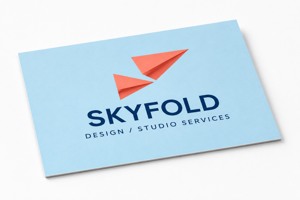
A studio service postcard
These custom postcards for an identified print job list 4 × 6 inches among their size options, horizontal or vertical orientation, 16pt stock as the default and a glossy-front default finish. Current ordering increments are 50. The AI Skyfold design is a 6 × 4 inch horizontal concept, not a checked print proof.
Compare custom postcard formats and give DecentCustom each job’s approved artwork, configuration and confirmed quantity. Add verified contact details where needed before printing. Keep brand permission, recipients and purchasing instructions specific to the job.
Choose the material only after identifying its user and purpose. The number of clients served, a design project’s fee and an agency’s overall audience do not establish a print order quantity or budget.
Sources checked November 11, 2026, UTC. Skyfold, Pineward Cafe and jobs A–B are fictional. No actual purchase, brand permission, client approval, stock count, delivery or business outcome was verified.