If a perfume experience already includes a take-home bottle, another container is not automatically needed. Verify the booked service, distinguish a first visit from a refill and add only the information or material that closes a real gap.
Start with the booked service, not an extra-container list
Ask what each participant receives under the actual reservation. Is the bottle included in the service price? Does the customer choose from specified options? Are an extra bottle, another fragrance or a gift presentation separate purchases? An attractive bottle in a photograph does not answer these questions.
Aroma Workshop’s Chicago scent-creation listing provides a concrete example: its one-to-four-person service lists a choice of bottle for each person within the stated $65-per-person price. It describes a visit of approximately 45 minutes to an hour. These are that operator’s published inclusions, not a standard price, duration or bottle allowance for every perfumery.
For your store, use the approved service description and the customer’s confirmed selection. If the bottle options or quantities are unclear, resolve that point before preparing a supply request. Do not add an empty container simply because a customer is attending a fragrance experience.
| Item or question | What establishes it | Material decision |
|---|---|---|
| Included take-home bottle | Current service terms and the actual reservation | Retain the included item; do not duplicate its allowance |
| Additional fragrance or bottle | A separate customer request accepted by the store | Keep it optional until its scope and charge are confirmed |
| Printed service information | A genuine explanation gap and approved wording | Reuse current digital information or existing print first |
| Protective or return packaging | The responsible provider’s actual requirements | Use the specified original system; a general promotional item is not proof of suitability |
A first-visit bottle and a refill are different requests
The word “bottle” can refer to the included finished item, a new container for a repeat purchase or an existing bottle accepted into a particular refill program. Keep those meanings separate in the service description and purchasing notes.
Aroma Workshop’s reorder information distinguishes a new bottle from a refill bottle intended for the customer’s current one. That does not establish the terms of another company’s return program. Le Labo’s refill FAQ, for example, specifies eligible original bottles, matching scent and size, and a dedicated return process; its online refill orders are not available for in-store pickup.
These examples help identify the question to ask. They do not authorize a store to transfer a bottle between providers, promise an unconfirmed refill or replace original packaging. Route a refill enquiry to the responsible provider. Keep the original label and supplied instructions available instead of covering them with a shop promotion.
A completed decision can end with no new purchase
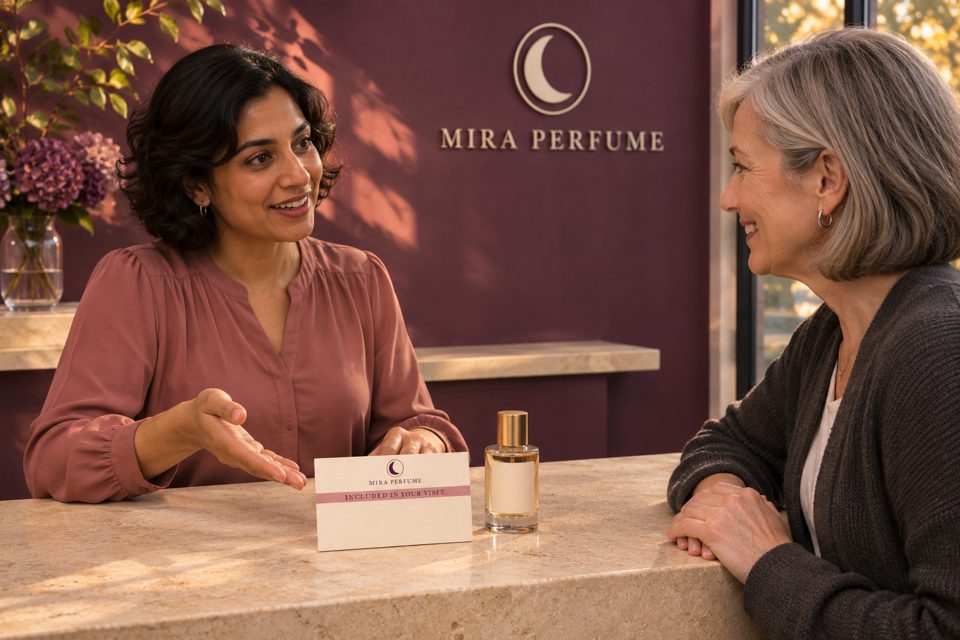
Fictional example: Mira Perfume has a confirmed reservation for three participants. Its manager checks the approved service: each participant receives one finished fragrance in an included bottle. The current reservation therefore accounts for 3 participants × 1 included bottle = 3 included bottles. This is an invented service example, not a claim that Mira is a real store or that three bottles are currently in stock.
The organizer had proposed buying three additional empty containers and a bulk run of cards. The store checks the reason for each item. No participant has requested a second fragrance or extra bottle. All three already received the approved digital inclusion summary, and the store has three current paper copies available if requested. The unresolved issue was understanding the allowance, not a shortage of containers or information.
The manager explains the included bottle to the organizer, who confirms that no extra container is wanted. The supply request is closed with zero additional bottles and zero newly ordered cards. Existing copies remain available; the digital confirmation is reused. The appointment has not yet taken place, and this decision does not prove fulfillment, payment status or customer satisfaction.
If a participant later requests another fragrance, create a separate enquiry for that change. Do not silently convert an optional addition into the original booking or infer a second bottle from the occasion, such as a birthday or bridal visit.
Give the next employee an inclusion statement they can use
Mira’s three-person reservation includes one finished bottle per participant under the confirmed service. The organizer has accepted that explanation and declined the proposed additional empty bottles. No new containers or printed cards have been ordered. The approved digital summary remains the reference, with three current paper copies available if requested. Any additional fragrance or bottle needs a separate accepted request. The visit is still upcoming.
That handoff identifies the agreed allowance, the declined addition and the remaining boundary. It prevents “prepare three bottles” from being read as an instruction to purchase three more. It also separates the communication decision from the employee’s later fulfillment check.
Before reusing the text, replace the fictional details with your own approved terms. Keep private reservation details in the actual order system. A public service card can explain a stable inclusion; it should not become a substitute receipt, inventory record or confirmation of a specific customer’s order.
Use a paper card only when it improves the explanation
For repeated in-store questions, a short card may make approved inclusion information easier to find. Compare that use with an existing webpage, digital confirmation or current print. In the Mira example, none needed replacing.
Keep the card separate from the fragrance
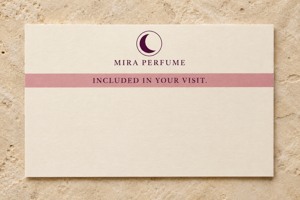
These custom postcards for service inclusion information offer a 4 × 6-inch paper format, with 16pt listed as the default stock and other options available. The page specifies ordering increments of 50; that increment alone does not establish a minimum quantity for every configuration.
Compare custom marketing materials for store information and send DecentCustom your approved artwork and actual requirements if new print is useful. The pictured Mira design is an AI concept. It is ordinary printed information, not a fragrance test strip, liquid container, bottle label or protective packaging.
Reviewed November 12, 2026: Aroma Workshop’s service, reorder and contact information; Le Labo’s refill FAQ; and the linked DecentCustom postcard listing. Operator-specific inclusions can change. Mira, its reservation and quantities are fictional. No appointment, fragrance order or new supply purchase was made.