Borrowed tools and collected bags involve different handoffs. Record what the local program has confirmed before turning a proposed cleanup into volunteer instructions.
Identify the responsible program and the proposed area
A street cleanup, a park volunteer event and work on private property can involve different organizations and permissions. Begin with the actual area and the responsible program. A general invitation to improve the neighborhood does not establish that a particular service covers every proposed location.
The NYC Department of Sanitation volunteer cleanup page covers public streets and sidewalks, excludes parks and beaches, and prohibits using its loaned tools on private property. Its tool confirmation identifies collection arrangements for the loan; the group is responsible for pickup and return. Bag collection can be requested without borrowing tools, and a changed bag-pickup location must be reported.
Another route is an ongoing neighborhood commitment. San Francisco Public Works’ Adopt-A-Street page distinguishes adopting an area through an agreement from joining an existing cleanup through its event calendar. It describes supplies and litter collection support. That does not make a one-day event registration the same as an adoption agreement, or transfer either city’s arrangements to another location.
Keep the request, tool loan and collection in separate fields
Use a short status record rather than one broad “confirmed” label. Record the source and responsible person for each answer. Leave an unresolved field visible until the appropriate program settles it.
| Field | What to establish | What does not establish it |
|---|---|---|
| Area and service | The proposed route is within the selected program’s scope | A generic neighborhood cleanup idea |
| Request status | The program’s response and any remaining steps | Sending an application alone |
| Tools | Confirmed items, pickup contact and return arrangements | An assumed supply bundle for everyone |
| Bag collection | The agreed location, coordination and change route | Having tools or choosing a convenient corner yourself |
This is an organizer’s information record. Use the actual program’s directions for tasks, equipment and site requirements. A branded shirt, ordinary paper card or group logo does not confer permission or protective performance.
Resolve conflicting lead times before promising a date
At the November 13, 2026 review, the DSNY page says requests need at least two weeks, while the NYC311 tool-loan page says to submit a project plan three weeks ahead. NYC311 asks for the location, event and rain dates, volunteer count and tools needed.
The published lead times disagree. Check the current requirement with the responsible program before committing to the schedule. Neither reading establishes approval or availability for a particular date. Preserve the response with the plan, and keep proposed dates separate from confirmed volunteer instructions.
Complete the plan without buying duplicate tools
Fictional planning example: Block & Broom proposes a public-sidewalk cleanup with an extra stop in a private yard. The coordinator first removes the yard from the request because the selected service does not cover it. The group keeps the event pending while the program reviews the proposed route and timing.
In this example, the program later confirms the supported plan and available tools. One group member takes responsibility for collecting and returning those items using the confirmed details. Another checks the agreed bag-collection location and the route for notifying the program if it changes. Each handoff is entered separately in the group’s working record.
The coordinator then compares the confirmed supply list with the proposed purchases. Duplicate brooms are removed. The volunteers receive a current digital brief drawn from the confirmed plan; unresolved details are not presented as settled. If a collection point changes, the designated coordinator follows the program’s notification process before updating the group. This finishes the information task without treating a submitted request as permission or a tool loan as automatic bag collection.
Print only the information that has a stable purpose

A dry indoor information card
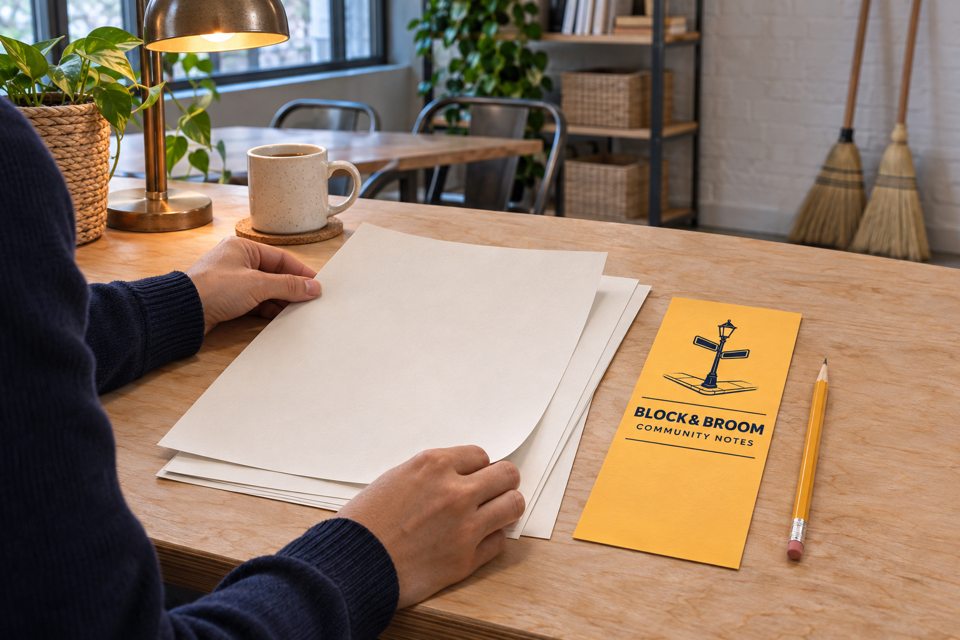
These custom rack cards for community information are listed at 3.74 × 8.27 inches, with 14pt standard paper as the default thickness and a current minimum quantity of 50. The small image is an AI artwork concept.
Compare custom rack cards if a recurring indoor information point needs approved, stable group information. Review the actual artwork with DecentCustom. This paper format is not weatherproof equipment, a city permit or an official program endorsement.
For a single event with changing details, the existing digital brief or a plain handout may meet the need. A minimum print quantity does not establish demand for that many copies. Keep dates and operational changes in the current approved information route.
Municipal program descriptions and the product listing checked November 13, 2026. The two NYC lead-time statements remain unresolved here. The worked plan is fictional; no application, agreement, tool loan, cleanup or outcome was arranged or measured.