The holiday date, your organization’s operating hours and a local service event answer different questions. Confirm each before combining them in a public notice or ordering printed materials.

Use the correct 2027 date without adding local assumptions
The U.S. Office of Personnel Management’s federal-holiday list places the Birthday of Martin Luther King, Jr. on the third Monday in January. In 2027, that is Monday, January 18. OPM’s page concerns federal holidays and refers readers to guidance for federal employee work schedules.
Youth Service America’s MLK Day of Service page also lists January 18, 2027 and connects the observance with honoring Dr. King’s life and legacy through community service. Its national date does not confirm a particular local project, volunteer place or organization’s operating hours.
Keep the purpose of the notice clear. A commemorative message can identify the day accurately. An hours notice needs the organization’s own confirmed arrangements. A service invitation needs a real host and current participation information. Combining them does not remove any of those checks.
Answer each reader question with its own source
| Reader question | Confirm through | Do not substitute |
|---|---|---|
| When is the holiday? | The correct year’s calendar and named observance | A previous year’s date copied from artwork |
| Will this organization be open? | The person responsible for its actual operating schedule | The federal-holiday date alone |
| Can I join this service event? | The actual host’s current event and participation instructions | A national campaign page or proposed local date |
For operating hours, specify which location or service the confirmed message covers. A front desk, online response team and event venue may have different arrangements. Do not fill an unknown schedule with “closed” or “normal hours” simply because another organization uses that wording.
For an event, record its own date, time, location, host and response process. A local project may be organized on another day; describe that actual arrangement rather than silently replacing it with January 18. Check any age, group or access questions through the host’s published process before presenting the invitation as suitable for a particular group.
Keep a proposal distinct from a public invitation
A useful working record has a source, an owner and a status for each statement. The calendar can be verified while the local activity remains proposed. An internal discussion about volunteering is not a confirmed event, and a coordinator’s interest is not a reserved group place.
When arrangements are incomplete, keep the public message limited to confirmed information. Use an existing updateable channel for later details and give one person responsibility for correcting the notice. Do not put a proposed venue, host logo or participation promise into a print design as though it has been approved.
Keep funding information separate too. A service organization’s grant page may describe eligibility, project windows or deadlines for a particular program. Those conditions do not automatically apply to every community activity, and an older application deadline is not an open funding opportunity for your project.
Remove two assumptions from one draft
Fictional worked example: Neighbor & Next drafts a notice headed “MLK Day 2027.” The first version assumes the organization will close on January 18 and invites everyone to a service session that the team has only discussed internally.
The notice owner checks the calendar, then asks the responsible manager about the organization’s own schedule. In this invented scenario, the manager confirms that its normal operating schedule will continue. The service host and session details remain unconfirmed.
The owner removes the closure statement and the invitation. The revised digital notice identifies Monday, January 18 as the holiday and states the organization’s confirmed operating arrangement. The proposed service activity stays in the internal plan, with a coordinator responsible for checking the host’s details before any invitation is issued.
The team holds the service-card print order. If a suitable activity is later confirmed, it will publish a separate invitation with the actual participation process. This example resolves the misleading notice without reporting a real closure decision, registration or volunteer event.
Print only stable, useful community information
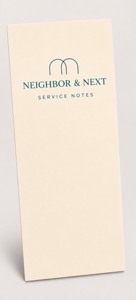
A paper format for a confirmed notice
These custom rack cards for community notices list a 3.74 × 8.27 inch format, default 14pt standard glossy stock and a current minimum quantity of 50. The small image is an AI design concept; no holder or official event status is included.
Compare custom rack cards only when an actual distribution need justifies a batch. Review the selected wording, artwork and configuration with DecentCustom. An existing digital notice or plain information sheet may already meet the need.
Calendar, service-day guidance and product details reviewed November 14, 2026. Organizational hours and the service proposal in the example are fictional. No actual event, registration, grant application, institutional affiliation or business outcome was established.