A Kwanzaa display needs accurate names and explanations before decorative artwork. Start with the host's purpose, distinguish the basic symbols from supplemental items, and review each label against its source.
What are the seven basic Kwanzaa symbols?
The founder's explanation of Kwanzaa symbols identifies seven basic symbols. The concise meanings below follow that account; retain its African cultural context when developing a fuller explanation.
| Symbol | Meaning in the founder's account |
|---|---|
| Mazao — crops | Harvest traditions and the results of shared productive work. |
| Mkeka — mat | History and tradition as a foundation. |
| Kinara — candle holder | Ancestral roots in continental Africa. |
| Muhindi — corn | Children and the future they represent. |
| Kikombe cha Umoja — unity cup | Unity as a basis for collective life. |
| Mishumaa Saba — seven candles | The values expressed in the seven principles. |
| Zawadi — gifts | Parental care and work, alongside children's honored commitments. |
For a label, keep the name, object and explanation together. Do not place a caption beside an unrelated stock photograph simply because the photograph looks seasonal. If you cannot confirm what an image depicts, use an accurate text explanation while the host reviews the visual choice.
Are the flag and written principles part of those seven?
The same source distinguishes two supplemental items: Bendera, the flag, and a poster or written form of the Nguzo Saba. This explains why a description may mention more than seven display elements while still referring to seven basic symbols.
Preserve that distinction in a heading or illustrated key. A designer should not silently renumber the list to make every pictured object fit one category. For an educational panel, a separate supplemental-items note is clearer than an unexplained nine-item list.
What do black, red and green mean?
The founder's flag account connects black with the people, red with their struggle, and green with the future arising from that struggle. Present those colors with their context rather than reducing them to a general winter palette.
Color alone cannot explain an object. Review the caption as carefully as the swatches: what will a reader learn, whose interpretation is being cited, and has the host approved the wording? A brand's own logo can identify the organizer without being presented as a Kwanzaa symbol.
Is an ordinary cup automatically a unity cup?
A general merchandise listing cannot establish an object's role in a community's celebration. The fact that a supplier sells a mug, candle holder or printed mat does not establish that the host has selected it for a particular cultural use.
For a buyer preparing an educational display, ask which actual objects the host wants explained. Keep any product description separate from a cultural identification. Avoid adding labels such as “authentic,” “official” or “ceremony-ready” without the specific basis needed to support them.
A completed display-label correction
Fictional example: Read & Root's educator receives a draft with a generic branded mug photograph captioned “Unity Cup.” The supplier's photograph identifies only an ordinary promotional mug.
The educator holds that panel and asks the host to review the identification. The host has not chosen that mug for its display, so the team removes the photograph and unsupported caption. It prepares a short text explanation linked to the founder's symbols page instead.
The host approves the corrected educational label for an existing display. The team orders no mugs and reuses its accurate display materials. The completed decision concerns this fictional label; it does not authenticate an artifact or claim that a real celebration has approved a supplier.
An optional label after the explanation is approved
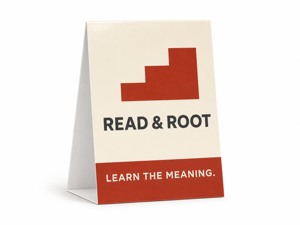
Paper table tent
These table tents for a reviewed educational label list a 5 × 7 inch size, 14pt stock and a default glossy finish, with matte listed as an option. The current quantity control starts at 25.
Compare custom table tents only after deciding whether another label is needed. Bring approved wording and original artwork to DecentCustom for proof review. A paper label provides information; it does not replace a cultural object.
Reviewed November 19, 2026. Meanings are concise summaries of the cited founder's account. Questions reflect the source's categories and practical display decisions, without a measured claim about customer frequency. Physical suitability, ritual use and delivery dates require separate confirmation.