Useful feedback identifies something a host can improve. Ask about the activity people actually tried, give them room to describe a problem and keep their replies separate from claims about everyone’s happiness.
Ask about one concrete experience at a time
After a small in-store activity, ask what visitors tried, what was unclear and what they would change. Treat the replies as suggestions from the people who answered, rather than a measure of everyone’s happiness. An International Day of Happiness theme does not change what the questions actually ask.
A question such as “How happy and welcome did our wonderful activity and gifts make you?” combines several judgments and suggests a favorable answer. Someone might enjoy the activity, dislike the gift and find the instructions confusing. One response would not tell the host which part needs attention.
Pew Research Center’s question-writing guidance recommends clear, concrete wording and examining one concept at a time. It also describes pretesting questions. The three-question example below is our own practical draft, not a validated research instrument.
Help us improve the activity. Taking part is optional. You can skip any question. Please leave out names, contact details and information about other people.
1. Which activity, if any, did you try today? Write the activity name, describe it briefly, or write “none”.
2. What, if anything, was unclear when you tried it? Please describe the instruction or step. You can leave this blank if you did not try an activity.
3. What is one change you would suggest for next time, if any? Write in your own words. “No change” is also an answer.
Use an activity name that visitors recognize. Before distributing the form, ask someone similar to the intended participant to explain what they think each question means. If they interpret “activity” as shopping rather than the paper-bookmark table, revise the introduction to name that table. Check the revised wording again.
A spoken invitation or existing paper can be sufficient. Do not make a response a condition of receiving normal service. If you use a digital form, check what it actually records before describing it as anonymous. Removing a name field alone does not establish that promise.
Three fictional comments, three specific next steps
Open Note is an invented shop. The following comments are written examples, not testimonials or findings about real visitors. They show how to connect an answer to a manageable action.
Comment A: “I couldn’t find the glue for the bookmark.” The host checks where the supplied glue was placed and whether it was available during the activity. If it was kept behind another display, move the approved supplies to the activity table and identify them. At the next setup check, ask someone to locate the materials using the instructions provided. Do not conclude that more branded merchandise would solve a missing-supplies problem.
Comment B: “I didn’t know which edge to fold first.” Review the specific first step. Add a clearly oriented demonstration sample or a labelled sketch showing the intended edge, and have the host demonstrate that step when needed. Check whether a new reader can identify the starting edge. A generic “Have fun!” sign does not supply the missing instruction.
Comment C: “No change—please keep the quiet table.” Record the request as a reason to consider retaining that option. Confirm whether the space and staffing can support it next time. One comment does not establish that every visitor prefers quiet activities, and retaining the table does not demonstrate a wellbeing effect.
Keep the original comments separate from the host’s interpretation and planned changes. Record who will check each change and when. A useful review ends with a specific next check; it does not end with a claim that the suggestions already improved the next event.
A few voluntary replies do not speak for all customers
AAPOR’s survey best practices distinguish sampling approaches and emphasize care when interpreting nonprobability responses. Its guidance also allows people to skip questions. A small opt-in feedback activity should not be presented as a representative customer survey merely because the questions look professional.
For your own review, retain the question wording, when and where feedback was invited, how replies were received and which answers were missing. A blank answer is unknown, not a positive rating or a zero. If you did not record how many people saw the invitation, do not invent a participation percentage.
For the fictional examples, a suitable internal note is: “These three invented comments illustrate checks on material location, first-step instructions and a quiet-table option.” For real feedback, report the actual number and context of replies, and separate a participant’s words from your proposed action. Do not turn private comments into public testimonials without the appropriate agreement.
These questions concern an activity experience. They do not measure life satisfaction or diagnose a personal condition. Our explanation of what happiness rankings actually measure shows why a life-evaluation score is a different kind of information.
A counter tent can invite feedback; it does not replace the form

If existing signs already identify the feedback point, keep using them. For a recurring indoor activity, the linked custom paper table tents for an indoor feedback invitation list a 5 × 7 inch format, 14pt stock and a default glossy finish. The current minimum quantity is 25, which may exceed a small shop’s needs.
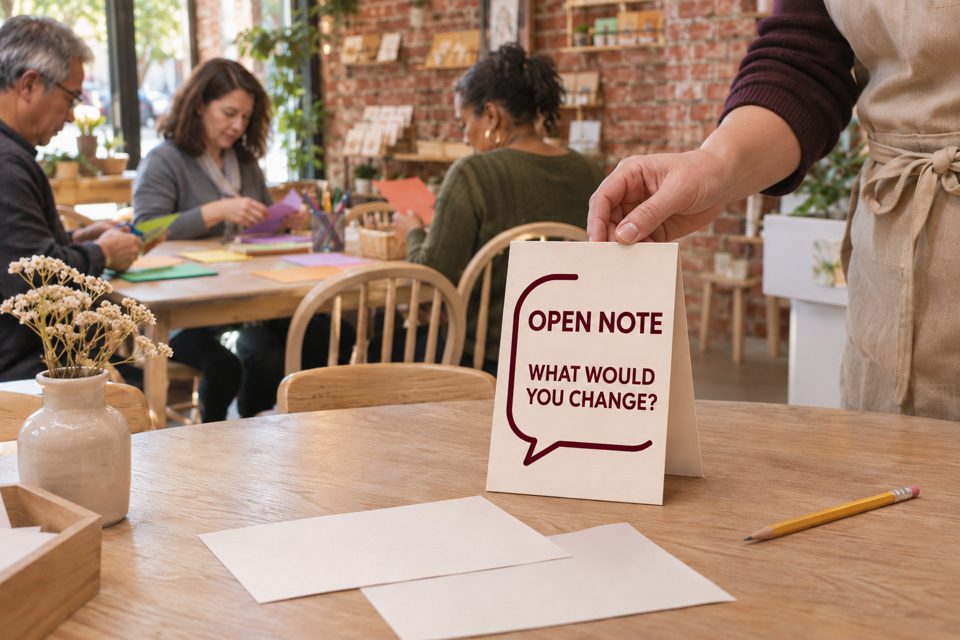
The fictional Open Note tent carries a short invitation. Keep the actual questions and response method available separately. Compare custom table tents for other counter messages, and confirm the artwork and selected configuration with DecentCustom. The paper sign is not a data-collection system or a guarantee of more replies.