Frozen retail packaging guide
A foil-lined tote and a frozen shipping package are different proposals. Preserve the original packaging and check the actual carrying job before adding a branded bag.
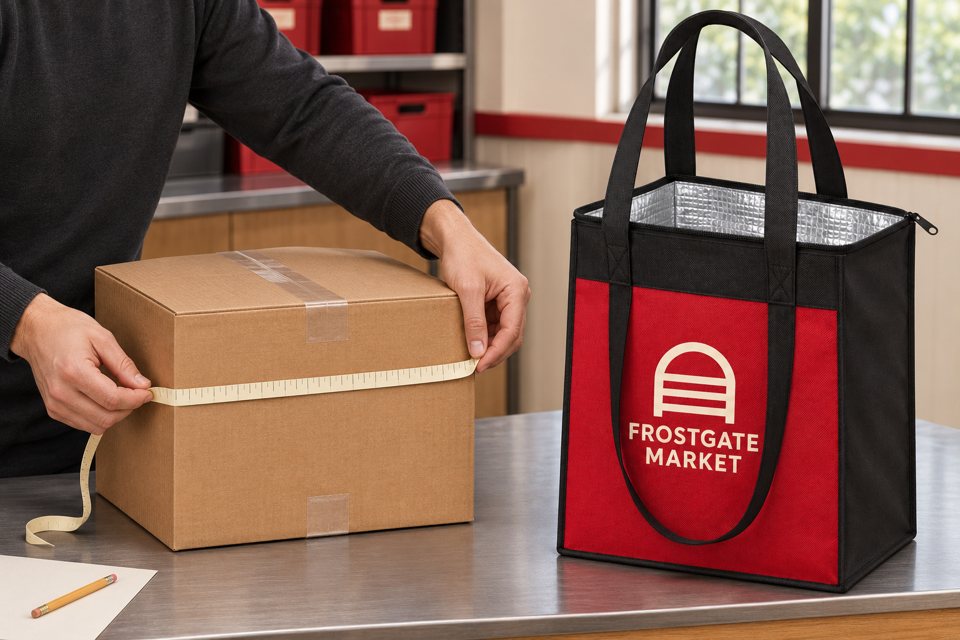
Start with the delivery process, then define the bag’s job
Separate frozen shipping packaging from insulated carryout bags by identifying the original package, the route it supports and the extra carrying task you actually need. A tote’s lining, logo or listed dimensions do not establish that it can replace a frozen shipping system.
First confirm the current delivery or pickup route. Parcel shipment, a store collection and a customer carrying a completed order are different situations. Keep the selected route and its packaging requirements together in the order process.
One operating example is Wild Fork’s online-order packaging FAQ, marked modified March 13, 2024. It describes its own bags and boxes using insulated liners and pre-packed dry ice. That description concerns its packaging process; it is not evidence that another insulated tote has the same performance.
Keep the responsible provider’s actual packaging and handling instructions in force. This guide provides no dry-ice handling directions, food-temperature limits or safe carrying duration. Those decisions cannot be made from the artwork shown here.
Two complete decisions for two different requests
Fictional example: Frostgate Market’s coordinator, Mica, reviews a proposed branded tote. The scenarios below describe purchasing decisions, not real orders or completed transport tests.
Request A: replace a parcel shipping package
The proposal would remove the original shipping arrangement and send the order in a promotional insulated tote instead. Mica does not approve that substitution from the tote’s listing or appearance.
Decision: retain the original packaging process for the actual parcel service. Any proposed replacement requires review by the responsible packaging and food-operation team for the real contents and route. A logo or foil lining is not that review.
Recorded outcome: the tote is excluded from this parcel-replacement proposal. No original liner, coolant or packaging component is removed to make the proposed bag work.
Request B: add a carrying accessory at collection
A separate proposal would help carry a completed order while keeping its required original packaging unchanged. Mica checks whether that extra carrying job is needed and whether the actual packed order can be handled in the proposed configuration.
Decision: keep the tote as a conditional accessory, with fit, closure, handling and intended-use questions unresolved until checked. Do not describe it as a guaranteed temperature-control solution.
Recorded outcome: continue with the current appropriate carrying method while those questions are open. If the packed order does not fit, keep the original packaging intact and review another arrangement; do not strip it down to fit the branded bag.
The accessory proposal does not establish a required purchase. Existing equipment or the provider’s current handoff arrangement may already serve the job.
A size comparison can reject a candidate, but it cannot prove performance
Measure the fully packed item, including its required original packaging and any protruding closure. Then ask about the bag’s usable opening, usable interior and closed configuration. A listed main product size should not be treated as a measured usable space for every packed shape.
Worked comparison — fictional packed order
The example packed order is 13H × 10W × 6D inches. The candidate’s listing gives 14.5H × 11.5W × 7D inches.
Listed height difference: 14.5 − 13 = 1.5 inches
Listed width difference: 11.5 − 10 = 1.5 inches
Listed depth difference: 7 − 6 = 1 inch
These are differences between numbers, not measured internal clearances. They do not account for the lining, opening shape, seams, zipper path or how the packed object passes through the opening. The comparison therefore leaves fit unconfirmed.
In the example, Mica records “nominal size comparison completed; usable fit still to check.” She does not record “fits” or remove part of the original package to gain space.
Use an appropriate empty or dry representative pack to examine insertion, closure, removal and the actual carrying arrangement before adopting the configuration. Keep that geometry check separate from any evidence needed for the actual contents, load or temperature conditions. No such test has been performed for this article.
A complete supplier brief that preserves the original package
Example inquiry for the collection accessory
We are considering a branded carrying accessory for completed collection orders. The required original food packaging will remain unchanged. Our example packed item is 13H × 10W × 6D inches; we need to check the actual representative order before approving fit.
Please identify the exact bag construction and confirm its usable opening and usable space with the intended closure. Can you provide the information needed to review that packed shape without forcing the opening or changing the original package?
Please describe the intended uses and limitations of the supplied configuration, along with relevant evidence for any performance claim proposed for our use. A general carrying-load statement or an unspecified hot/cold claim does not answer the question for our actual contents and route.
We have not approved a shipping-package replacement or placed an order. We will review actual use, quantity, artwork, care requirements and a complete quote separately before deciding whether to buy.
This is example wording, not an inquiry sent to a supplier. The real brief needs the actual order configuration and operating conditions; unknown conditions should remain questions rather than being filled with invented values.
Make the handoff decision explicit
Mica’s fictional handoff reads: “Parcel packaging unchanged. Tote not approved as a parcel replacement. Collection accessory remains conditional pending actual packed-order fit and intended-use review. Current appropriate carrying arrangement stays in use. Artwork approval alone does not change this status.”
This record keeps the purchasing decision visible to staff. It does not certify a package, a carrying load or a food-temperature result.
Review the exact tote after confirming a separate carrying need
Compare custom lunch bags and coolers by the actual carrying job. A different size or construction is a different proposal, with its own fit and use questions.
foil-lined grocery tote
The current listing specifies 80 GSM polypropylene, a foil liner, an extended zippered closure and a main product size of 14.5H × 11.5W × 7D inches. Its maximum listed logo size is 8H × 8W inches.
The current minimum/default quantity is 50 bags. One collection handoff does not itself justify that order. The listed construction is not a verified frozen-food carrying duration, usable packed capacity or replacement for the original shipping process.
AI Frostgate Market artwork on a red-and-black tote, matching the empty bag in the scene. Click the small image for the exact product. The illustration does not establish lining performance, a load rating, food-contact suitability or a measured fit.
Approve the carrying use before the printed identity
Keep the original shipping package, collection accessory and artwork decisions separate in the brief. If a carrying need remains after fit and intended-use review, bring its actual configuration, quantity and artwork to DecentCustom for current options and quotation. Keep using the current appropriate arrangement when a new accessory adds no justified benefit.
Prepared by DecentCustom, reviewed November 7, 2026. Frostgate Market, Mica, the packed-order dimensions and decisions are fictional. The linked operator describes its own process. No actual package, route, coolant handling, fit, load, temperature performance, supplier contact or customer outcome has been tested or verified. Source organizations do not endorse the product.