For a seasonal flower order, explain which parts of the result are flexible and which require a specific answer before the florist accepts the brief. A customer may welcome a different stem while still needing the right color, presentation or meaningful flower. Record those priorities in the order conversation.
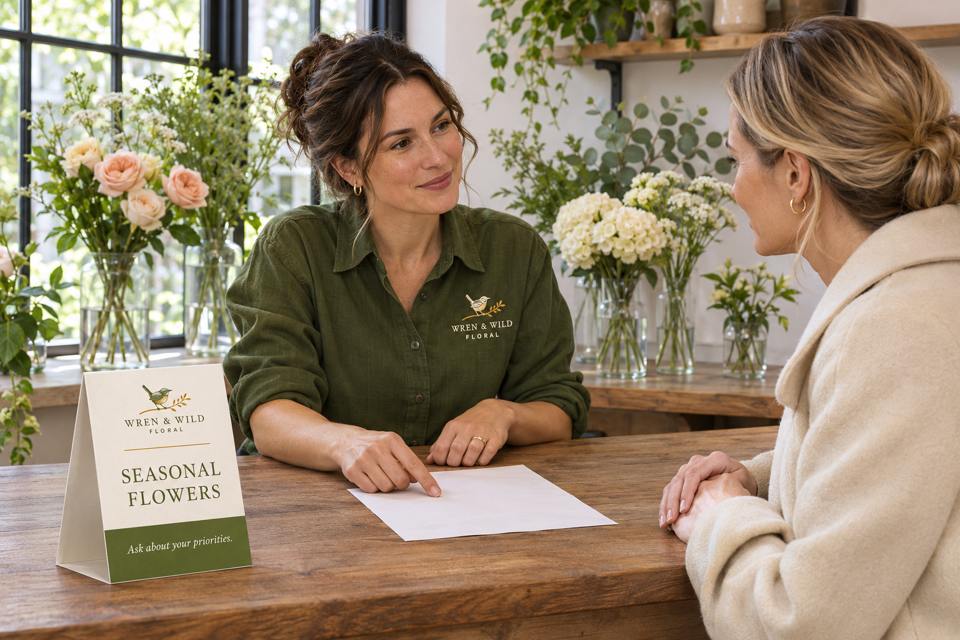
A reference photo can mean different things to each person
The florist may see a loose, seasonal composition. The buyer may see a particular flower associated with the recipient. Asking “Do you like this style?” will not necessarily uncover that difference.
Butterfly’s Rest explains its seasonal design approach: its photographs indicate style and scale rather than an exact recipe, and particular varieties are not guaranteed. That is one operator's approach, not a policy that applies to every florist.
In an anonymous discussion about a local florist order, a buyer disliked substitutions they felt had not been communicated. Some respondents considered the substitutions reasonable; others emphasized contacting the buyer. These differing opinions cannot establish the arrangement's quality or a complaint rate. They show why acceptable seasonal variation and a particular customer's expectations need a conversation.
Ask what caught the buyer's attention: an exact variety, a restrained palette, an airy shape, the arrangement's apparent scale or its container. A mood description is a starting point. It is not confirmation that every visible detail can be supplied.
Separate essential details from flexible preferences
Fictional worked example: Wren & Wild Floral receives a request for an anniversary arrangement based on a reference photograph. The following brief is invented to demonstrate the questions; it is not a real order or a statement of flower availability.
Order discussion W-01
Presentation: vase arrangement; the recipient should not need to find a vase on arrival.
Overall direction: soft peach and cream, with a loose shape.
Important color limit: no bright red flowers.
Meaningful detail: the buyer asks for peach roses because of a personal association.
Flexible preference: other seasonal flowers may vary within the agreed palette, subject to the florist confirming what it can supply.
Reference photo: used for the overall direction; it does not establish the available flower list.
Unresolved question: can the shop obtain suitable peach roses for this order?
Current status: awaiting the florist's availability check and the buyer's answer to any proposed alternative.
This brief makes the decision visible. Replacing an incidental flower within an agreed flexible brief is different from replacing the detail the buyer has identified as essential. Do not bury that distinction under “similar flowers may be used.”
Also check the format. A wrapped bouquet and a vase arrangement are different requests even when their colors look similar. Record the agreed presentation separately from the flower preferences, so a discussion about stems does not silently change the container or handover format.
Offer an answer the buyer can actually choose
Before describing an alternative as available, the florist needs to check its own sourcing and production position. The messages below continue the fictional example after that check. Each offers a specific choice instead of asking the buyer to approve an undefined substitution.
Option A — The color matters more than the exact variety
We cannot confirm peach roses for this arrangement. We can offer peach lisianthus with cream seasonal flowers in the agreed vase format, with no bright red flowers. Would that alternative suit the recipient, or is the rose itself essential? We are awaiting your answer before confirming this revised brief.
The named alternative is fictional availability for this example. A real florist should substitute its checked options. The buyer can answer a meaningful question: whether the proposed flower meets the purpose.
Option B — The rose itself is essential
Thank you for explaining that the peach rose is the important detail. We cannot confirm that requirement for this order. We can discuss a different arrangement or timing only after checking what is feasible. We have not confirmed a revised arrangement.
If the requirement cannot be met, say so before making a promise. Do not invent another delivery date, imply a reserved supply or treat an unanswered message as approval. Any existing order's handling should follow the shop's actual agreed process; this guide does not supply refund or contract terms.
Leave the next staff member a clear order status
Keep the agreed preference record and subsequent answer with the appropriate private order reference. A general sign cannot carry the customer's decision for them. For the fictional W-01, an unresolved record reads:
W-01 — pending buyer response
Original essential request: peach roses, vase arrangement, no bright red.
Availability checked: peach roses cannot be confirmed for this order.
Alternative offered: peach lisianthus and cream seasonal flowers, same agreed vase format.
Response: not yet received.
Owner: counter coordinator Maya.
Next action: contact the buyer through the agreed order channel and record their answer.
Revised brief: not confirmed.
If the buyer later accepts the alternative, record the actual choice and confirmation in the order process, including what remains unchanged. If they decline, keep that answer clear. A note saying only “customer contacted” does not tell a colleague whether an arrangement was agreed.
Keep personal explanations and contact details out of public display artwork. Staff need the order's working record; other visitors only need to know how to raise an important preference.
Use a counter prompt for the question, not the customer's approval
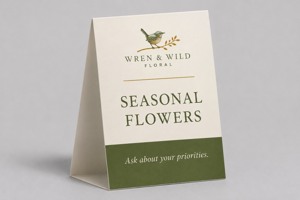
A short prompt for a dry consultation area
“Seasonal flowers — ask about your priorities” can introduce the conversation. DecentCustom's 5 × 7 paper table tents list 14pt card stock and finish options; current quantity validation starts at 25. Check the final configuration and folded footprint before ordering.
Keep paper away from wet flower preparation. The AI concept does not demonstrate moisture resistance, an exact print finish or physical fit. One illustrated counter does not establish a need for 25 signs.
An existing notice or digital order page may already work. If new print is useful, compare table tent formats and send DecentCustom the approved wording, artwork, display requirements and quantity. Keep changing availability and individual approvals in the order process, where staff can update them.
Reviewed November 9, 2026. Wren & Wild Floral, W-01, names and proposed flower options are fictional. No real order, supplier availability, customer outcome or business improvement was measured.