One shopper can collect several orders, and one order can use several bags. Keep the order identifier, ready items and bag allocation linked; counting bags alone cannot establish that every order has been handed over.
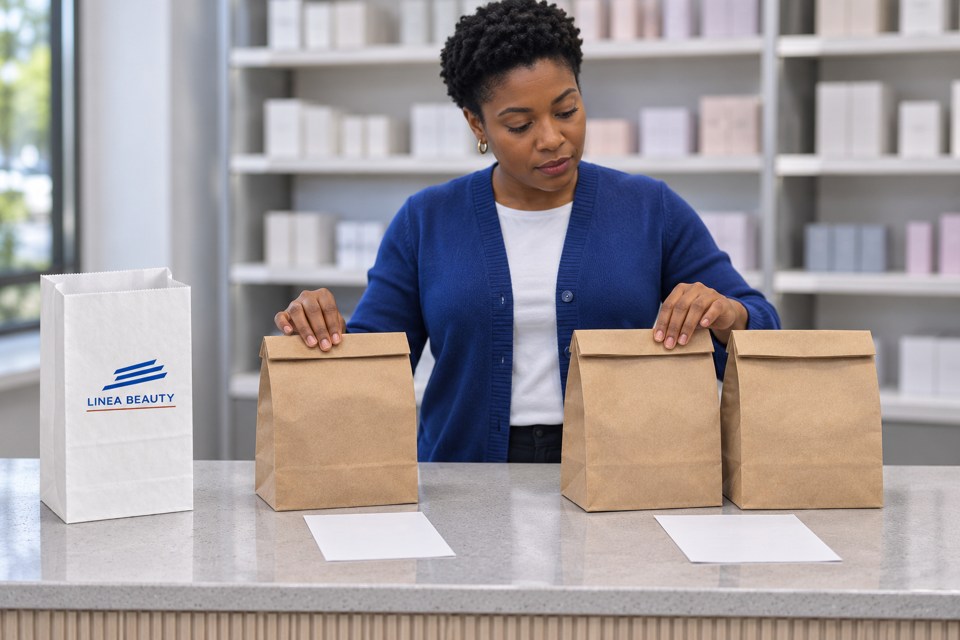
The customer, order, item and bag are different units
A shopper may present two order notifications at one visit. That does not mean there should be two bags. One order may contain items prepared in separate bags, while another item may have become unavailable. The order record establishes what is ready; the outer bag is only one part of the handoff.
Sephora’s US pickup FAQ directs customers to check the ready notice for available items and describes the original pickup barcode. Keep those provider-issued details attached to the correct order rather than replacing them with a shop logo.
For your own store, use its actual accepted identification and collection process. An employee should be able to identify the ready items and associated bags for each order before treating a single customer visit as complete. Keep an order that is not ready separate from one that can already be collected.
Use a per-order check, followed by a bag count
| Working field | What it answers | What it cannot establish alone |
|---|---|---|
| Original order reference and current notice | Which order is being handled and its current status | That another order for the same shopper is also ready |
| Ready item list | Which items and quantities are available for this collection | That every originally requested item is included |
| Original bag allocation | How those ready items are divided across this order’s bags | That a bag for another order belongs to this one |
| Actual handoff result | Which matched bags and ready items were transferred | Any later return, replacement or payment adjustment |
The working record should stay in the appropriate private system. Do not write customer names, order details or copied barcodes into a public display merely to make the counter look organized. Follow the store’s own collection process and keep original product labels and packaging intact.
If two orders are being collected together, retain their separate identities through the check. Do not consolidate bags or replace the original identification as a shortcut. Any permitted packing change still needs a way to preserve the correct item-to-order match.
A completed check: two orders needed three original bags
Fictional example: Linea Beauty has two pickup orders for one shopper. Order A has two ready items in one original bag. Order B originally requested four items; its current notice identifies three ready items and one unavailable item. B’s three ready items are allocated across two original bags: two in the first bag and one in the second.
The expected collection is therefore five ready items in three bags: A contributes two items and one bag; B contributes three ready items and two bags. The unavailable item is not part of that physical collection. This invented record is not an actual retailer’s inventory.
At the counter, the employee initially finds A’s bag and only B’s first bag. There are two bags and four ready items present. Counting “two orders, two bags” would miss B’s remaining ready item. The employee compares the original allocation, locates B’s second bag and matches it to B’s record. The missing bag question is resolved before the handoff.
The shopper then receives the three matched original bags under Linea’s confirmed collection process, and the employee records the five ready items transferred. B’s unavailable line remains separately identified in the order record for the provider’s applicable handling. No sixth item has been delivered, and the example does not assert a completed refund or replacement.
Say what was collected without erasing the exception
Order A’s two ready items were handed over in its one original bag. Order B’s three ready items were handed over in its two original bags after the second bag was located and matched. The shopper received five ready items in three bags. B’s unavailable item was not delivered and remains identified separately in the order record; no payment adjustment or replacement outcome is recorded here.
This closes the actual transfer while preserving the unresolved line. A note saying “both orders complete” would be less precise if someone later needed to understand the unavailable item. Likewise, a prepared bag on the shelf is not proof that the shopper has received it.
If a bag or item cannot be matched, leave that part open and route the question to the responsible employee. Do not fill the gap with an unrelated item, a complimentary sample or another customer’s bag. A new branded outer bag cannot resolve an identification or missing-item problem.
Choose any additional outer bag after the order check
Original pickup bags and labels may already meet the need. If a shopper requests another carrying format, first establish the store’s permitted process and measure the fully packaged items. Preserve the original order information. Do not assume a paper bag provides liquid containment, chemical compatibility, opacity or protective performance.
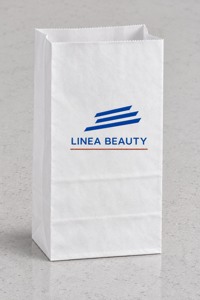
A small dry-content format to compare
These custom white paper bags for small dry retail items list 4.75-inch width, 8.75-inch height and 3-inch depth. They are unlined white paper without handles, with a 200-bag minimum; 500 is the case pack. One-sided full-color printing is included.
Compare custom paper bags in other formats and give DecentCustom your approved artwork and actual packed dimensions if an outer bag is useful. The Linea design is an AI concept. Neither its image nor the listed dimensions prove that a particular cosmetics order will fit.
Reviewed November 12, 2026: Sephora’s US pickup information and the linked DecentCustom product. Linea, its orders, bag allocation and handoff are fictional. No customer records were collected or real orders fulfilled. Actual provider policies and item status remain the reference.