A cleanup summary should explain what was recorded and how. Keep counts, measurements and estimates distinct before combining records or announcing a result.
Decide what the record is intended to show
An activity summary and a standardized monitoring survey answer different questions. A useful community report can describe one event without claiming to measure a wider change in pollution. Decide the purpose with the host before creating extra forms or asking volunteers to enter the same information twice.
NOAA’s shoreline monitoring FAQ distinguishes opportunistic observations from standardized collection using consistent field methods and study designs. It explains that comparable monitoring depends on those methods. A normal cleanup tally is not automatically an MDMAP survey, and a custom-branded sheet does not make it one.
Ocean Conservancy’s cleanup guidance recommends a recorder for each small team and reviewing submitted details and units. It distinguishes weighing collected trash from estimating its weight. Follow the selected program’s current reporting method; keep a supplied form or working digital process when it already meets that purpose.
Put the unit and evidence beside the number
| Record type | What to retain | Limit to state |
|---|---|---|
| Bag count | What was counted, by whom and at which event | Bags are not a measured mass |
| Measured weight | The weight record, unit and measurement method | Report only what that record covers |
| Estimated weight | The method, assumptions and source | Label it as estimated, not weighed |
| Unknown weight | That no usable measurement or estimate was established | Unknown is not zero |
Do not apply an unexplained pounds-per-bag factor to every bag size and call the result measured weight. A full bag of light packaging and a partly filled bag of dense material need not weigh the same. If the selected program requires an estimate, retain its applicable method and assumptions separately from the observed count.
Also separate registrations from attendance. A person who signed up but did not attend is not evidence of an on-site participant. Define the attendance record before using it in a public summary, and keep private participant details out of that summary.
Choose one record owner before adding totals
A paper sheet, an app submission and a coordinator’s spreadsheet may describe the same work. They are not necessarily three additional results. Assign a person to reconcile the records and retain a simple reference to the event, team and reporting method.
Mark a transferred paper entry as transferred, link it to the corresponding digital entry and count it once. Investigate an unexplained mismatch rather than selecting the larger number. Preserve the original records and document a correction so a later reviewer can understand the final total.
Finish with a statement the records actually support
Fictional record example: Clear & Count receives a paper sheet listing five bags from Team A and another listing three bags from Team B. Team A’s five bags also appear in an app entry that the recorder made from its paper sheet. The coordinator confirms that those two Team A records describe the same work.
The unique bag total is five plus three, or eight bags. Adding the app entry again would produce thirteen and double-count Team A. No weight was recorded, and the group has not established an applicable estimate. The weight field therefore remains “not measured,” rather than zero or a claimed number of pounds.
The completed summary reads: “At this event, the two team records document eight bags collected. Weight was not measured. The duplicate app copy of Team A’s paper record was excluded.” This reports the defined record set. Without a comparable earlier survey, it does not claim that local litter fell by a percentage, that all material was recycled or that a particular environmental outcome occurred.
Use print for a stable reminder, not as measurement evidence

A small indoor process reference
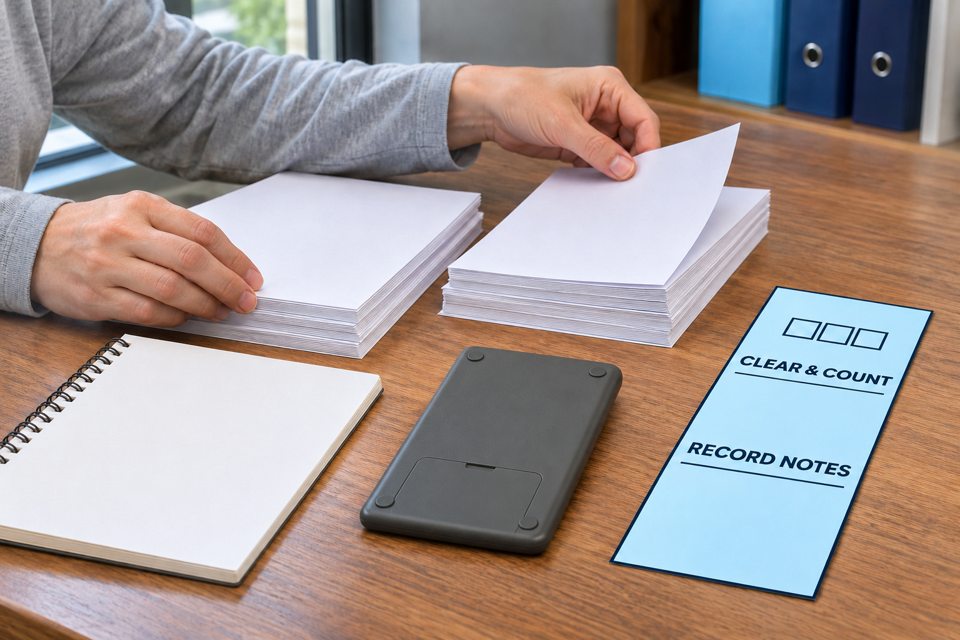
These custom rack cards for recording guidance are listed at 3.74 × 8.27 inches, with 14pt standard paper as the default thickness and a current minimum quantity of 50. The image is an AI artwork concept.
Compare custom rack cards only if recurring indoor briefings need an approved reminder. Prepare the actual artwork with DecentCustom. An ordinary paper card is not a scale, waterproof field form, certified monitoring method or NOAA endorsement.
The existing program form, shared digital workbook or plain reference sheet may already be sufficient. Keep changing event totals in the actual record system rather than ordering a new card for each report.
NOAA and Ocean Conservancy method descriptions and the product listing checked November 13, 2026. The numerical example is fictional and demonstrates addition and duplicate removal only. No real participant records, cleanup measurements, survey submission or environmental result were obtained.