Decide who provides each item, who keeps it and what happens if it is missing before ordering another class kit. “Materials included” needs to identify the actual materials and the particular course.
If your center offers several kinds of adult learning, first separate program and workshop entry routes. Then approve the materials list for that offer, rather than assuming one school-wide pack fits every learner.
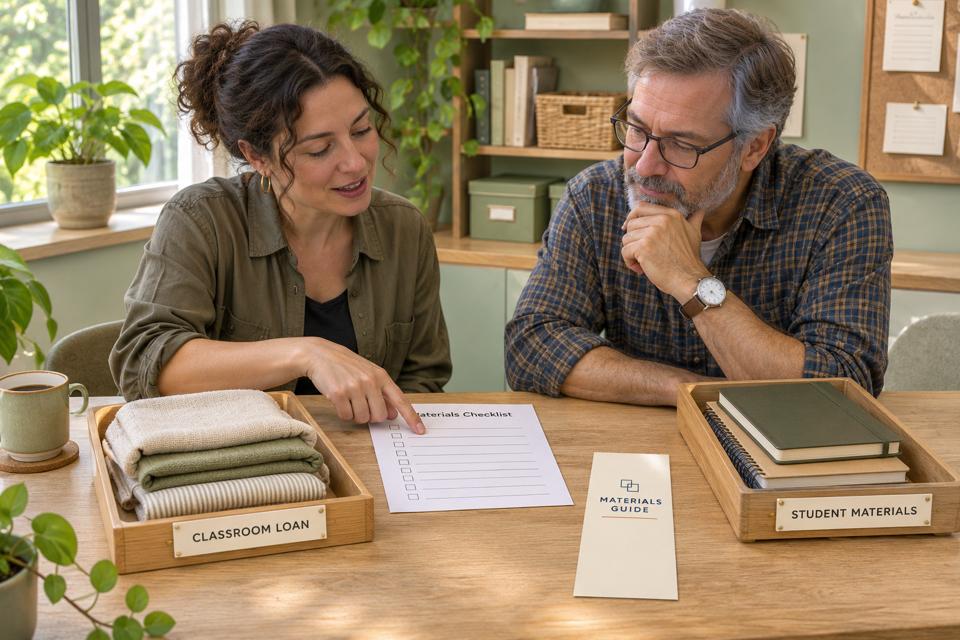
Give every item an ownership status
A useful list distinguishes four arrangements. They answer different questions for learners and for the person preparing the classroom:
- Provided for classroom use: available during the lesson, with the provider confirming how it is allocated and returned.
- Included to keep: specifically supplied for the learner to take home. Name the items; do not extend this to every tool used in class.
- Required from the learner: something the participant must bring or obtain separately, with the course’s own specifications.
- Optional: a permitted preference or substitute. State the conditions under which it can replace the provided item.
Some classroom-use equipment may be formally checked out as a loan. Other equipment stays at a workstation throughout. Use the actual arrangement in the instructions. For reusable items, record who issues them, where they remain and who checks them after the session. Keep quantities and personal loan records in the working system.
Two sewing classes show why the details matter
Made Sewing Studio’s Beginner Bootcamp page says machines are supplied and lists fabrics and other materials students should bring. It also says only limited supplies are held on site. A message saying only “equipment provided” would leave the consumables question unanswered.
In contrast, The Works Seattle’s Garment Sewing 101 page lists sewing machines, fabric, thread and needles as provided. It describes a take-home beginner toolkit and separately requires purchase of the independent creator’s pattern. That pattern requirement remains a separate action even though classroom materials are available.
These are examples of published course arrangements, not a comparison of which class is better. Confirm the current booking and materials list before applying either example. A different teacher, project or session can have different requirements.
The practical lesson is to separate three statements: what is available for use, what becomes the learner’s property, and what the learner must obtain separately. Permission to print a purchased pattern through a provider’s process is not permission to distribute it freely in a branded class pack.
Worked example: replace “bring your kit” with a usable notice
Fictional planning example: a small sewing studio provides classroom machines and lends basic tools, while students supply project fabric. The instructor approves compatible student-owned tools as an optional alternative. These are invented conditions for demonstrating the method.
“Bring your kit—we supply the equipment” gives the learner little help. The course owner can replace it with a message that names the arrangements:
“A classroom sewing machine and loan tools will be available during this session. Bring the project fabric listed on your confirmed course page. If you would prefer to use your own tools, ask the instructor to confirm suitability before class. Classroom loan tools stay at the studio. If you cannot obtain a required material, contact the course team before the session so they can explain the available options.”
Before sending that notice, have the instructor check it against the actual course and identify the contact route. If fabric is included for that session, remove the bring-fabric sentence. If the class requires a participant’s own machine, replace the machine statement and use that course’s full equipment list. Do not issue both versions without identifying the relevant session.
Keep the complete current requirements on the course page or confirmation. A short printed guide can point to that information, but it should not force a learner to guess which list applies.
Turn the list into a purchase decision
For each proposed purchase, check its intended status against the materials already available. Existing equipment that can be used for the class belongs in the classroom plan; an item already included in a student kit belongs in that kit’s contents. Student-owned alternatives need the instructor’s approval, rather than a promise that any substitute will work.
Then identify the actual gap. Is the class short of a required consumable? Is a loan item missing? Does the preparation message need correction? The response might be a targeted replacement, a clearer instruction or use of existing stock. It does not have to be another complete welcome kit.
For example, Hipcooks Seattle’s FAQ says aprons are available and class recipes are supplied afterward. Another apron or notebook should therefore have a specific additional purpose before becoming a purchase recommendation. That arrangement belongs to Hipcooks; use each course’s own inventory and instructions elsewhere.
A reusable internal record can be brief: item; course; ownership status; supplied or required specification; current usable stock; responsible person; action before class. Leave unverified stock as unknown until someone checks it. Keep specialist equipment in its approved storage and handling system; an ordinary promotional bag is not evidence of suitable protection.
Print only the preparation information that stays useful

If the same stable preparation guidance is repeatedly explained at reception, custom rack cards for a stable materials guide are one possible format. The linked paper SKU is 3.74 × 8.27 inches, with a default 14pt glossy option and a starting quantity of 50. A holder is separate.
Keep the changing course list, required purchases and personal loan status in the maintained system. Use a printed card for approved general instructions and the address of that current list. If the existing email or course page already gives learners what they need, keep using it.
The image is an AI design concept, not a finished-order photograph. Check actual-size text and selected paper stock, then review rack card formats and options if printing is appropriate. Prepare only authorized artwork with DecentCustom.
Provider material descriptions and the linked SKU were reviewed November 13, 2026. The ownership framework and worked notice are editorial suggestions; they do not establish any other school’s rules or demonstrate improved attendance, learning or sales.