Activity briefs and supplies • reviewed November 27, 2026
A useful team-building brief explains the task, how people can take part and what the facilitator already provides. Start there before ordering matching items or describing a vague day of activities as suitable for everyone.
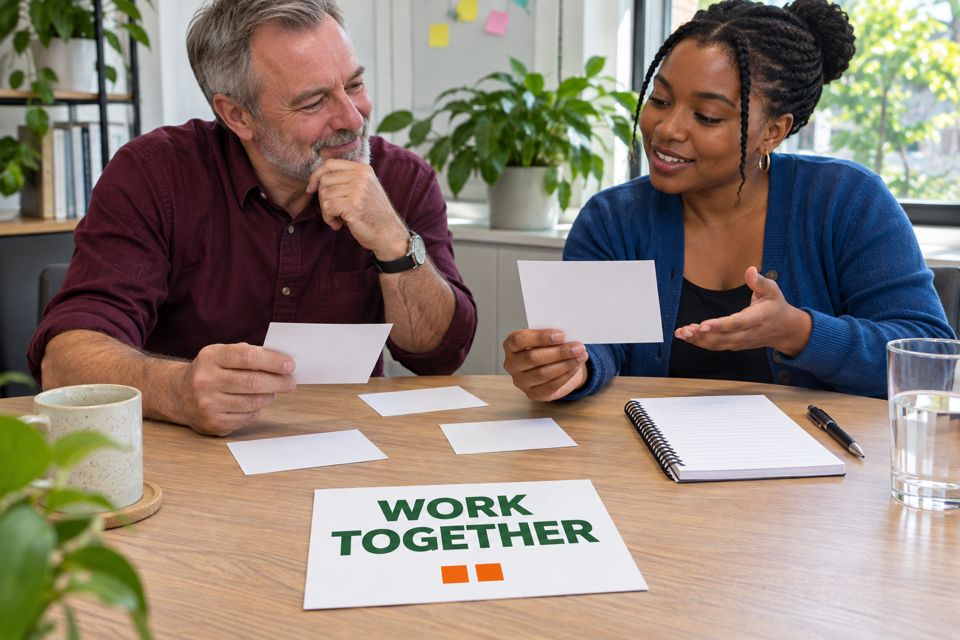
What should the team-building day help people discuss?
Choose a clear work question before choosing merchandise. A team might need to clarify a handoff, review a shared process or identify whom to ask when a task stalls. “Build team spirit” alone does not tell participants what they will do.
The University of Minnesota’s 2023 guidance on purposeful team gatherings recommends sharing goals in advance, asking for input and connecting the agenda to the intended purpose. Use that planning principle without promising that a single event or branded item will improve performance.
Tell participants the purpose and expected format, including any discussion or reflection afterward. Ask the responsible manager about attendance and work-scheduling questions; this guide does not set an employer’s policy.
What will the activity actually involve?
Describe the activity instead of relying on its name. Is it a seated discussion, a tabletop problem, a walk or a physical challenge? Ask the facilitator about space, duration, group size, equipment, preparation and any requirements specific to that program.
The University of Minnesota Duluth’s resource page distinguishes kits and facilitated discussions, notes space and movement requirements, and provides a contact for adjustments. Its local resources are examples, not confirmation that a particular kit or facilitator is available to your organization.
Use the provider’s current instructions for the chosen session. Do not copy clothing, footwear, age or weather rules from a different venue. A general promotional brief does not replace a facilitator’s activity instructions or equipment checks.
Can someone contribute through a different role?
Discuss participation options before the day. Depending on the activity, a facilitator might offer a speaking, recording, observing or timekeeping role. Confirm that the role is meaningful for the actual task rather than promising a substitute that the provider has not agreed to.
The University of Houston’s team-building program describes participant choice and alternative ways to engage, including roles such as note-taker or observer. That is the program’s stated approach, not a legal ruling about every employer’s event.
Provide a direct route for someone to ask about an activity or an adjustment. Do not ask people to explain personal circumstances on a public RSVP sheet. The organizer should confirm the response with the responsible facilitator and tell the participant what has actually been arranged.
What does the facilitator already provide?
Ask for the included-materials list before making an extra order. Separate equipment used by a group from items each person needs. Check who supplies, distributes, collects and returns each item, and whether participants need a device or anything of their own.
A confirmed attendee count is not automatically the quantity for every material. One set per table and one sheet per person have different denominators. An optional takeaway has another purpose again. Keep these decisions separate instead of buying one of everything for everyone.
A completed materials review can mean no extra purchase
Fictional example T33: twelve colleagues are confirmed for a seated process discussion. The draft plan says “activities for everyone” and proposes a new activity kit for each employee. The reviewer asks the organizer to check the actual session and included supplies.
The fictional facilitator confirms three tables of four, one shared card set per table, supplied writing materials and an agreed recording role for anyone using that route. The revised brief describes a seated discussion and how to contact the facilitator about participation before the session.
T33 review record
12 confirmed participants ÷ 4 people per table = 3 tables. Three shared card sets are included by the facilitator. Writing materials are included. No additional activity kits or branded takeaways are ordered. Keep the existing digital agenda as the current information route.
Closing question: who checks that a work handoff has the information the next person needs? Record the team’s agreed next step and an owner for reviewing it at the following team check-in.
This is a fictional planning correction and a proposed discussion question. It does not document an event taking place, an adjustment being provided to a real participant or any measured change in team performance. The useful result is an accurate brief and a purchasing decision tied to the actual supplies.
When would a printed activity brief add value?
A digital agenda or existing shared board may be sufficient. Print only when the facilitator agrees that a brief helps the session, the content is final and the quantity matches its use. Do not print activity directions that the responsible provider has not reviewed.
A flat reminder for an agreed brief
These custom postcards for a checked activity brief list a 6 × 4-inch format and full-color printing on one or two sides. The order increment of 50 is not a participant or table count.
Compare custom thank-you card formats and give DecentCustom the approved text and configuration. Work Together is an AI artwork concept. Ordinary paper is not activity equipment, a facilitator qualification or safety certification.
Questions before the team-building day
Does team-building always mean physical activities?
No. Ask what the chosen session actually involves. The brief should describe its movement, space and participation requirements.
Can I ask about another way to take part?
Use the organizer’s direct contact to ask about the actual activity. Confirm the facilitator’s response instead of assuming a role or adjustment is available.
Should we buy one kit for every attendee?
Check included supplies and the unit of use first. T33 needs three shared sets already included, rather than twelve new personal kits.
Do matching gifts prove the event worked?
No. Define what the team wanted to discuss and what follow-up it agreed. A purchase is not evidence of improved work or relationships.
Reviewed November 27, 2026. University resources illustrate planning approaches; current bookings and program rules require provider confirmation. T33 and the images are fictional. No actual participant request, activity approval, equipment test, order or team outcome was created.