Retirement celebration planning • Reviewed November 27, 2026
Agree who will receive the retirement keepsake before collecting messages and photos. Ask for one specific memory, review what can be included and deliver the finished collection through the retiree’s chosen route.
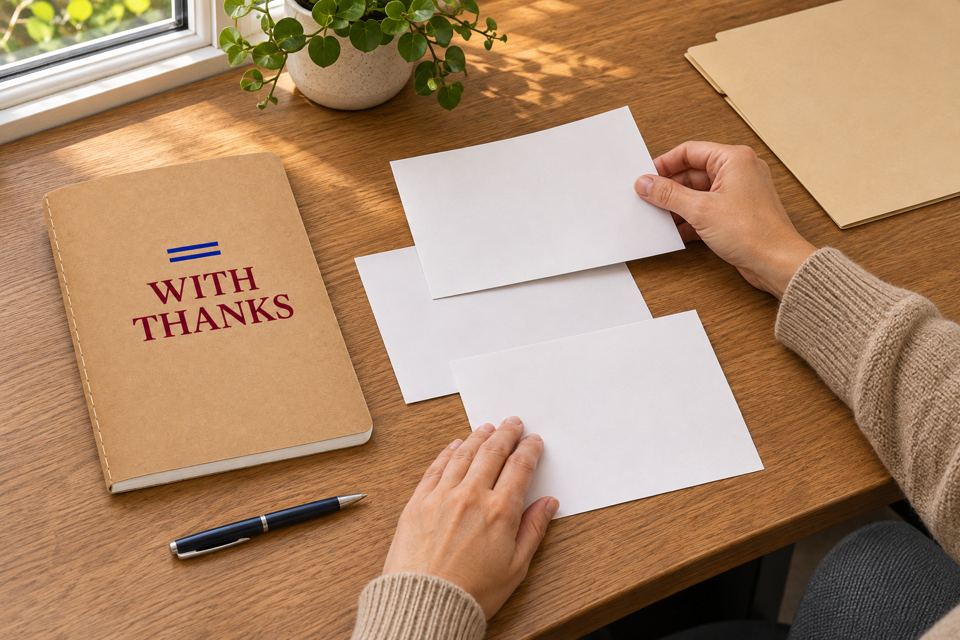
Decide whether the keepsake is private before asking for contributions
Ask the retiring colleague whether a collection of messages or photos would be welcome, and who should receive it. A private book, a slideshow at the gathering and a company social post have different audiences. Do not collect material under one description and quietly use it for all three.
The University of Virginia’s virtual retirement celebration guide begins by asking whether the retiree wants an online celebration. It also makes sending a recording conditional on agreement from the retiree and attendees. This is one employer’s event guide; its useful planning distinction is that the format and use of the material need agreement.
Set a simple brief: recipient, contributors, paper or digital format, collection owner, review date and intended audience. Leave room for a shorter note, no photos or no collection at all. The retiree’s preference should shape the project rather than becoming a reason for the coordinator to persuade them.
Ask for a specific memory, with an easy way to decline
A focused prompt is easier to answer than “write something meaningful.” Ask for a moment the contributor personally remembers, what the colleague did and why it mattered to them. A warm general wish is also welcome; not everyone has a long shared history.
Example collection request — fictional private keepsake
“Avery has agreed to receive a private collection of colleague messages. If you would like to contribute, please send a short note to the collection coordinator through the existing internal channel by the agreed review date. You might describe one thing Avery taught you or a moment when their help made your own work clearer. A simple good wish is equally welcome, and contributing is optional.
Please include how you want your name shown. The collection is for Avery; we are not preparing a public slideshow or social post. Send a photo only if you are allowed to share it for this use, and identify the people shown and any uncertainty. The coordinator may return a question before including it.”
Add the real coordinator, approved route and date before sending your own request. Do not ask contributors to upload material into a broadly shared folder merely because it is convenient. Keep submissions out of the general event RSVP or seating list.
Ask people to omit confidential work details, client information and personal matters that do not belong in the keepsake. Where a story involves someone else, use the organization’s review process and the agreed audience to decide what can be included. Uncertain material can stay out while a simple personal note remains part of the gift.
A worked review: a better story and a photo held back
Fictional example: Avery prefers a private message collection. Riley submits a note saying, “You saved the business thousands and everyone depended on you.” The coordinator has no evidence for the savings figure or a claim speaking for everyone. Riley also sends a group photograph without enough information about its permitted use. Another colleague submits a short good wish.
| Submission | Review decision | Finished result |
|---|---|---|
| Riley’s broad praise | Ask Riley for a moment they personally remember; remove the unsupported business claim. | Riley reviews and approves a specific first-person note. |
| Group photograph | Hold while the coordinator checks the source, people shown and permitted use through the agreed process. | The photograph is not included in this version. |
| A simple good wish | Check the contributor’s display name and intended use. | Include it without demanding a longer story. |
Riley’s revised note might read:
“Avery, thank you for sitting with me during my first equipment handoff and explaining why each step belonged in the log. I still use the questions you taught me when I prepare the next handoff. I appreciated your patience when I was new. Wishing you a retirement that leaves room for what matters to you. — Riley”
The revision gives Avery a recognizable moment and lets Riley speak in their own voice. It does not invent a measurable saving, a company-wide opinion, a retirement plan or a preferred hobby. The coordinator asks Riley to approve the edit instead of silently replacing their message.
The finished collection can contain the two agreed text contributions while the photo remains outside it. Receiving a file does not establish that it is cleared for inclusion, and an unresolved picture does not require holding every otherwise approved note.
Check the final copy and the delivery route
Compare the assembled version with the approved messages. Check spelling, accents, contributor names, order, cropping if any photos are included, and any restrictions noted during review. Have someone open the actual final file rather than relying on a working document’s title.
For a digital collection, test access for the intended recipient without widening the audience. Google Drive’s sharing documentation, for example, distinguishes restricted access from access for anyone with the link and notes that workplace administrators may limit sharing. Use the current controls of the system your organization actually permits; a link being available to the coordinator does not prove the retiree can open it.
Confirm a suitable handoff route that will still work after departure. Do not assume a work account remains available, or move workplace material to a personal account without the appropriate agreement. A paper handoff may be simpler if that is the retiree’s chosen format.
Record what was delivered, to whom, by which agreed route and whether receipt was confirmed. Keep working submissions and access arrangements within the organization’s existing retention process. A private keepsake does not automatically become permission for a later public tribute.
Choose the notebook only if it suits the agreed format
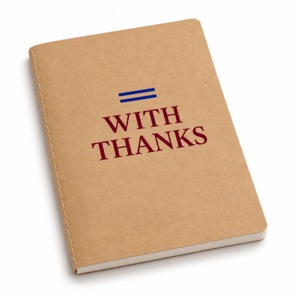
A blank-page option for personal notes
If the retiree wants a physical notebook, these blank A5 kraft-cover notebooks for agreed keepsake notes list a kraft paper cover, compact stitching and 80 sheets with blank pages by default. A pen is not included. The example cover does not mean the interior contains printed messages or photographs.
Compare custom padfolio and notebook options, or use an existing suitable notebook or private digital collection. Ask DecentCustom about the actual cover artwork and configuration before ordering. This article does not establish a custom photo-book printing service, a binding service or compatibility with photo adhesives.
With Thanks is fictional AI cover artwork. Confirm that the intended writing format and selected item suit the recipient; new merchandise is optional.
Questions before collecting retirement messages
What should colleagues write in a retirement keepsake?
Describe a specific moment, what the colleague did and what it meant to you. A short sincere good wish is also suitable. Avoid invented results or assumptions about their retirement plans.
Can the same photos go into a public slideshow?
Check that separate use through the agreed process. Material submitted for a private keepsake should not quietly be repurposed for a wider audience.
What if a photo’s source or permitted use is unclear?
Hold the photo while it is checked. The collection can still include other agreed material.
Does the keepsake require a newly printed notebook?
No. Use the format the retiree welcomes. An existing notebook, a private digital collection or individual notes may serve the purpose.