For a US shop considering its first Record Store Day submission, check eligibility and complete store information before promoting participation. The current 2027 consideration window ends December 1, 2026; submitting is not an invitation.

What does the current US store-submission page say?
As checked November 22, 2026, the US Record Store Day submission page gives a June 2–December 1, 2026 window for 2027 consideration. It requires a shop to have been fully open to the public for at least one year before submission. Premature or incomplete submissions are not held for later review. Recheck the current page before acting.
The same page says qualifying stores receive next-step information by January 10, 2027 and that individual submission questions cannot be addressed before December 10, 2026. Use those published instructions rather than assuming an immediate response.
This is a store-participation preparation task, not a release order or a request to book an artist. Do not substitute another country’s registration route, a pressing plant’s production deadline or an old spring event date for the current US process.
Build an accurate description of the actual shop
The organizer’s description of a participating store centers on an independently owned, full-time, stand-alone physical shop with a major commitment to music retail. Its US site and promotions are primarily for US stores. A general gift retailer with a few records, an online-only seller and a physical record shop should not be presented as interchangeable businesses.
Have the owner or authorized manager review the actual business model. Do not let the person designing a flyer decide eligibility from the shop’s logo or the amount of vinyl visible in a photograph. A profile should describe what the business does, not recast it to sound like a preferred applicant.
Gather the public shop name, customer address, current website or social page, contact route and opening information. The signup page requires an up-to-date public link showing location and hours. Check what a visitor actually sees when following that link. A stale temporary address or a page that only says “coming soon” leaves an important inconsistency.
Use a contact mailbox the responsible person monitors. Agree who owns follow-up and who keeps the public profile current. Keep account credentials and internal documents in your approved business systems; a shared planning note can identify the owner of the next action without exposing them.
For the opening history, distinguish public trading from earlier milestones such as signing a lease, announcing the name or opening an online storefront. Ask the owner to establish the relevant facts from the business’s actual records. Do not select the oldest convenient date because it makes the application appear ready.
Two completed readiness decisions
Needle Note and First Spin are fictional US shops. All opening dates, business conditions and decisions below are invented examples, not real applicants or organizer determinations.
Needle Note: its owner confirms that the physical shop has been fully open to the public since October 2025. The example business is independently owned, operates full-time at its own shop and primarily sells vinyl and CDs. Its manager checks that its public page accurately shows the customer location and hours, and that the contact mailbox is monitored.
Readiness decision: the owner can review the complete information against the current form. The internal status remains “prepared for owner review.” No form has been submitted and no invitation received in this example.
First Spin: its physical shop opened in June 2026. As of the review date above, it has not met the opening-duration condition. The owner holds the premature submission and keeps normal shop information accurate. An earlier online launch is not used to change that decision.
A concise fictional description for Needle Note’s owner to review is:
“Needle Note is an independently owned, full-time physical record shop whose main business is selling vinyl records and CDs. Our shop has been fully open to the public since October 2025. Our public store page gives our current customer location and hours. The manager monitors the contact address supplied with our store information.”
That paragraph is an editorial example, not a completed application. For a real shop, use accurate details in every requested field and check the current form’s requirements. Do not copy the fictional description if its facts do not match your business.
The useful outcome is a decision with an owner: prepare and review accurate information, resolve a missing fact or wait. Buying a banner, printing campaign artwork or announcing an expected exclusive does not resolve any of those tasks.
Separate preparation, submission, invitation and merchandise
Keep a small status record in your existing system. “Information prepared” means the details are assembled. “Submitted” needs the actual submission evidence. “Invited” needs the organizer’s actual communication and the next steps it specifies. Do not advance the record simply because someone expects a favorable result.
If the owner submits, keep the submitted version, date and relevant acknowledgment privately. Record any subsequent question and the person responsible for answering. Do not describe an unverified browser message or an unfinished form as a successful submission.
For public announcements, use only the status established. Pending paperwork is an internal task. It should not become an official-participation claim on a printed sign. Separately review permissions for any campaign name or artwork you intend to use; a generated image is not official authorization.
The organizer also explains that participating shops control their own stock and promotions, and a product mentioned on its site is not guaranteed at every listed store. Even after an invitation, verify actual release availability and your own arrangements before telling customers what they can buy.
Keep general store information useful while participation is unresolved: accurate hours, the normal customer entrance and the services you actually offer. Those details help customers without requiring an event affiliation or an unconfirmed merchandise promise.
Use the records you already have
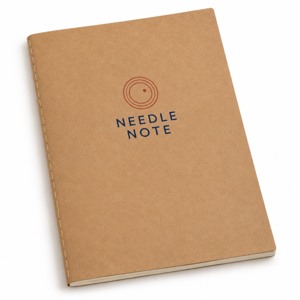
An existing digital record or notebook is enough for the readiness check. If a team has a separate ongoing paper-note requirement, these kraft-cover notebooks for ongoing staff notes list A5 sizing, 80 sheets, stitched construction and a current minimum of 12. One application does not create a need for twelve notebooks.
The Needle Note cover is an AI artwork concept. No application form, official campaign material or invitation is included. Compare custom notebooks and padfolios and confirm a selected cover configuration with DecentCustom only after that separate materials need is established.