When work demands conflict, an awareness message is only a starting point. A useful conversation identifies the work problem, what the supervisor can change and when the team will check the agreed next step.

What should a workplace stress conversation accomplish?
For a workload problem, aim for a decision about the work: its priority, scope, timing, owner or available support. “We know everyone is busy” acknowledges the situation but leaves the same conflicting demands in place. Identify which decision needs to change and who can make it.
The CDC’s guidance on supporting worker mental health emphasizes workplace policies and practices, including addressing excessive demands, giving workers more control and training supervisors. It also encourages workers to identify stressful factors and discuss solutions. This supports examining the work environment alongside individual support; a branded giveaway does not establish that a workload problem has been addressed.
A Stress Awareness Month message can invite this conversation. Confirm the employer’s actual route for raising work concerns and the person responsible for responding. A campaign slogan is not a confirmed meeting, service or response deadline.
What can I say when two deadlines conflict?
Bring a specific example rather than a judgment about your own ability to cope. Describe the tasks, requested deadlines, estimated time and the consequence of doing one first. Make clear which estimates are uncertain. Avoid putting client details or a colleague’s personal information into a shared example.
“I have two hours available this afternoon. The handover needs about 90 minutes and the first draft about an hour. Which should take priority? Can we move one deadline, narrow the draft or arrange another person to help?”
The supervisor can check the actual deadlines and ask the receivers what they need. Does “draft” mean a complete document or a short outline for discussion? Can a different owner take part of the work? Can the requester accept a new date? Do not call a deadline moved until the person depending on it has received and confirmed the change.
Before ending, record the agreed task, owner, next action and review time in the existing work system. A meeting note that says “try to manage stress” does not specify any operational change.
A completed decision: one handover today, a full draft tomorrow
Fictional example. Work Check’s coordinator has 120 minutes available. A handover is estimated at 90 minutes and a full draft at 60 minutes. The requests add up to 150 minutes, exceeding the available time by 30 minutes. These are work estimates, not measurements of anyone’s mental health.
The supervisor checks with both receivers. The handover remains the first priority today. The draft receiver agrees to a short outline today and the full draft tomorrow. The team records this completed plan:
- Today: the coordinator completes the 90-minute handover first.
- Remaining 30 minutes: prepare only the agreed outline. It is not labeled a completed full draft.
- Tomorrow, 9–10 a.m.: the coordinator has a separate 60-minute block for the full draft; its receiver has confirmed this timing.
- Tomorrow, 10:15 a.m.: the supervisor and coordinator check whether the handover and draft have reached their receivers and whether another decision is needed.
The supervisor updates the existing work board and withdraws the conflicting “both complete today” instruction. The team buys no new materials. This example demonstrates a resolved planning decision, not proof that stress, health or productivity improved.
Keep the work plan separate from personal health information
A shared work board needs the agreed priority and owner, not a person’s symptoms or private story. Ask which workplace support routes are actually available and how to use them. Check each provider’s own terms rather than promising a service is confidential, free or available to everyone without confirmation.
The National Institute of Mental Health’s stress fact sheet advises talking with a professional when coping is difficult or symptoms persist. An operational conversation with a supervisor does not provide a diagnosis or replace professional help.
If an awareness campaign will feature employee quotes, names or photos, handle that as a separate choice. You can ask before using someone’s name or photo; agreeing to discuss work does not establish permission to publish a personal account.
Use an ordinary notice only when it helps the actual work process
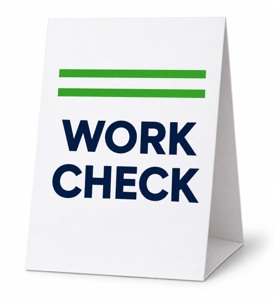
An existing calendar, work board or private meeting invitation may be enough. If an approved, dry indoor shared desk needs a general reminder of the work-check process, compare folded paper table tents for an approved work notice. The checked listing is 5 × 7 inches, uses 14pt card stock and has a minimum order of 25. The default finish is glossy, with matte also listed.
Keep individual workload or health details out of a general desk notice. Check its actual placement, readability, wording and quantity before printing. Compare custom marketing materials only after confirming a real need; ask DecentCustom about approved artwork and order requirements. The AI concept shows optional paper printing, not a treatment, protective product or verified workplace result.
Common questions about discussing work stress
What if everything is called urgent?
Ask the person responsible for the work to rank the actual requests and check the consequences with their receivers. Identify the decision that still needs an owner instead of silently promising all deadlines.
What if the first conversation produces no decision?
Record the unresolved conflict, who is checking it and the agreed next contact. Use the organization’s actual route for work concerns. Do not label the problem resolved because a meeting took place.
Do I need to share a personal story in an awareness session?
Confirm what the session involves before joining. A work-planning example can discuss tasks and deadlines without collecting private health experiences or agreeing to public campaign content.
Can a stress ball or notebook replace this conversation?
A promotional item does not decide priorities, change a deadline or provide professional care. Start with the actual work problem and available support; an optional item has a separate, limited purpose.
Sources reviewed November 23, 2026: CDC worker mental health guidance and the NIMH stress fact sheet. The Work Check scenario is fictional. Confirm local workplace processes and current service details separately.