Match supplies to the service people actually receive. A hotel desk, a self-arrival rental, a campground office and a tour meeting point do not share one automatic shopping list.
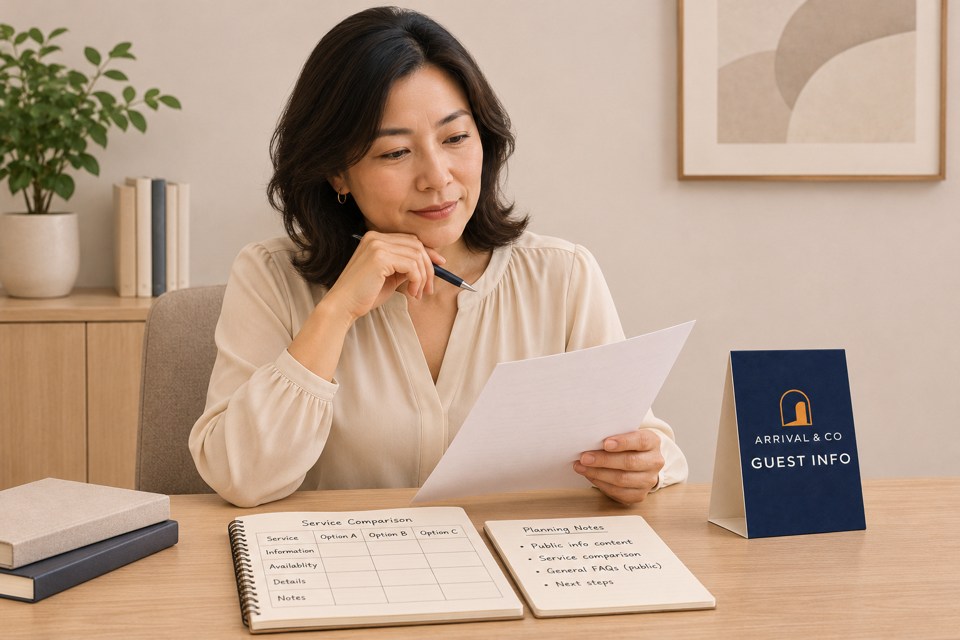
Choose the branch before choosing the item
Start with the actual service and contact point. Then identify the existing item that already supports it, the remaining information or supply gap, and the person authorized to approve a change. Do not infer a purchase requirement from an industry label.
Overnight lodging: hotels, boutique hotels, motels, bed-and-breakfasts, hostels and resorts can have different staffed hours, arrival arrangements and guest services. Check whether the task belongs to reception, housekeeping, a property host or another operator. Existing room information, linen, drinkware and uniforms come before a replacement list.
Camping and rental stays: RV parks, campground offices, glamping operations and vacation rentals need their own check. A campsite, furnished tent and rental house do not automatically include the same equipment. An office may coordinate an arrival while a separate host or cleaner handles the accommodation.
Travel and activity reception: travel agencies, activity-booking offices, visitor centers, cruise ticket counters and outdoor guides handle different stages of a trip. Consultation, buying a ticket, checking in, meeting a vehicle and boarding are separate tasks. Existing confirmations, maps, brochures, staff clothing and specialist equipment may already answer the need.
Use actual arrangements to challenge a generic shopping list
The Seattle Vacation Home FAQ describes electronic-lock arrival instructions without collecting keys in person, alongside existing kitchen supplies. That example supports checking an arrival message and current household stock before assuming a staffed reception desk needs more materials.
Washington State Parks’ camping information distinguishes accommodation categories and directs guests to their confirmation for check-in details. Its early-arrival guidance allows staff time to prepare the site. Those are named-program conditions, not one rule for every campground or rental.
The Tours Northwest FAQ describes existing branded vehicles and driver clothing. Direct website or phone bookings do not require a printed voucher. Check the operator’s actual process before adding another printed item or identification piece.
These examples illustrate differences. They do not establish another business’s opening hours, stock, supplier contract or purchase authority.
Separate the guest, the payer and the supply owner
The person using an item may not buy it. A group organizer can pay for a booking while individual guests use the service. A cleaner can notice a shortage while the property owner or manager approves replenishment. A guide may use company equipment without controlling its branding.
For each proposed item, record: actual service; user; existing item and condition; unresolved gap; approving person; purchasing person; replenishment owner. Leave unknown roles unresolved rather than assigning them to the most visible staff member.
A paper information tent can explain a stable public contact route at a real indoor desk. It cannot make a rental staffed, approve an early arrival, reserve a tour place or replace outdoor equipment. Cups require an actual drinking-service task and suitable configuration; a vehicle display requires the operator’s authorization and a suitable surface. Neither follows automatically from “hospitality.”
Worked example: a rental is not a new hotel desk
Entirely fictional example: Arrival & Co manages a self-arrival rental. A draft shopping list includes a reception tent, new cups and extra staff shirts because the property is classified as lodging.
Coordinator Nia checks the actual service with the manager. In this example, guests already receive current arrival instructions, the kitchen has sufficient usable drinkware, and there is no staffed public desk or new reception role. The manager confirms those findings. Nia removes the three unsupported purchases and records who will check the existing information and household stock before the next stay.
A separate, staffed visitor desk could produce a different decision: its owner might confirm a recurring public-information gap after reviewing the existing guide. That would justify comparing an information format for that desk, not transferring the order to every rental or tour. This example reports no real inventory check, reservation or operating result.
Consider print only for a confirmed public-information gap
Ordinary indoor public information
These ordinary paper table tents for approved public information list a 5 × 7 inch size, 14pt stock and glossy default finish. The current minimum is 25. Review the actual artwork and folded configuration for its placement.
Compare custom table tents and review an authorized brief with DecentCustom. This paper concept is for dry indoor information, not a key, ticket, privacy record, safety sign or weatherproof display.
Reviewed November 16, 2026. Original research grouped fifteen service types; named provider examples are limited to their own published arrangements. They are not a national demand sample. Arrival & Co is fictional. No actual stock, approval, guest access, purchase need, safety performance or business effect has been established.