A useful supplies review starts with what people already use. Separate personal belongings, items returned to the venue and optional take-home merchandise before choosing an order quantity.
Count a missing function, not every member
A membership list is not automatically a shopping list for bottles, towels and bags. Some people bring their own. Some items are provided for use during a visit. Others are loaned and must remain with the venue. A gift purchase should begin with the remaining useful task, rather than replacing each of those items with a logo version.
Real operators show why that distinction matters. CycleBar’s FAQ describes available cycling shoes, notes that a rental fee may apply, and lists provided towels and wet-clothing bags separately from apparel and bottles offered for sale. Buying a bottle from the retail display is a different transaction from using a supplied towel. A new cotton bag also does not establish the same wet-clothing containment as an existing bag used for that purpose.
Seattle Athletic Club Downtown’s published amenities include towel service and private locker rentals. That is a reason to check the existing arrangement before proposing extra supplies, not evidence that every gym needs the same inventory or that another location has identical services.
| Item found in a supplies review | First question | Purchasing implication |
|---|---|---|
| Member’s own water bottle | Does the member want and need another one? | Do not assume a replacement is useful because a new logo is available. |
| Venue-provided towels | Are they for use during the visit, and who collects them? | Keep service stock separate from take-home gifts. |
| Loaned or rented shoes | What does this operator provide, charge and require returned? | A branded general-purpose item does not replace the specialist item or its return instructions. |
| Existing wet-clothing bag | What is its intended use and who supplies it? | Do not substitute an ordinary cotton bag on an unverified waterproof assumption. |
| Optional dry-clothing bag | Is there an unmet carrying task, recipient interest and a suitable size? | Assess the actual bag and existing stock before deciding whether to order. |
Check the chosen operator’s current policy directly. These examples explain different supply arrangements; they do not establish what is in another studio’s cupboards or what its members prefer.
A completed example: four requests, one usable bag already in stock
Fictional Ridgepool Club is considering cotton bags for a small adult welcome group. Its buyer asks the twelve intended recipients about their actual dry-clothing carrying needs. Eight prefer their existing bags. Four would like a replacement, subject to checking the proposed size and strap. This is an illustrative planning example, not a customer survey or a recommended purchase rate.
The buyer then checks the club’s unallocated gift stock. One existing bag is usable for this purpose and has approved, current artwork. It is available for this group and has not already been promised to somebody else.
| R14 decision input | Example count | Meaning |
|---|---|---|
| Intended recipients | 12 people | The group being asked, not an automatic bag order. |
| Prefer their existing bag | 8 people | No replacement bag included in this proposal for these recipients. |
| Interested in a replacement | 4 people | Interest remains subject to checking the actual candidate. |
| Suitable unallocated existing gift stock | 1 bag | Can cover one of those requests if the recipient accepts it. |
| Potential additional bags | 3 bags | Four requests minus one usable existing bag. |
The arithmetic is 4 − 1 = 3 potential additional bags. It does not prove that a particular SKU fits, that those people have approved the design or that an order can be placed for three units.
The current product page discussed below starts at ten units. That commercial constraint does not turn three potential replacements into ten confirmed needs. The buyer can defer the order, check a different suitable product and quantity, or document a separate real use for any additional units. Unrequested extras should not quietly become “spares” merely to justify reaching a minimum.
If the existing bag is the wrong size, has obsolete artwork or has already been allocated, remove it from available stock and redo the count. A bag physically present in the office is not necessarily available for this decision.
Check this cotton-bag candidate against the dry-clothing task
The live quantity control was set to a ten-unit minimum when checked. The page also lists a case pack of 100; case pack and minimum order are different fields. Recheck the selected configuration and total price before placing an order.
For R14, the next practical step is to compare the listed dimensions and single-strap arrangement with the recipients’ intended contents and carrying preferences. The nominal width and height do not establish how a filled bag will sit in a particular locker or feel on someone’s shoulder. Keep the existing bag as an option while checking.
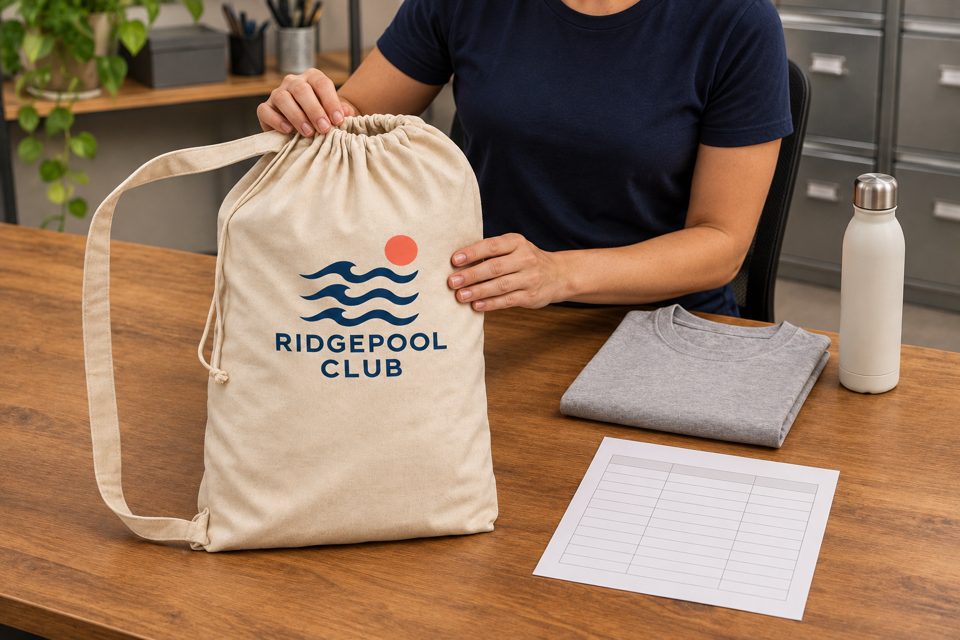
The generated illustration is an artwork concept, not proof of strength, wash-cycle durability or water resistance. No waterproof lining is established by the stated cotton specification. Keep wet items, specialist equipment and any cleaning requirements outside an assumed dry-clothing use until suitability is separately confirmed.
Record the decision so another person can follow it
A useful purchasing note includes the reason to buy or wait. For this example, the buyer can write:
“R14 cotton-bag proposal: twelve intended adult recipients were asked about a replacement. Eight prefer their existing bags; four are interested, pending a size and strap check. One suitable, unallocated bag with current approved artwork is available. This leaves three potential additional bags. The candidate’s current minimum is ten, so we have not approved an order. Next, check fit and recipient acceptance, then compare a suitable quantity or defer. Keep venue towel stock, borrowed shoes and wet-clothing bags outside this gift count.”
That note preserves the options and the unresolved work. It does not claim that a gift increases retention, that every member wants matching merchandise or that unused inventory creates demand. Once the real gap, suitable item and accepted quantity agree, the purchase has a reason that someone else can verify.
Sources and selected product details checked November 10, 2026. R14 is fictional. Current operator rules, product configuration, price and availability require their own check before a real purchase.