A studio can use a team approach while a client still has a preferred trainer. Explain how the next session is assigned and how the handoff is confirmed, without promising one person will always be available.
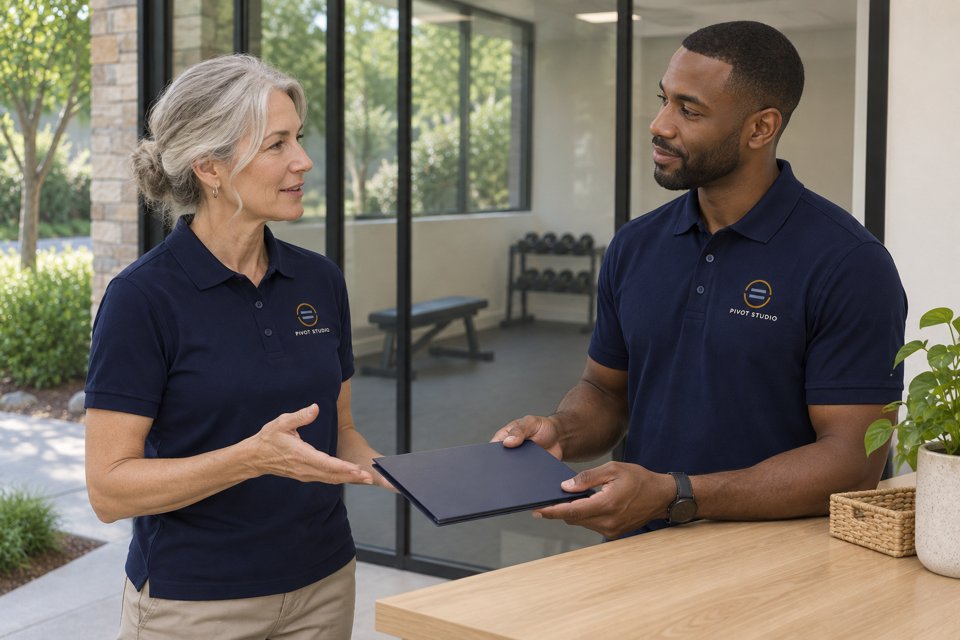
Continuity and one named trainer are different promises
A client may be comfortable with a particular trainer and worry about having to start again with somebody else. A useful answer explains the studio’s actual arrangement and the next appointment. “We work as a team” is a starting point, but it does not identify who is assigned or what the studio has checked.
Fitness Together West Seattle’s FAQ describes a team approach in which the program, progress and notes are shared among trainers. It separately says a specific trainer may not be guaranteed and directs concerns to the studio. Its scheduling section asks clients to discuss changes with the studio. Those distinctions explain the service arrangement; they do not verify any particular client’s next assignment.
For another studio, ask how its own system works. Is a trainer request recorded as a preference or accepted as a confirmed assignment? Who checks that the relevant handoff has reached the person taking the session? Who contacts the client when an arrangement changes? Keep the answer administrative rather than making unsupported promises about identical sessions or results.
The client should have a clear way to express a concern. A preference may reflect familiarity, communication style or another issue they wish to discuss privately. The receptionist does not need to infer the reason or put it into public-facing materials.
A completed reply when the client asks for Dana
In fictional H17, a Pivot client asks to continue with Dana. The next appointment remains Tuesday at 4 p.m., but the current scheduling record names Lee. The studio’s authorized system records Lee’s acknowledgment of the administrative handoff. The client has not yet said whether the arrangement works for them.
The information owner, Avery, checks those facts and can reply:
“We have recorded that you would prefer Dana. The current arrangement for your Tuesday 4 p.m. appointment names Lee. Pivot uses a team approach, and Lee has acknowledged the handoff in our normal studio system. That is separate from a guarantee that Dana will be available for every session.
“We have not assumed that this answers your preference. Please tell Avery through our normal private studio contact route if you would like to discuss the arrangement or available scheduling options before the session. We will confirm any agreed change in the booking record rather than leave it as an informal request.”
This reply respects the client’s preference and identifies the current assignment without promising a particular alternative. It does not say that the client has accepted Lee merely because the record names Lee. It also avoids claiming that an administrative acknowledgment proves the quality of the next session.
If the studio has not checked the handoff, the wording needs to change: “I will ask the responsible team member to confirm the handoff and reply through our normal channel.” Do not copy the completed example’s confirmation into a real message before that check has happened.
A client can ask a focused follow-up: “Who is currently assigned to my next appointment, how does your team confirm the handoff, and who should I contact about my trainer preference?” That question is more actionable than trying to infer the arrangement from a familiar uniform or an old appointment card.
Record the open conversation without duplicating private program details
Keep the underlying program and any sensitive client information in the studio’s existing authorized process. An administrative handoff note can identify the scheduling question and next owner without reproducing exercise instructions, health history or personal progress information.
A completed fictional note for H17 reads:
“H17: client preference for Dana recorded. Current Tuesday 4 p.m. appointment lists Lee. Lee’s administrative handoff acknowledgment is recorded in the authorized studio system; underlying program details remain there. Avery owns the client reply and any scheduling discussion. Client acceptance of this arrangement has not been recorded. Keep the question open until Avery receives a response or confirms the next communication step. Any agreed assignment change must be reflected in the current booking record.”
The note makes the unresolved conversation visible. It does not create a second informal training record or turn the client’s concern into a promotional story. If the assignment changes again, record the actual update and communication responsibility rather than relying on a folder being passed between colleagues.
For a studio manager, check the process before buying anything: can the next colleague find the current assignment, handoff status and communication owner? A clear internal process may solve the problem without a new printed form or uniform order.
Use ordinary staff apparel for recognition
A consistent shirt can help a visitor recognize the studio team. It does not establish who is assigned to the session, whether that person has read the relevant record or what professional qualifications they hold. Explain those matters through the actual studio process.
The navy Pivot design is an AI concept, not proof of fit, color availability, decoration durability or exercise performance. Reuse suitable existing staff clothing where it already meets the need. Keep trainer credentials, client records and appointment confirmation separate from the logo.
Reviewed November 10, 2026. Pivot, H17, Dana, Lee and Avery are fictional. No actual client information, trainer assignment, program, health record or studio scheduling change was accessed or processed.