A studio appointment, a live virtual session and permission to use the premises outside an appointment are different arrangements. Confirm the change you need before treating one as another.
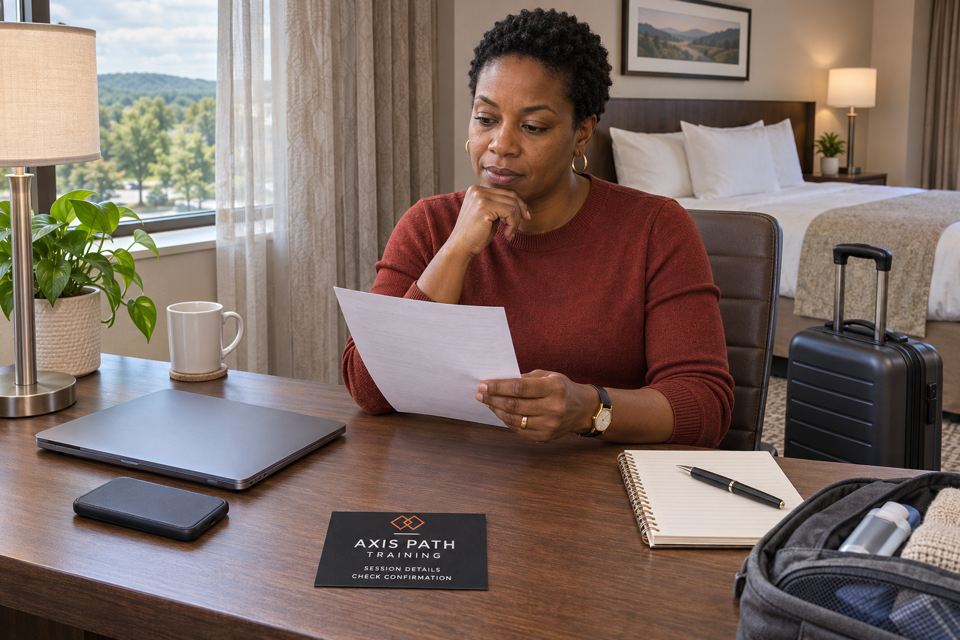
A training package does not answer every access question
When travel disrupts a regular appointment, a client may ask to meet online instead. Another client may want to use the studio on a day without a training appointment. These requests involve different decisions. Knowing that a studio offers personal training does not resolve either one automatically.
Fitness Together West Seattle’s FAQ describes live virtual training through a web meeting, asks clients to discuss scheduling changes with the studio and directs questions about use outside scheduled sessions to the local studio. A service being offered is different from a particular change being accepted.
Start with what the current confirmation actually says: who is attending, whether the session is in person or virtual, the date, time zone and relevant location or private joining instructions. Then ask for the specific difference you need. Avoid treating an unanswered request as a revised booking.
| Arrangement | What needs confirmation | What cannot be inferred |
|---|---|---|
| In-studio training appointment | Current appointment, facility and arrival instructions | Permission to use the premises whenever convenient |
| Requested live virtual session | Studio acceptance, format, time zone and joining instructions | Automatic conversion of an existing physical appointment |
| Visit outside a training appointment | The studio’s explicit applicable arrangement | An unused room or purchased package establishes access |
The same FAQ distinguishes family sharing of one-on-one packages arranged at purchase from non-shareable partner packages. Ask the studio about the actual package. A family member’s interest does not by itself transfer an appointment or create independent studio access.
A pending change should still look pending
In fictional P29, an Axis Path client has an in-person session recorded for November 18, 2026, at 5 p.m. in Seattle. They will be in New York and request live virtual training instead. They also ask whether they can use the physical studio on Sunday. Neither request has yet been accepted.
A complete reply before a decision is:
“Your current November 18 appointment still shows in-person training at 5 p.m. Seattle time. We have received your request to meet live online while you are in New York. The studio needs to confirm the change and send the applicable joining instructions before you treat it as a virtual appointment.
“Your question about using the physical studio on Sunday is separate. That arrangement has not been confirmed. We will reply about it through our normal studio channel; the virtual-session request does not add Sunday access.”
This message identifies the existing record and the two open questions. It does not create a video link, promise a free format change or imply that the client should travel to the studio while the access question remains unanswered.
A focused request from the client can also ask whether a format change affects the applicable terms or session accounting. Confirm those details with the studio before agreeing to a different arrangement. The fact that the example uses the same start time is not a promise that a real studio can accommodate it.
After acceptance, write one appointment with two clearly labeled times
Suppose the fictional studio accepts P29’s virtual change. It should update the current booking rather than leave an in-person appointment and a separate informal message that appear to conflict. A completed replacement confirmation could read:
“P29 update: your November 18, 2026 session is confirmed as live virtual training. The start is 5 p.m. Pacific Standard Time in Seattle, which is 8 p.m. Eastern Standard Time in New York on that date. These describe the same appointment.
“This virtual arrangement replaces the earlier in-person format for this session. Use the joining instructions supplied through our normal private studio channel. Please ask the studio about the requirements for your actual location before the session.
“Your separate request for Sunday studio use is still awaiting an answer. This confirmation does not grant that access.”
The example’s time conversion was checked using the named America/Los_Angeles and America/New_York time zones for November 18, 2026: 17:00 at UTC−08:00 is 20:00 at UTC−05:00. It is a fictional scheduling example, not a real appointment. Do not reuse a fixed three-hour difference for every destination or date.
Keep the meeting address or link in the actual private confirmation. A public studio card should not reveal a client’s meeting details, account credentials or personal schedule. If the calendar and latest message disagree, ask the studio to reconcile them rather than guessing which format will occur.
For the booking owner, the useful final record identifies the accepted format, the original appointment it replaces and any separate request still open. The client should not have to infer those facts from the presence of a laptop in a promotional photograph.
A paper reminder can point to current details
The existing confirmation may be enough. If a studio needs a small public reminder after a consultation, keep it focused on finding the current session details. Reuse suitable current materials first, and avoid printing private meeting links or changing appointments into long-lived artwork.
The charcoal Axis Path design is an AI concept. Its copper mark is ordinary artwork, not a foil or material-performance demonstration. No real meeting link or personal appointment information appears on it.
Sources checked November 10, 2026, UTC. P29 and Axis Path are fictional. No appointment conversion, meeting, access permission, package transfer or payment was processed.