Start with what the visitor wants to do: enter the public venue, attend a particular performance, or arrange an event of their own. The same building can have different booking routes and different people responsible for the answer.

General admission, a show ticket and a room booking answer different questions
A ticket for an existing performance does not book the venue for your own event. Likewise, an event inquiry does not establish that a room, date or public admission is confirmed. Separate the visitor's intended activity before sending them to a form or issuing arrival instructions.
- General visit: the person wants to use the venue's public visitor offer. Check its current admission or reservation route and the relevant opening arrangements.
- Scheduled performance: the person wants a specific film, concert or other programmed event. Identify the exact event and its ticketing route, rather than assuming ordinary building admission includes it.
- Private rental: the person wants to arrange an event. Establish the space, proposed use and rental contact. Keep the request pending until the venue confirms the arrangement.
Some venues offer only part of this list. A public cultural space is not automatically available for birthdays, weddings or exclusive hire. “We would like to come as a group” also leaves an important question unanswered: attend the venue's program together, or arrange a separate event?
Actual cinema pages show why a group and a private event need separate routes
SIFF's group-sales page distinguishes groups attending regularly priced screenings from a full theater buyout. It also describes an on-screen welcome option for a buyout: existing venue equipment may already provide the greeting a host needs.
Its separate cinema box-office page directs customers to a film's showtime for online ticket purchases and explains that confirmation-email tickets can be scanned from a phone. It notes that rental-event pricing can differ. Check the specific screening's eligibility rather than promising one general group discount across all dates and venues.
Northwest Film Forum's rental information supplies a different operational distinction: private rental does not include a listing on its public calendar, and the renter is responsible for ticket sales, including advance sales and the door. Its inquiry asks for setup and cleanup within the event's requested times.
These are named operators' published arrangements, not rules for every cultural venue. A public calendar can help someone find a programmed show; its silence does not establish whether a separate private booking exists.
Three similar questions can produce three different next steps
The following requests are invented examples, not transactions with the operators above.
A — “Can we look around on Saturday?” Identify the actual venue and public visitor offer. Give its current admission or reservation route. Do not send the visitor to private-event sales simply because the building also rents rooms.
B — “We want 20 seats at the advertised Friday film.” Confirm the exact screening and ask whether the group-sales route applies. Twenty attendees do not establish an exclusive booking, available adjacent seats or a need for 20 printed desk signs.
C — “We want to screen our own film for invited guests.” Start a rental inquiry for that proposed use. Ask the venue which space and services can be arranged and who handles invitations or tickets. Do not turn the inquiry into a public show listing or send confirmed arrival instructions before receiving an answer.
The useful routing test is whether the next person receives the question they can answer. A box-office team can discuss a particular show; a rental coordinator can review a proposed hire. The public visitor's request may need neither.
A pending rental reply should identify the unanswered arrangement
For request C, a fictional desk could respond:
Keep the actual event-specific answer in the approved booking correspondence. Avoid collecting private guest information on a public desk sign. If a request changes from attending a show to hosting one, review its route again rather than carrying the old ticket assumptions forward.
Use a paper prompt for a stable public information gap
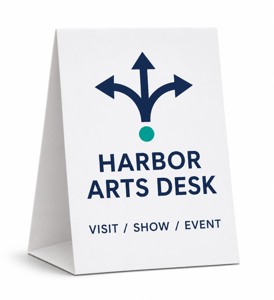
Keep an existing confirmation, website or digital display if it already gives the correct next step. Where an authorized indoor reception desk still needs a stable prompt, paper table tents for a cultural venue reception desk are one option. The linked SKU lists a 5 × 7-inch format and 14pt card stock; its current minimum is 25.
The fictional Visit / Show / Event artwork starts a conversation. It is not a ticket, booking confirmation or permission to enter. Confirm the folded footprint, wording and placement before ordering. Compare custom marketing materials and give DecentCustom the approved artwork only after identifying a real information need.