A new logo does not mean a venue needs new supplies. Start with the equipment, staff identification and visitor information already in use, then describe the specific problem a proposed purchase would solve.

First ask what the current uniform is meant to identify
Review the existing system before replacing an item. A shirt can be part of an institution's established staff identification, rather than simply a blank surface for new artwork. Identify who controls that system and whether the proposed change is permitted.
Pacific Science Center's visitor FAQ tells guests seeking on-site assistance to approach staff in blue PacSci shirts and badges, or use the Information Desk. An unfamiliar replacement shirt would not automatically preserve that published way of finding help.
The Klondike Gold Rush Seattle volunteer page, last updated January 22, 2025, describes training and a volunteer uniform being provided. This is an example of an institution supplying its own identification, not confirmation that the listed openings are available today.
Before proposing new apparel, check the actual role, existing allocation, condition and authorized design. A missing shirt for an approved role is a different problem from a request for a new look. Ordinary branded apparel does not create institutional authority or replace required training.
A reusable-cup arrangement is more than a cup design
Seattle Theatre Group's FAQ describes its r.Cup arrangement and asks patrons to return those cups to designated bins. It also says older venue-branded plastic cups with lids remain welcome for purchasing drinks at its bars and using them inside the performance spaces.
That is a reason to check an existing service arrangement before recommending a new cup. It is not evidence that every theater uses the same system, that any outside cup is accepted, or that a disposable paper alternative is suitable.
Ask the venue's responsible team what is already supplied and how it is meant to be returned or reused. Keep approved visitor instructions with that system. A cup-count shortage, unclear return information and a proposed branding refresh require different answers; buying a different cup does not resolve all three.
A missing answer may need an update rather than a new item
Review the visitor's actual task against the current ticket confirmation, website, map or information desk. PacSci's FAQ, for example, directs guests to its North Entrance while the Denny Way entrance is closed. A printed map should not be treated as current merely because copies remain on a shelf.
For a mixed cultural venue, identify the applicable visit, show-ticket and private-rental routes before deciding which message needs updating. A rental host's arrival note and an ordinary visitor map may have different owners.
Preserve ticket codes, original identification and specialist instructions. A general office label is not a replacement for an admissions credential, collection label or safety notice. Check who owns the information and obtain the actual approved correction.
A filled review note can separate “keep,” “check” and “add”
This invented arts-center example demonstrates the decision. It does not describe the operators cited above.
KEEP — Staff identification. The existing authorized shirts are available for the planned reception role. No replacement order is proposed. Any future change goes to the person responsible for that uniform.
CHECK — Visitor directions. A stack of older maps exists, but the coordinator has not verified the entrance information against the current venue notice. The map is not ready for redistribution. Obtain the approved current answer before deciding whether to update the digital page or print anything.
ADD — Review notes, if needed. Existing digital notes can hold the responsible contact, source and unresolved question. A separate paper log is optional if the team genuinely needs one; it does not make the unverified map correct.
The result is not an automatic three-product shopping list. It records one retained arrangement, one unresolved information check and one optional recording method. Do not call the review complete while the entrance answer is still pending.
For an actual purchase request, name the remaining gap precisely: which authorized item is unavailable, for which task, and who approved the specification? If those answers are unknown, record them as unknown. A large audience or a new campaign logo does not supply the missing evidence.
A notebook can hold the review without replacing its source records
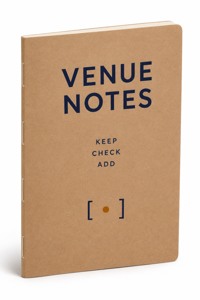
Use an existing document if it already serves the team. For matching paper logs, kraft-cover notebooks for venue supply review notes currently list 80 blank sheets in an A5 format. The linked SKU's minimum is 12; its 500-piece case pack is separate, and a pen is not included.
Compare custom padfolios and notebooks and discuss approved artwork with DecentCustom. The fictional Keep, Check, Add cover is a recording prompt, not a completed inspection, permission to alter venue systems or proof of savings.