For an April autism-related community event, give guests concrete information before they decide to attend. A broad event label cannot tell someone the schedule, what arrival will involve or which arrangements are confirmed. Start with those facts and a clear route for questions.
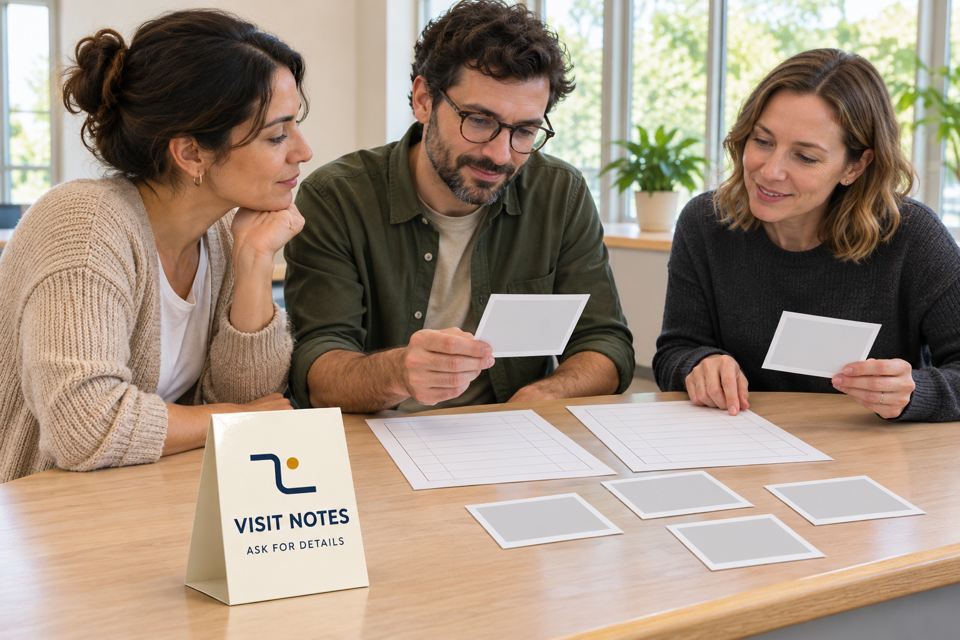
What should guests know before arriving?
The Autistic Self Advocacy Network's accessible event planning guide recommends advance schedules, information about quiet spaces and a named event contact. Its cognitive-accessibility section focuses on helping people know what to expect.
Turn that principle into an actual host review. Check whether your current information answers these questions:
- What will happen, and when are the main activities and breaks?
- Where should guests arrive, and what will they encounter at check-in?
- Which participation arrangements are confirmed, and which are still pending?
- Who can answer an access question before the event?
ASERT's event-planning resource suggests using venue photographs and written descriptions to explain a visit. Use accurate images of the actual location with the host's permission. An AI room image can illustrate a blog discussion; it cannot show a guest the real entrance, bathroom or route through the venue.
Is advertising a quiet area enough?
ASERT discusses a designated place to take a break, with seating, limited clutter and information that helps guests find it. Before advertising your own quiet area, confirm what space the host has actually arranged.
Record its location, availability during the event, expected conditions and how a guest can ask for help finding it. If the proposed room is not reserved, say the arrangement is pending in your working notes. Do not publish it as available just because it appears in a draft map.
The ASAN guide also discusses conflicting access needs. A change that helps one person may not meet another person's needs. Describe actual options and invite questions instead of presenting one room, lighting choice or giveaway item as a guarantee that everyone will be comfortable.
How should people ask about their own needs?
ASERT emphasizes asking attendees and identifying who can help, because needs differ. Put the host's approved contact route in the advance information, and make sure someone is responsible for answering it.
Keep a request separate from a confirmed arrangement. For example, “you can ask about a quieter space” and “a quieter space is available throughout the program” make different promises. The second needs actual host confirmation.
When an arrangement changes, update the information guests use. A printed desk notice can point to a current host resource, but it reaches people after arrival. It cannot replace the advance information someone needed when deciding whether or how to attend.
A promised room removed until it is confirmed
Fictional example: Visit Notes drafts an invitation promising a quiet room for an April event. The coordinator discovers that the room appears on a planning sketch but has not been reserved.
The group withdraws that promise. It approves its existing digital event information with the confirmed agenda, actual arrival details and a host contact for access questions. The quiet-room field remains pending in the internal plan until the host can verify it.
The extra print purchase is removed, and no new order is placed. The completed fictional decision improves the accuracy of the information. It does not claim that a room was approved, an access request was fulfilled or attendees experienced a measured benefit.
Use a desk notice to support current host information
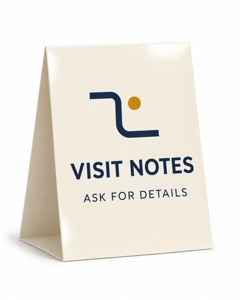
An ordinary information pointer
If guests need an additional dry indoor desk notice, table tents pointing to confirmed host information list a 5 × 7 inch size, 14pt stock and a default glossy finish. The current quantity control starts at 25.
Compare custom table tents with an existing accurate notice and review approved wording with DecentCustom. This paper concept does not certify accessibility, supply Braille or verify any venue arrangement.
Reviewed November 21, 2026 using the ASAN guide's advance-information and differing-needs sections and ASERT's planning resource. The guide is an established planning resource, not a current legal-compliance assessment. No real venue was audited. Visit Notes and its decision are fictional.