More inquiries help only when the studio can support the next step. Decide whether the current need is a new-booking explanation or clearer support for people already using the space.
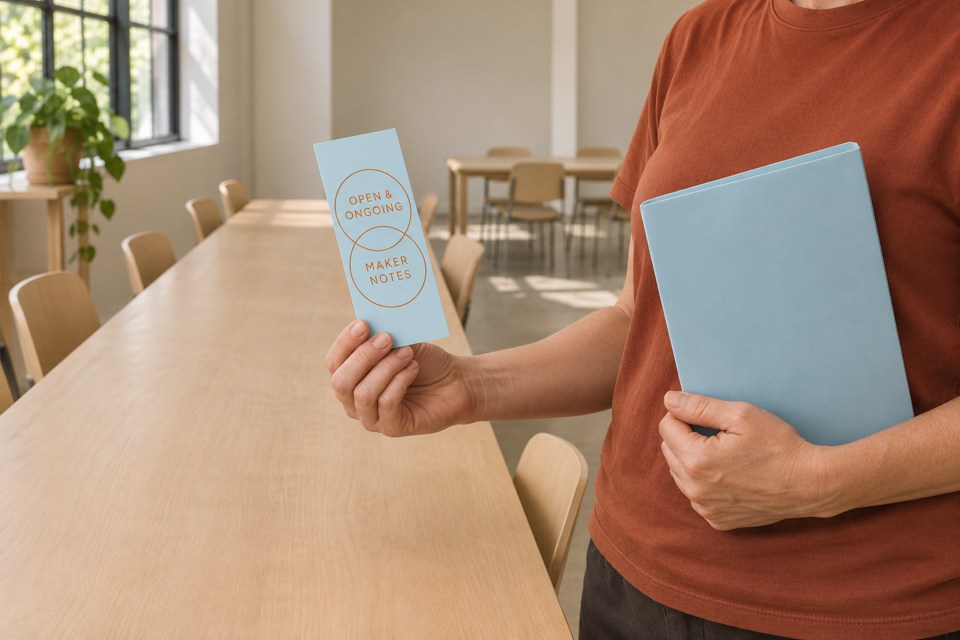
Name the problem before choosing the message
A studio asking for “more promotion” may mean several things. Suitable people may not know where to inquire. Existing members may not know how to request support. Or staff may already be handling more interest than the available sessions can support. Those situations call for different decisions.
| Current question | Evidence to check | Possible next action |
|---|---|---|
| Do suitable newcomers understand the offer? | Actual questions and the current service description | Clarify who the offer serves and the inquiry route |
| Can another session actually be supported? | Confirmed room use, appropriate staff and the operator’s booking conditions | Hold the invitation until the proposed arrangement is checked |
| Are current makers missing help? | Unresolved support requests and the existing member instructions | Clarify the support route and who follows up |
The table is an editorial planning tool. It does not identify the bottleneck in your own studio. Read the existing records and ask the people responsible before selecting a new campaign or a print quantity.
Check what happens after someone responds
Pottery Northwest’s membership description gives one concrete constraint: independent members use an area when it is not occupied by a scheduled class. A statement about studio access should therefore be read alongside the actual class arrangement, rather than used as proof that another group can be added.
Seattle REconomy’s woodshop page provides another example. Open Hours are posted as Stewards become available. A request for a custom time becomes a confirmed arrangement only if a Steward is available and replies with a confirmed time. It also directs people needing extensive hands-on help to a support-matching request.
These named operators illustrate different services, not one national capacity rule. The shared planning question is whether the next step has an owner and a supported arrangement. A submitted form, a friendly conversation or an empty-looking room does not establish that by itself.
For an internal review, keep the proposed audience, requested activity, current room allocation, required support, unresolved point and responsible decision-maker together. Use the operator’s own systems. Avoid publishing a new opening or extra session until the person responsible has actually confirmed it.
Growth and stable service are different goals
A public makerspace discussion includes a founder seeking advice and a commenter describing a settled operation while weighing whether expansion would require more work. These are anonymous, self-selected accounts with unverified roles and circumstances. They are useful questions to investigate, not evidence of typical US studio demand or a proven business model.
Ask what the studio is trying to improve in the current period. A new inquiry route may fit an approved introductory offering. A clearer support message may fit an existing membership program. Keeping a workable arrangement stable can also be a deliberate choice. Do not treat every quiet period as proof that branded giveaways or more bookings are needed.
Evaluate the chosen communication against its specific task. An inquiry is not a confirmed booking. A booking count does not show whether existing makers received the support they needed. Keep unknown results unknown rather than describing either message as a demonstrated improvement.
Hold an invitation until the session is supported
Fictional planning example: Open & Ongoing wants to invite newcomers to an extra introductory session. A helper sees interest messages and proposes printing a “new session available” handout. The suggested room period already overlaps the studio’s planned independent-maker use, and the teaching arrangement has not been confirmed.
The coordinator holds the invitation and checks the existing calendar with the people responsible. In this invented plan, the proposed extra session is not approved. Reception replies to inquiries through the existing route without offering a confirmed place or implying that another session has opened.
The review also finds that current makers have been sending support questions to the general booking inbox. The coordinator confirms the existing member-support route and adds a clear explanation to the member instructions. Staff record who will follow up on the unresolved questions. This corrects the communication plan; it does not create teaching capacity or report an actual retention result.
The team keeps the current calendar and digital instructions. It postpones the proposed print order while the wording and distribution need remain unsettled. If a later session is approved, its actual confirmation can supply the details. Interest alone is not the print brief.
Print only a stable information route with a real use
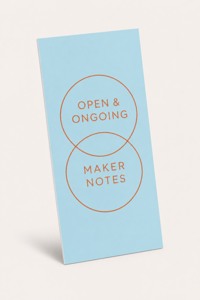
Ordinary paper for general maker information
These custom rack cards for a maintained maker-information route list a 3.74 × 8.27 inch format, default 14pt glossy stock and a current minimum quantity of 50. A holder is separate. The AI artwork is not a booking confirmation or an access pass.
Compare custom rack cards only after checking the audience and actual distribution need. Review approved wording with DecentCustom. A paper route cannot supply staff time, confirm room availability or replace a member’s current instructions.
Provider pages, the bounded public discussion and SKU reviewed November 15, 2026. Open & Ongoing and the worked plan are fictional. No actual bookings, staffing decision, capacity increase, revenue, retention or marketing outcome was verified.