A volunteer can welcome a personal thank-you and still decline a public name or photograph. Ask about the actual message, audience and format before turning appreciation into a post or printed display.

Should volunteer recognition be public or private?
Start with the person’s preference rather than a standard public announcement. Someone may appreciate a private email, prefer a short spoken thank-you or welcome a name in an internal bulletin. Those are different choices. Agreeing to volunteer or attending an appreciation gathering does not tell the coordinator which recognition format the person wants.
In Energize’s guidance on recognizing volunteers, Jeanne H. Bradner describes recognition as individual, appropriate to the contribution and possible through public or private channels. Her practitioner perspective also gives everyday feedback a place alongside organized celebrations.
Points of Light’s May 2021 article describes several formats, including personal electronic thanks, stories, awards and group events. These are options to consider. The article’s age matters: it is not evidence that a particular award program, event arrangement or volunteer’s preference is current.
Before preparing a recognition item, separate these questions:
- Private thanks: which existing, agreed contact route should the sender use?
- Internal naming: may a particular name and contribution appear in the specified staff or volunteer channel?
- Public naming: may that wording appear on the organization’s public website, social account or display?
- Photographs and stories: which actual image, caption or personal detail is proposed, and where would it appear?
A yes to one item should not silently fill the others. An internal bulletin can still have a different audience from a private message; a name-only acknowledgment does not answer a photograph question.
What should the coordinator ask before preparing the message?
Describe the real choice, including the audience. “Can we thank you?” is too broad when the intended use is a named social post with a photograph. Show the proposed words and image when asking about a specific publication.
“We would like to thank you for preparing the current welcome materials. Would you prefer a private email, a short private conversation, or the name-only acknowledgment shown below in our volunteer bulletin? A public website post and photographs are separate choices. You can decline those and still receive our thanks. Please tell me if you would prefer another approach.”
This is an original editorial example, not a legal permission form or a substitute for the organization’s own process. Avoid asking for a personal explanation of why someone declines publicity. Keep the appreciation separate from a request to work another shift.
Verify the contribution too. Our examples of specific volunteer thank-you notes show how to correct a role copied from an outdated roster. Accurate work and a suitable delivery channel need separate checks.
A finished plan can use different kinds of thanks for different people
Fictional worked example: Quiet Thanks is an invented community organization. Its coordinator has confirmed that a small preparation team sorted the current welcome materials before opening. An unsent draft names Jordan and Lee in a public post and includes a group photograph. The coordinator checks preferences before scheduling it.
Jordan chooses a private email through the route already used for coordination and declines public naming and photographs. Lee approves the exact name-only line for the organization’s internal volunteer bulletin and declines an external post or photograph. A third person has not replied to the proposed individual publicity request.
The coordinator withdraws the unsent named photo draft. Jordan’s private message is ready for the agreed route. Lee checks this separate internal line:
“Thank you, Lee, for sorting the current welcome materials before opening. We appreciate the care you gave to those preparations.”
The editor prepares this public team version instead, after checking the wording and intended use through the organization’s process:
“Thank you to the preparation team for sorting the current welcome materials before opening. We appreciate the time and care given to that work.”
The public version contains no individual names, photograph or personal story. The coordinator leaves the unanswered individual publicity request unresolved. The revised messages and their audiences are now clear; no new printed batch is ordered. This completes an editorial example, not a report that a real message was sent or that anyone’s future participation improved.
What if someone does not reply or changes their mind?
A missing reply leaves the proposed individual public use unconfirmed. Follow up through an appropriate existing route when necessary, or proceed with a suitable general thank-you after the organization’s review. Do not label silence as a preference for publicity just to finish a schedule.
If a person changes a preference before release, pause the affected item and revise the actual draft. Check the scheduled post, bulletin file and printer proof separately: correcting a working note does not necessarily correct each prepared copy. Give the responsible editor or production contact the current approved version.
If something has already appeared, establish where it was used and follow the organization’s correction process with the person and responsible owner. Do not promise that changing one page removes every previously distributed or shared copy. This guide organizes the communication decision; it does not determine legal requirements or provide a data-protection system.
A coordinator’s notebook is optional
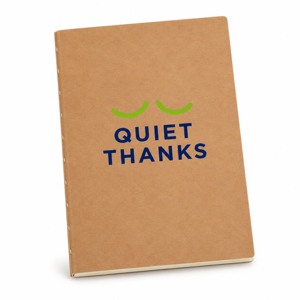
An existing working record may be enough. For ordinary planning notes, these kraft notebooks for a coordinator’s working notes list a stitched A5 format, blank pages and 80 sheets. The stated size is 8.26 inches high by 5.83 inches wide; the current minimum quantity is 12. A pen is not included.
Compare custom notebooks and padfolios, or discuss approved cover artwork with DecentCustom. The Quiet Thanks cover is an AI design concept. An ordinary notebook does not establish publication permission, protect confidential information or prove volunteer retention. Its minimum order does not establish a need for twelve copies.
Reviewed November 23, 2026. Recognition sources provide guidance and format options; the preference checks and completed scenario are original editorial examples. No current National Volunteer Week dates, legal compliance or measured recognition outcomes are asserted.