Before you send anything to print, put your booth and the organizer’s product showcase on separate lists. Decide who supplies each identifier, which samples stay put, and how a buyer will find you after the show.
Decide what goes in the showcase and what stays at the booth
You can have two samples that look identical and need to handle them differently. One goes into a display managed by the show. The other is at your booth, where a buyer can compare sizes or ask to handle it. Start by labeling those destinations on your work list. A single line that says “samples and signage” leaves too much for someone to interpret on setup day.
The 2027 Global Pet Expo showcase rules illustrate why the distinction matters. The organizer describes a standard two-foot-square display space for an entry. It provides a tent card and a receipt at setup, and requires the receipt to retrieve the item. Those are arrangements for that showcase. Use the current manual for your own space and ask the organizer whether extra materials can be displayed.
A four-line work list to copy
- Showcase sample. Record the exact variant, its destination, who will place it, and the document they will need to collect it.
- Booth sample. Record the variants buyers can actually handle. Give them clear, consistent names so staff can explain differences without guessing.
- Information the organizer provides. List the supplied card, map or directory you will use and what you must submit for it to be accurate.
- Information you own. Name the person who checks the booth number, the buyer contact and the public product information. Decide which line is stable enough to print.
The show’s 2027 exhibitor directory instructions say that listings are digital and tell companies where to update their booth and product information. Check that listing before ordering a floor map or printing directions. A booth identifier on a card can help someone find you during the show, but the live directory is where you can correct a change.
A worked example with two bandana colors
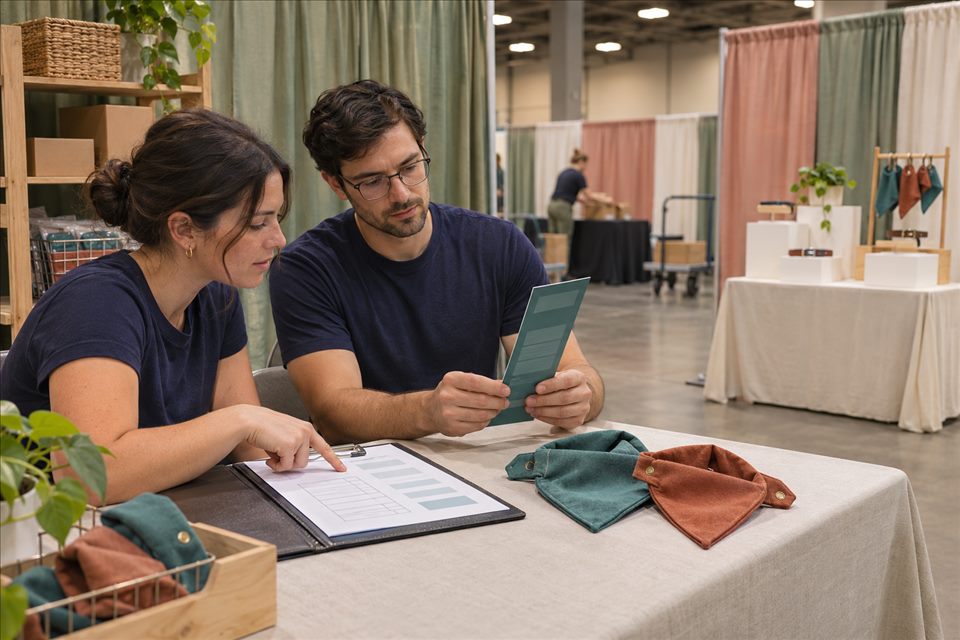
Imagine a two-person pet accessories brand. The green bandana goes into the organizer’s showcase. A second green one and a rust sample stay on the booth table for comparison. The original print brief asks for one stack of cards that says “See both colors in the showcase.” That line sends a buyer looking for something that will only be available at the booth.
What the team puts in the revised brief
Organizer display. Green sample only. Use the supplied entry card. Maya places the sample and stores the receipt with her show documents. At closing, she takes the receipt to the showcase and confirms the sample is back before the team seals its booth carton.
Booth table. Green and rust reference samples. Check that the sample names, current line sheet and the names staff use all match.
Optional take-home wording. “Ask our wholesale team for the current bandana line sheet.” Put the approved company URL on the proof. The contact route can stay useful even if the booth number moves or the available colors change.
That example is fictional. It shows who owns each action and why a simple change to the card prevents the wrong promise. It does not establish an event’s actual handling rules or a brand’s right to give samples away.
Before printing, follow the same path as a buyer
On a phone, find your listing using the name an attendee will search for. Read the booth number aloud and compare it with the display plan. Then hand the proposed card to a colleague who has not seen the brief. Ask them to find the current line sheet or reach the wholesale team without your help. If a code is part of the design, test the actual-size proof and give the reader a short written address as another route.
Check the last step off the show floor too. Make sure the handout still leads somewhere after the event and that someone handles sample requests. If those details are in flux, one maintained link may be more useful than a larger batch of dated print.
Questions people ask when they are new to trade shows
We already have a one-pager. What else should we bring?
A first-time US exhibitor in this trade show discussion asks what they are missing after preparing one-pagers and looking at booth options. The comments offer several ideas, including giveaways. For a pet expo, compare the one-pager against the four-line list above. A reliable sample identifier or a clear buyer contact may fill a real gap. Another handout that repeats the one-pager probably won’t.
Should I print a full exhibit kit if I’m still testing wholesale?
In a discussion about starting to sell dog treats wholesale, a commenter suggests seeing a pet-industry show before committing to a booth. If you are in that position, first check the organizer’s attendee categories and eligibility. If you are visiting to learn, there is little reason to print booth-specific signage or produce a batch of giveaways. The discussions are examples of questions people raise. The organizer sets the rules for participation.
When a rack card earns its space
Use a take-home card when it gives an interested buyer a stable route they can use later. If the product assortment and pricing may change, keep them on a maintained line sheet. If a phone link and existing business card work, use those.
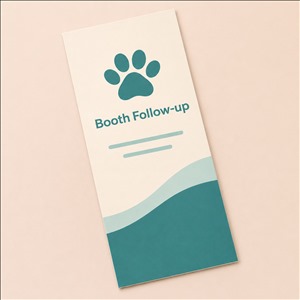
A slim card for booth follow-up
These custom rack cards list a 3.74 × 8.27-inch format, 14pt stock as the default and a current minimum of 50. The standard glossy option has a glossy front and an uncoated back. A holder is separate. Check actual-size readability and the configured finish before ordering. The image is an AI artwork concept.
Pet expo print and sample questions
Should I make my own card for the organizer’s showcase?
Check what the organizer supplies and what it permits beside an entry. Keep your optional buyer handout at your booth unless the event approves it for the shared display.
Can I send a buyer away with the display sample?
Separate the registered display piece from stock you are authorized to distribute. Check the event and your team’s sample policy before offering a takeaway. Let the buyer know who can confirm availability.
What if the booth number changes after printing?
Correct your listing and tell the team which old cards to pull. A stable wholesale contact can work for future copies, with show-specific directions shared separately.
Find the right materials
See pet expo supplies by booth task, or compare printed marketing materials for a buyer handout. For freight paperwork and outbound collection, use the guide to trade show shipping and move-out.
Reviewed November 28, 2026. Check the current organizer instructions for your event, space and products.