Academic poster sessions • Reviewed November 29, 2026
Check when you can hang your poster, when you need to be at your board, and when it has to come down. Then practice a short explanation that leaves room for the visitor’s question.
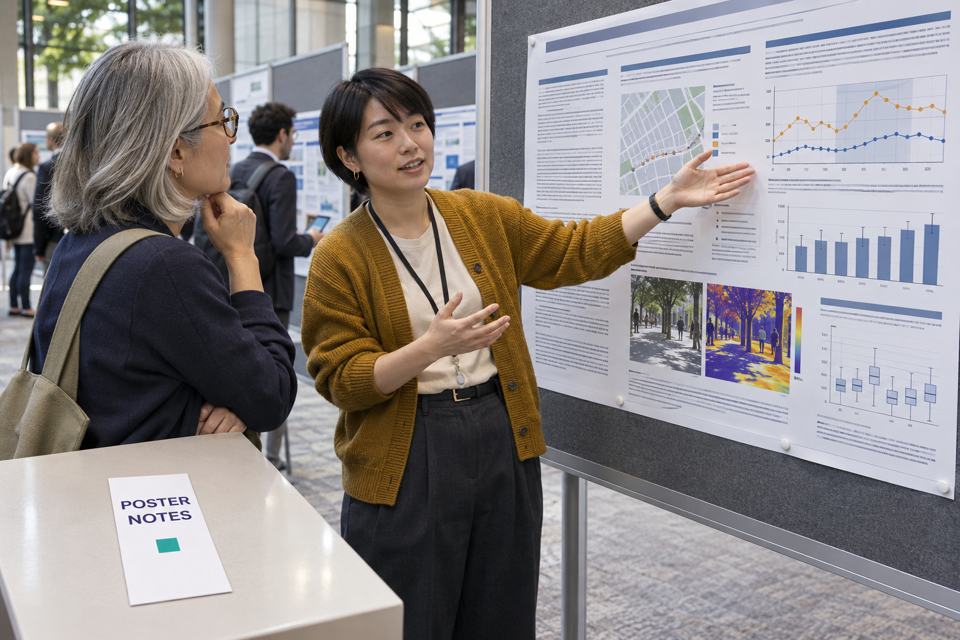
Illustrated conference scene. The charts and Poster Notes artwork are fictional.
Do you have to stand by an academic poster all day?
Use your assigned attendance time. Some meetings give you a longer window to display the poster than the time you’re expected to be there. Also check when setup opens and when the board must be cleared.
The EGU26 poster guidelines listed display and attendance windows separately and assigned board locations through the program. AGU25 guidance for session chairs described its own setup period, posted presenter availability and an onsite assistance desk. Read the presenter instructions for your own meeting and look again at the live program if anything changes.
A fictional note to keep on your phone
Hall B, board P-14. Setup opens at 9:00 a.m. Be beside the poster from 10:00 to 11:00 a.m. Leave it displayed until noon and take it down by 12:15 p.m. Check the program at breakfast before heading to the hall.
Use the venue’s local time zone. If you need to leave in the middle of an assigned slot or a coauthor is covering, ask the session chair how the change should be handled.
What should a first-time presenter bring?
Check the board’s usable width and height, orientation and mounting method before ordering a print. Verify your pickup window if you’re printing near the venue. Save the final PDF offline, then follow the organizer’s digital upload instructions separately if the event requests a file.
A presenter in a first-conference packing discussion asks where a backpack goes while they present. If you’re bringing a bag or a poster tube, ask whether there’s storage or a designated place by the board. Keep the aisle clear and keep your badge, schedule and backup file easy to reach. Bring the mounting materials the event permits, or check what the host provides.
What can you say when somebody stops to look?
In a discussion started by a first-time poster presenter, one commenter recommends preparing a short version and expanding if the visitor asks. Start with the question you worked on, point to one figure, then pause. You can adjust how much detail to give once you hear what they want to know.
For a fictional project about pedestrian shade, you might say, “We wanted to know where a person could find shade along this route at lunchtime. This map shows the segments we observed. Our visits covered three afternoons, so it’s a snapshot of those conditions. Would you like to see how we recorded each segment?”
That opening gives the visitor something to ask about without making the result sound broader than it is. If someone asks about a morning you didn’t study, say what you measured and what evidence would be needed to answer their question.
Share a way to find the approved material afterward
Check the conference’s sharing and photography rules and any approval your team needs. If you can share a public abstract or a team-approved summary, offer a readable web address. Test it with a visitor’s view so you know whether the page requires a login. If the full poster can’t be shared, the approved abstract may be enough.
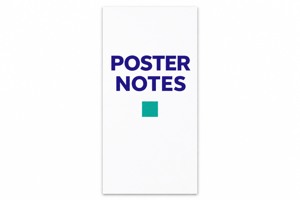
A narrow card with a title and one link
These custom rack cards for a poster follow-up list a 3.74 × 8.27-inch format, full-color printing and standard 14-point or premium 16-point stock. Use the format for a stable title and approved public link. A printed note beside the poster can give visitors the same information. The image shows a fictional card design.
Is my poster board number the same as my abstract number?
Use the mapping in the current program and any instructions from the chair. The two identifiers may be different.
Can I skip the upload if I’ve already printed the poster?
Check the event’s file instructions. A printed copy and an online submission can have separate requirements and deadlines.
What if I can’t answer a question during the session?
Say what you measured and what is still uncertain. If you can share a public reference, point to it. Ask before arranging a later conversation.
The board assignment, research example and images are fictional. The linked meetings illustrate their own practices. Follow your organizer’s current presenter instructions.