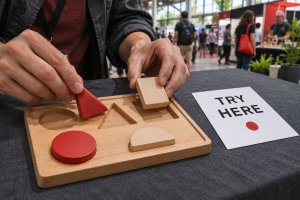
Before you close the booth, give every promised sample an owner, a product code, and a date for the next update. Keep an incomplete request in a separate queue. The person packing the sample should be able to tell which box to pull and what still needs confirmation.
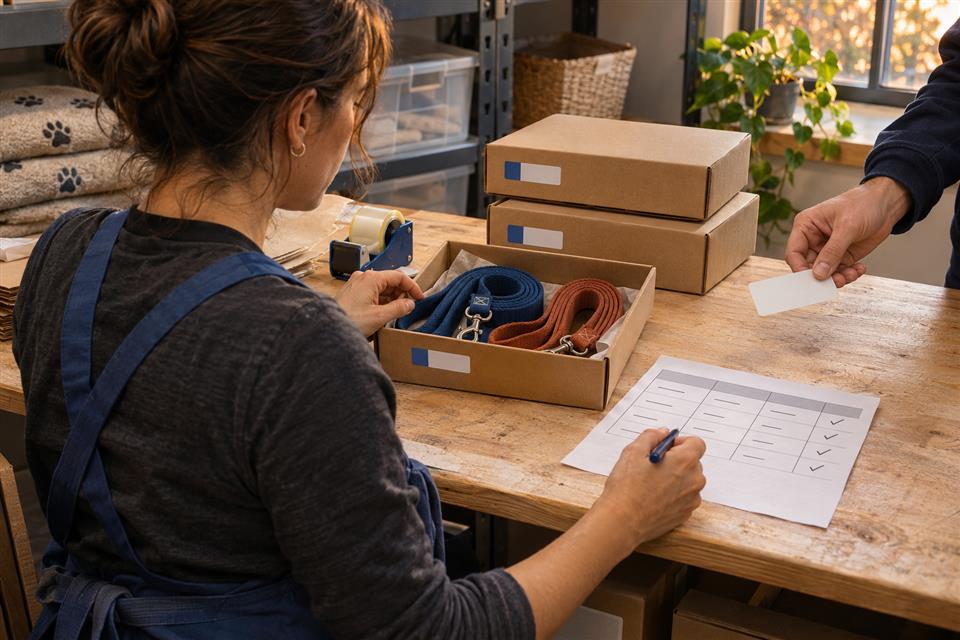
Make the next step clear before the buyer leaves
A badge scan may help you find the record later. To fulfill a sample request, you also need to know what the buyer asked for and when you said you would respond. At the booth, read those two details back. Confirm the channel the buyer wants you to use for that request, and keep private contact details in your team's approved system.
A short record to copy
- Request ID: Use a code your booth and packing teams can both find, such as PX-014.
- What they requested: Write the product ID and variant, plus whether you handed it over, promised to send it, or offered to confirm availability.
- Who owns it: Name the person responsible for the next action and the person who covers if they're unavailable.
- When to update: Use the date you agreed with the buyer. Keep a promised update separate from an unconfirmed ship date.
The Global Pet Expo lead-management guide calls out the value of capturing the next action, assigning someone to monitor records, and routing them to the right people. Your team can do that with an existing shared log when volumes are manageable.
Reconcile requests before the next shift takes over
Start with the promises that create work for another person. Pull any display sample out of the list of items available to send. If a buyer wants to compare case quantities afterward, direct them to the current wholesale line sheet once they have the right variant.
A fictional seven-request handoff
- PX-014 through PX-016: Three samples handed over at the booth. Mark them handed over and record any separate follow-up explicitly agreed with the buyer.
- PX-017 and PX-018: Two samples promised and confirmed. Assign both to the packing lead, record the exact product variants, and check the requested destinations before packing.
- PX-019 and PX-020: Two requests waiting for confirmation. One buyer wants a size the team has yet to verify. The other asked for a sample but did not confirm where to send it. Give each a named owner and update date.
The seven requests split into three handed over, two confirmed to send, and two waiting. The packing team prepares two packages. If the buyer confirms the address on PX-020 later, move that request to confirmed and record the change. Keep the original request ID.
When notes are incomplete, leave the missing field visible. “Size unconfirmed” tells the next person what to ask. Substituting the display size can waste a shipment or make a buyer evaluate a variant they never requested.
Send the update you agreed to
For a delayed sample, give the buyer the exact request and a date for the next decision. If availability remains uncertain, offer a choice only when you have a substitute confirmed.
Thanks for looking at the medium rust sample at the show. I’m checking whether we can send that size. I’ll update you by Tuesday. Our request reference is PX-019.
Once it ships, record the date and the appropriate shipment reference in your system. If the buyer asks you to close the request, record the outcome. A sample delivered, a quote requested, and an order accepted belong in different fields.
What if the badge record is incomplete?
One exhibitor in a discussion about post-show follow-up described scanned contact details that did not reliably reach the person they had spoken to. Another trade show discussion raised problems moving notes and owner fields into the team's system. Before the show, submit a test record through your approved workflow and confirm that the request ID, item, and owner all survive the export. At the booth, ask the visitor to confirm where you should send the specific information or sample they requested.
Put one stable identifier on the sample package
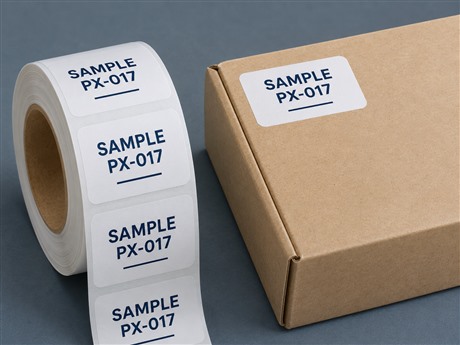
If several sleeves or boxes look alike, attach an internal request code to each package so the packing team can match it to the variant in the log. For a recurring workflow, compare custom packaging label options and test a proof on the actual outer packaging. A handwritten tag works for a short run. Keep the request code, buyer details, and shipping label in their proper places, and leave existing product information visible.
Pet expo sample follow-up questions
Does a badge scan count as a sample request?
Record a request when the visitor asks for one and your team agrees on what happens next. A separate contact list can capture the scan itself.
Can I send the closest available version?
Tell the buyer which variant is available and confirm they want it. Update the existing request so packing and sales see the same details.
When should a request be closed?
Close it when the sample has been handed over, the agreed delivery is complete, or the buyer cancels. Keep an open follow-up task if either side still owes an action.