An exclusives order is not a count of saleable items. Check what arrived, keep damaged or unresolved stock separate, and explain the actual purchase rules before a customer plans around an item.

Match the received item before counting it for sale
For each item, compare the actual order, receiving information and physical product. Check the edition or identifying details that make it the advertised exclusive. A regular edition of the same title is not automatically the item a collector requested.
Record the quantity physically received. Inspect condition under your store’s receiving process, separating damaged, wrong or unresolved units from the stock you offer. A carton arriving does not establish that its contents are complete or saleable. Record the discrepancy and the person handling it through the existing supplier route.
For the separate question of location and order status, see website stock, store stock and pickup readiness. That guide explains why stock at another location and an order acknowledgment do not establish collection today. Here, the task is reconciling the actual received units you can offer.
A worked count: 20 ordered does not mean 20 available
Shelf & Story is a fictional independent bookstore. Every quantity below is invented to demonstrate the count, not to predict a real allocation or describe a real exclusive edition.
Ordered: 20 units of one example item.
Physically received: 16. Four ordered units have not been received; their cause and future delivery are unresolved.
Within those 16: one damaged unit is isolated and not offered for sale. The checked saleable quantity is 16 − 1 = 15.
Later: 10 of the 15 saleable units have been sold, with no other stock movements in this example. The remaining saleable quantity is 15 − 10 = 5.
The damaged unit is already included in the received count. Adding it again would create an extra unit on paper. Equally, adding the four unreceived units to the available balance would promise stock that the shop cannot hand over.
Keep each change in the existing stock system or one agreed record. If an additional unit is found damaged, transferred or otherwise removed from sale, reconcile that movement before quoting availability again. Two employees selling against separate handwritten starting counts can produce conflicting answers even when both initially counted correctly.
Use the same item identifier throughout. Do not combine editions or a separately offered giveaway in one balance. A count of five is useful only when staff know five of what, at which location, in what condition and at what check time.
Supplier limits and customer limits answer different questions
The ABA’s public 2027 catalog page says exclusives ordering is closed and describes an order threshold associated with shipping and freebies. That is not a customer’s reservation or evidence that a specific store received a particular item. Check your actual order terms for the item concerned.
A separate retail example shows why the wording matters: Aesop’s Fable’s 2026 tote listing displays a one-per-customer limit and a sold-out status. This describes that retailer’s historical product offer, not a national rule for every item in 2027. Do not copy its limit, price or inventory into your own notice.
For your shop, establish the applicable rules before staff announce them. Is a limit per customer, per item or per transaction? Does it apply to the specific edition? Which sales channels and release arrangements are actually allowed? If the terms are unclear, resolve the question with the responsible person before offering a workaround.
Separately, check official participation and local event promises. A registration, a supplier allocation and a retail purchase are different steps. A queue position or a conversation with a bookseller should not be presented as a reservation unless the actual arrangement creates one.
Give an answer the customer can act on
In the fictional example, the shop confirms a one-per-customer rule for this particular item after checking its applicable terms. At the moment five saleable copies remain, a useful reply is:
“We have five checked saleable copies of this example edition remaining at this shop as of this stock check. Our rule for this item is one per customer. This message does not reserve a copy; availability can change as purchases are completed.”
A real response should identify the actual item and shop, the check time and the permitted buying route. Do not use a precise count if nobody has checked it. If sales are occurring quickly and the count is uncertain, say you need to verify availability rather than repeating a stale figure.
Once the remaining five units have sold in the example, the balance is zero. Replace the availability message with a clear sold-out answer:
“That example exclusive edition is sold out at our shop. We do not have a confirmed restock date. A regular edition may be a different option if you would like us to check it, but it is not the exclusive edition you asked for.”
Do not leave the old offer at the counter while changing only the online listing. An alternative needs the customer’s choice; its similar cover or title does not make it an accepted substitute. Avoid promising a supplier replacement before that outcome is confirmed.
Leave a usable handoff for the next shift
At handoff, reconcile the remaining saleable count against actual movements. Keep unresolved deliveries and isolated items visible in the internal record with an owner and next action. They should not quietly reappear in the saleable balance.
After the event, record what remains and follow the actual supplier and store rules. Do not assume unsold exclusives can be returned or moved to another channel. The point of the final count is an accurate next decision, not a claim that a particular sale-through rate or promotion succeeded.
A label can identify a folder; the stock record carries the balance
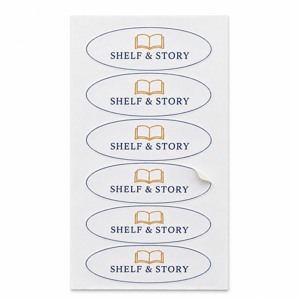
Reuse existing stock records and plain bin labels first. Where an approved dry folder needs a stable shop identity, these paper product labels for approved dry folders offer paper among several material choices and customizable shapes and sizes. The illustrated oval white-paper version is an AI concept; the number shown is not a promised sheet yield.
Keep changing quantities in the stock record. Do not put an untested adhesive on book jackets, collectible editions or original identification. Compare custom labels and stickers, then confirm the selected paper, surface, size and order quantity with DecentCustom if there is a real labeling need. A printed logo does not verify authenticity, condition or available stock.