AAPI Heritage Month planning • Reviewed November 26, 2026
Planning an AAPI Heritage Month activity starts with a precise description of the people and histories involved. Use the broad observance name for context, then give each selected story, contributor and resource its own accurate name.
What does the May observance recognize?
The heritage portal hosted by the Library of Congress identifies May as Asian/Pacific American Heritage Month. Its explanation covers the Asian continent and Pacific Island regions, rather than a single national tradition.
The portal connects May to Japanese immigration to the United States on May 7, 1843, and completion of the transcontinental railroad on May 10, 1869, noting the Chinese immigrants who formed most of the track-laying workforce. These historical references help explain the timing; they are not a complete account of every community included in the observance.
Begin a local program description with its actual scope. A reading discussion about one person's work, an exhibition about one location and a community-led performance need different descriptions. A precise subject gives visitors a useful reason to attend or read, without suggesting that one activity represents every history.
Should the program say AAPI or AANHPI?
The National Park Service's introduction to AAPI heritage explains that there is no single naming rule for everyone. It discusses AAPI, APA and AANHPI, notes individual preferences and describes its own practice of using specific ethnic group names where possible while respecting communities' naming choices.
AAPI commonly expands to Asian American and Pacific Islander. AANHPI explicitly includes Native Hawaiian in the name. Spell out the name you use on first reference, then keep the abbreviation consistent within the program. When quoting an institution's resource title, preserve its actual title instead of silently changing it to your preferred acronym.
For a contributor's short description, use the wording that person has provided or confirmed for this activity. Do not infer a speaker's identity from a surname, appearance or a generic stock photograph. If a name or description is still awaiting a reply, keep it marked as pending in the working draft.
Check the details people will actually see: the title, the speaker line, image caption, link label and print proof. A careful introduction can still be undermined by an unrelated cultural motif or a caption that assigns a person an identity they have not supplied.
Choose a concrete story and label its limits
One possible reading resource is the NPS article about Geraldine Kenui Bell, written by Ellie Kaplan. It describes Bell, also known as Geri, as the first Native Hawaiian woman to serve as superintendent of an NPS unit and discusses her work with parks and Native Hawaiian communities.
That article offers a particular person, work and place to discuss. Its publication history and named author are part of the resource record. It is a historical reading source, not an announcement that Bell will attend a local event or endorse the organizer's products.
A planning note can record the exact article title, author, source link, the specific subject being discussed and one question for readers. For this resource, the question might concern how park leadership and community relationships appear in the account. Keep the reading grounded in what the article says rather than asking one biography to explain all Native Hawaiian experiences.
Linking readers to a resource and reproducing its photographs are separate decisions. This example uses a link and original fictional artwork. It does not reproduce the historical portrait or claim permission to print it on merchandise. Review the applicable terms and any required permissions before reusing someone else's material.
Turn a broad celebration claim into a finished reading brief
Fictional worked example: Morgan starts with a draft called “One Asian Culture Celebration.” It includes an unrelated decorative pattern and a guest-speaker line, although nobody has accepted an invitation. Morgan replaces those assumptions with a smaller, sourced activity that the organizer can describe accurately.
Morgan's completed program brief
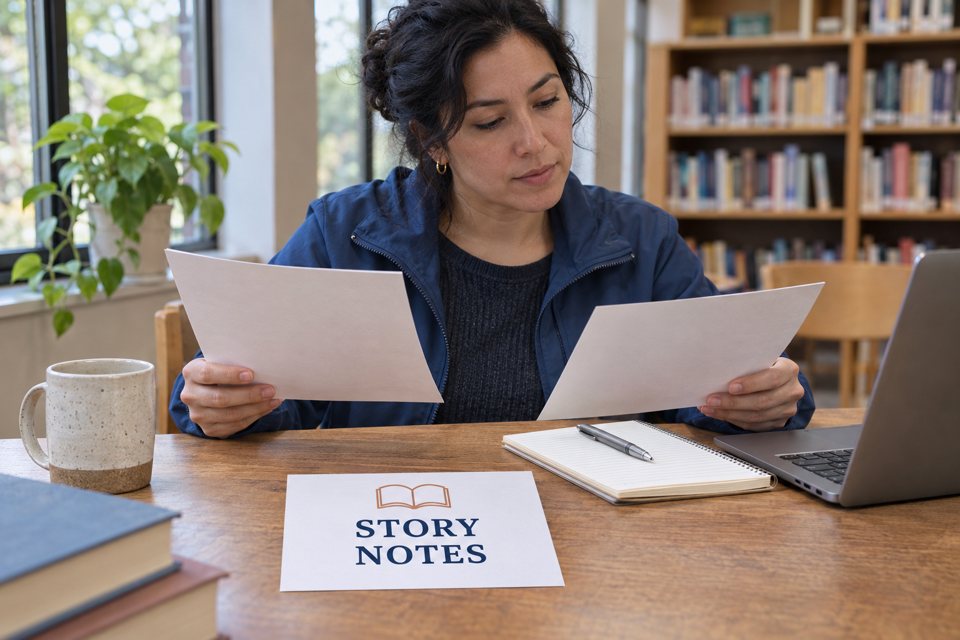
Working activity: a May reading discussion of the NPS article “Geraldine Kenui Bell.” Subject: one Native Hawaiian park leader's work, as described in Ellie Kaplan's article. Source: the linked NPS biography. Reader question: what relationships between park leadership and community work does the account describe? Guest status: no guest announced. Artwork: original Story Notes book motif, with no claim to represent a particular culture. Owner: the fictional program coordinator maintains the draft and resource link.
Morgan removes the one-culture title, unrelated pattern and unconfirmed speaker claim. The completed result is a scoped reading brief in an existing digital program note. No real person has been contacted, no event date has been confirmed and no printing is ordered in this exercise.
For a real program, confirm the host, time, access arrangements and contributor wording before announcing those details. Leave the limits of the selected activity visible. A useful, specific discussion can belong within the wider month without claiming to cover every community.
Choose a format after the program details are ready
An existing digital note or plain paper can carry the reading link. If a stable, approved program needs a print batch, compare custom postcards for a checked reading note. The listing offers flat cards in multiple sizes and orientations, with full-color printing on one or both sides and purchases in increments of 50.
That increment is not an attendance forecast. Compare custom thank-you card options with DecentCustom after checking existing supplies, the actual format and approved artwork. Story Notes is fictional printing artwork, with no institutional endorsement or cultural-authenticity claim.
Questions before sharing a heritage program
When is AAPI Heritage Month?
May in the United States. A local activity still needs its own confirmed arrangements.
Is there one required acronym for everyone?
NPS describes differing preferences. Spell out your chosen wording and use specific, confirmed community or contributor names where appropriate.
Does AANHPI explicitly name Native Hawaiians?
Yes. Preserve the actual wording of a source or contributor rather than treating every abbreviation as an interchangeable title.
Can one biography represent every community?
Describe it as one person's story with a defined source and scope. A focused reading can contribute to the month without claiming to summarize all experiences.
Sources reviewed November 26, 2026: the Library of Congress partner heritage portal and NPS terminology and Geraldine Kenui Bell articles. The NPS introduction was updated in 2024; the biography in 2022. Morgan and Story Notes are fictional.