World Bee Day planning • Reviewed November 25, 2026
You do not need to become a beekeeper to take part in World Bee Day. For a native-pollinator project, start with suitable flowers and nesting habitat, and check local planting guidance before choosing a giveaway or buying equipment.
Use World Bee Day to choose a useful action
The FAO World Bee Day page identifies May 20 as the annual observance and describes the importance of bees and other pollinators. Its page reviewed for this article displays 2026 material; that is not evidence of a confirmed 2027 theme or local event.
For a community notice, separate the occasion from the activity you can actually offer. A general awareness message does not confirm a garden workday, permission to plant on a site or a place on a beekeeping course. Name the responsible local host and use its current instructions when inviting people to participate.
Begin with the question your audience is trying to answer. Someone hoping to help wild bees needs a different starting point from a person who wants to learn honey production. An attractive bee image or merchandise slogan can leave that distinction unanswered. Put the practical purpose into words before choosing what to print.
Honey bees and native bees are different groups
The University of Minnesota Bee Lab’s public FAQ explains that honey bees are not native to North America and that most native bee species are solitary, with many nesting in ground tunnels or stems. A managed honey-bee hive is therefore not a home for every kind of local bee.
The FAQ directly asks whether becoming a beekeeper helps bees. Its answer distinguishes keeping honey bees from helping native and wild bees, and points readers toward flowers and nesting habitat. Starting a hive should not be presented as the automatic conservation step for someone whose actual goal is native-pollinator support.
This does not mean that every reason for keeping honey bees is invalid. It means the goal needs to be stated accurately. Beekeeping involves its own learning and management decisions. A community awareness handout should not turn a general wish to help pollinators into an equipment shopping list.
When preparing a short explanation, use the group you actually mean. “Our project will review local native-pollinator habitat guidance” is more precise than a promise to “save every bee.” Keep any claims about a particular site or species tied to evidence for that site or species.
Match the next step to the place
Bee Lab recommends plentiful, diverse flowers through the growing season and undisturbed nesting habitat for wild bees. Its guidance supports looking at the resources already present before assuming that a hive or purchased shelter is the missing item.
For a planting decision, use a local extension service, conservation district or similarly relevant regional resource. Minnesota’s Board of Water and Soil Resources planting toolbox emphasizes site conditions and regionally appropriate species, including when choosing seed mixes or packets. Its Minnesota plant lists are not a ready-made planting list for every U.S. location.
An original planning method is to record the site, the person who can approve changes, the question to resolve and the regional resource that will answer it. For example, a group can check what flowers and nesting areas already exist before proposing purchases. If the site owner or maintenance responsibility is unknown, keep physical work pending.
Treat a seed packet’s full species list as information to review, rather than accepting the front label as the whole decision. If the contents or intended planting location are unclear, hold that giveaway and seek appropriate local guidance. A printed bee design does not establish regional suitability.
A no-purchase first step can still be complete: identify the right local guidance, write a focused question and agree who will review it. That is different from claiming that habitat has already improved or that a particular number of bees will return.
Finish one resource brief before buying a giveaway
Fictional worked example: Jordan proposes a new hive and generic wildflower packets for an invented community centre’s World Bee Day display. The proposal calls both purchases necessary to help native bees. No order has been placed.
Jordan revises the goal after reading the Bee Lab FAQ. In the exercise, the fictional site owner approves an information review of the existing garden, while any planting or maintenance changes require a separate discussion. The packet’s species list has not been provided, so Jordan holds the seed giveaway.
Jordan’s completed working brief
Goal: identify a suitable next question about native-pollinator habitat. Site: the fictional centre’s existing garden. Owner: its appointed garden coordinator. First task: review the existing flower and nesting-area information. Resource: guidance relevant to that region and site. Held decision: seed packets and any physical changes until the contents and requirements are checked.
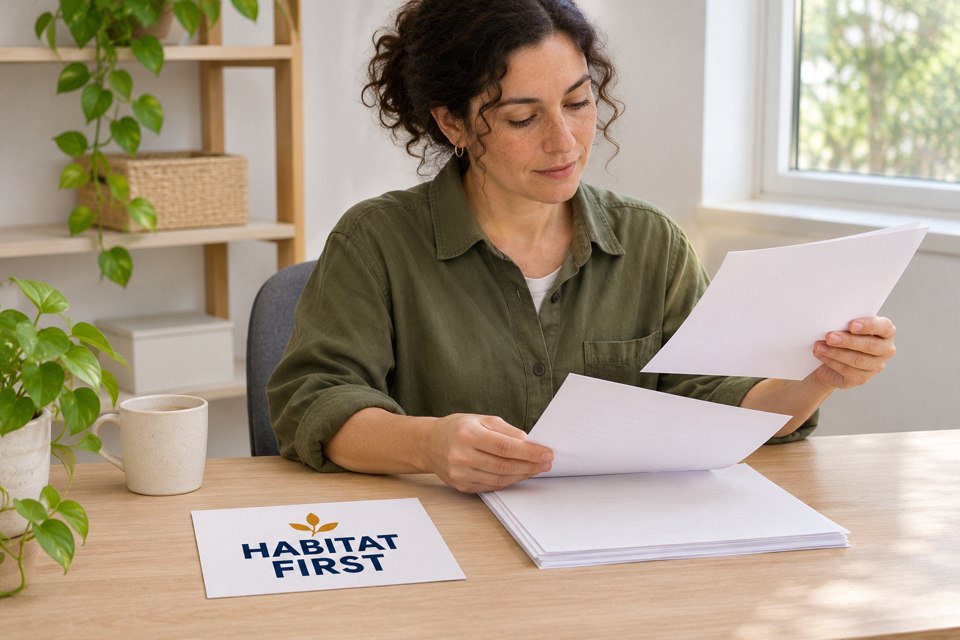
The completed display plan uses an existing plain sheet to explain that limited task and name its information route. Jordan removes the hive purchase from this native-habitat proposal. No real garden has been assessed, host contacted or ecological outcome measured.
Consider a card only when the information needs one
An existing sheet or digital resource may do the job. If a group has approved a stable handout, custom postcards for a checked pollinator resource offer flat cards in several sizes and orientations, with single- or double-sided full-color printing. The listing specifies purchases in increments of 50.
That commercial increment does not measure habitat needs or participant numbers. Compare custom thank-you card options with DecentCustom only when the actual information task warrants a batch. Check the selected stock, finish and writing area. Habitat First is fictional artwork; the card contains no seeds and is not an outdoor habitat product.
Questions before planning a bee-awareness activity
When is World Bee Day?
May 20 each year. Check the year separately when using an official theme or a host’s event details.
Do I need a hive to help native bees?
No hive is required for the habitat-review approach described here. Bee Lab distinguishes beekeeping from native-bee conservation and recommends flowers and nesting habitat.
Can I give out any packet labelled bee-friendly?
Check its species and regional suitability first. If the contents or planting location are unresolved, hold that choice and consult relevant local guidance.
Does a bee-themed giveaway prove that a project helps bees?
The design alone proves no biological result. Explain the actual task and its evidence; existing information materials may already be sufficient.