Choosing comics together • Reviewed November 24, 2026
A comic can be free without being intended for every age. Match the exact issue to its publisher’s audience guidance, then consider the reader’s interests and the actual pages before choosing it together.
Start with the issue you will actually receive
When planning a Free Comic Book Day visit with children, identify the specific giveaway issue, publisher and edition. A familiar character can appear in different stories and formats. Recognizing the cover is a starting point for a question, rather than a complete recommendation for this reader.
Read the current shop’s selection and, when available, the publisher’s entry for that exact issue. A sampler, preview, reprint and collected volume can contain different material. Keep that distinction when asking a bookseller for help or preparing a family-facing selection note.
Penguin Random House’s Comics Giveaway Day 2027 announcement describes age labels for its own program and presents choices across All Ages, Teen and Mature categories. Its existence makes the practical point: a giveaway lineup can serve several audiences. The announcement does not establish what your chosen shop will stock or which item fits a particular child.
Use the publisher’s explanation of its own rating
Look for the audience label on the actual edition or its publisher listing, then read that publisher’s explanation. Do not silently translate a word or colored symbol into a universal numerical age, school grade or reading level.
VIZ’s ratings guide says its icons usually appear on covers or packaging and are intended to help readers, parents, educators and retailers choose material. Its All Ages description can include mild language and fantasy violence. The guide also describes Teen, Teen Plus and Mature categories.
VIZ explains that these are internal assessments for general guidance, with limits to uniform application and content explanations. Treat its guidance as information to use with the actual title. It does not replace looking at the pages or considering the person who will read them.
If you cannot find a label or match a listing to the issue, keep that question open. Ask the shop to identify the publisher entry or an alternative whose details can be checked. Missing information does not establish that the content is suitable for every age.
Bring the reader’s interests and the pages into the decision
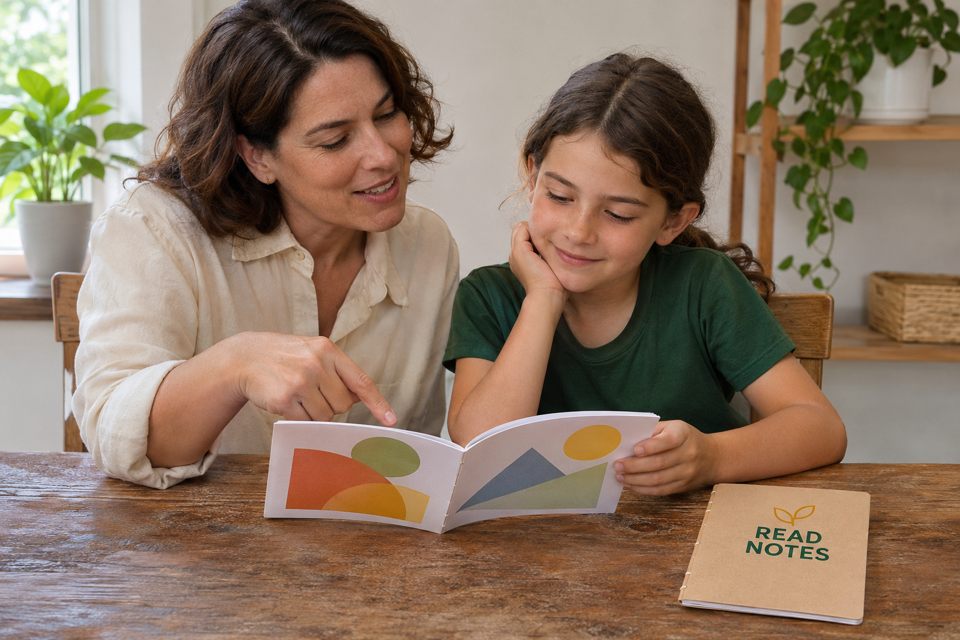
Ask what the child hopes to read: a funny short story, a familiar character, an adventure or something to share aloud. Then look together at the actual pages, where the shop permits browsing. Notice whether the language, themes, visual intensity and format fit the reading experience you want.
An audience category and ease of reading answer different questions. A label does not measure an individual child’s comfort with a theme or ability to follow a particular layout. Avoid promising a reading-level result from a cover or a promotional description.
- Identify: title, issue or edition, and publisher.
- Check: the label and the publisher’s explanation for that item.
- Discuss: the reader’s interests and any content the family wants to review.
- Decide: choose, read together first, select an alternative or leave the item pending.
For a shop display, retain the original labels and keep staff notes tied to the specific editions. A broad “all children” sign can erase useful distinctions. Give families a way to ask about a title without promising that a free price, display position or genre settles the decision.
Complete a choice while leaving an unidentified issue pending
Fictional worked example: Rosa and her child notice a free booklet with an appealing illustrated cover. In this invented exercise, its edition is unclear and Rosa cannot locate a matching publisher entry. Her first note calls it “approved for our child” based only on the cover.
Rosa removes that conclusion. She records the item as unidentified and leaves it pending. A second invented booklet has an identifiable edition and a publisher audience note that she can read. She and her child review its pages together and discuss the story and visual style.
The completed reading decision
Booklet A: edition and guidance unresolved; not selected. Booklet B: exact edition identified, publisher note and pages reviewed together; selected for shared reading in this fictional example. The family’s note preserves what they checked instead of turning an unknown answer into approval.
Neither booklet represents a real published title, and the exercise makes no recommendation about an actual child. Rosa uses an existing family note, orders no products and sends no outside message. The useful result is a specific choice and a clearly held item, rather than a general promise about every giveaway comic.
Keep reading notes in whatever already works
A household can keep the title and next question in an existing notebook or document. For an organization with a real need for matching A5 kraft-cover notebooks for shared reading notes, this SKU lists 80 sheets, blank pages by default and no included pen. The current minimum is 12.
One family’s reading choice does not establish a need for 12 notebooks. Compare custom padfolios and notebooks only for an identified recording task, and discuss approved artwork with DecentCustom. The fictional Read Notes cover is an AI concept, not an age rating, educational assessment or evidence of learning results.
Questions about choosing giveaway comics with kids
Are all free comics intended for children?
Giveaway selections can include several audience categories. Check the actual issue and its publisher’s guidance before choosing it for a child.
Does an All Ages label mean there is no challenging content?
Read the publisher’s explanation. VIZ’s description, for example, can include mild language and fantasy violence. Review the specific pages and consider the reader’s preferences.
Is the age rating the same as a reading level?
Keep audience guidance separate from how an individual reader follows the text and page layout. A label does not provide a personalized reading assessment.
What if I cannot identify the edition or its rating?
Keep the choice pending and ask for help matching the actual item to its publisher information. You can review a clearly identified alternative together instead of guessing.