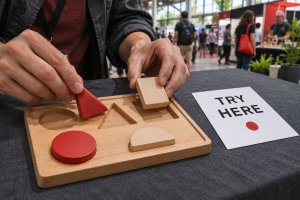
Time a full round with real materials before you promise everyone a turn. Count the minutes for instructions, practice, answers and reset. Those minutes and the number of workspaces tell you how many people can take part.
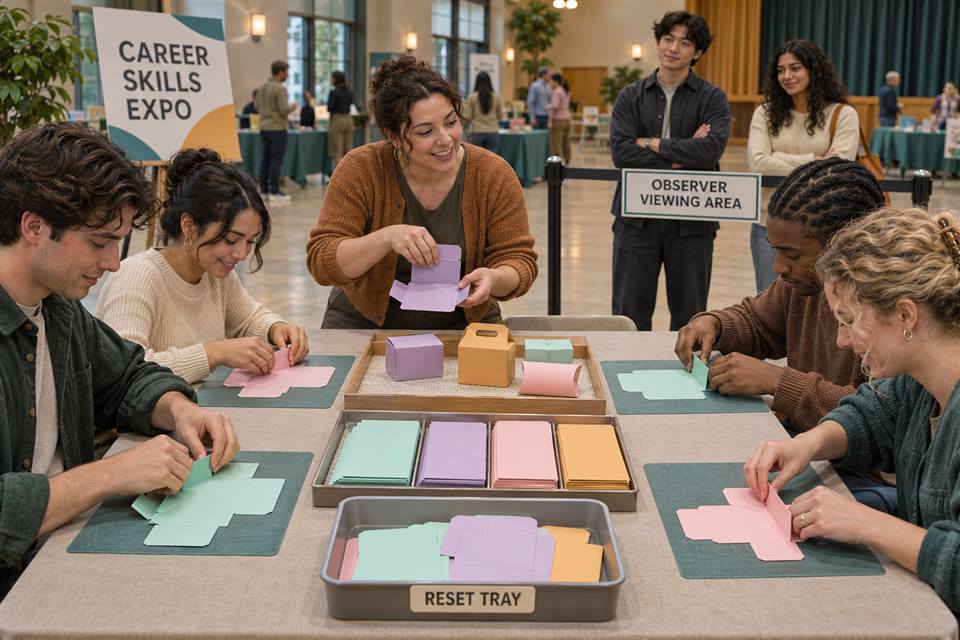
Choose one short task the presenter can repeat
Ask volunteers to teach one action they can explain in plain language. A packaging worker might demonstrate how they turn a pre-cut flat sheet into a simple carton. Learners can fold the model and compare it to the finished example while the presenter explains how their team checks the fit.
Junior Achievement of New Jersey's Career Exploration Fair describes students rotating among stations and asking volunteers about tools and careers. Agree on the exact activity with your own organizer, including who can participate, what accommodations are needed, and what equipment or materials are allowed.
- Give the instruction once using the same words and sample you will use at the event.
- Let a first-time volunteer try the task at the actual table. Time the slowest part as well as the whole round.
- Allow for a question and a reset. Put a fresh set in the ready tray, move the finished example into view, and clear the next workspace.
Use the slowest point to decide how many can try it
Measure the number of places people can actually work at. A table with room for six people may have only four places if pairs share trays. Check whether one presenter can give a clear view and individual help from those positions.
A fictional 30-minute station block
The folding task takes one minute to explain, three to try, one for a question, and one to reset. Each round takes six minutes. Two trays with two working places each give four places per round.
Thirty minutes fits five six-minute rounds, with a maximum of 20 hands-on places if every round runs. Reserve one whole round for interruptions and schedule 16 hands-on places. If 24 learners arrive, eight need a different plan if everyone is expected to try it. Two more rounds would take another 12 minutes at the tested pace.
Ask the organizer to confirm the time inside the room. Travel between stations can reduce the time available at your table. Write the actual schedule on a sign close to the queue and keep a matching copy with the presenter.
Give observers something specific to look for
When the round is full, show observers the finished carton and ask them what holds its sides upright. The presenter can lift a second example from the table and answer one question before opening the next round. A seated or reachable viewing position may help. Coordinate the waiting space with the organizer and leave the route clear.
Let people know the expected wait and the next start time. If there is no later hands-on place, say so while they still have time to visit another station. Keep participation counts separate if the event team wants to know how many people actually tried the task.
How do you make a career demonstration short enough?
A presenter in a career-day discussion wanted a short activity that could make an unfamiliar job visible to elementary students. Start by choosing what they should notice or do in one round. Use a simple first action, let the presenter show a finished example, and keep deeper questions for the end. If the activity needs long setup or specialist equipment, ask whether a live demonstration with a good view would work better for that audience.
Put the participation limit where learners can see it
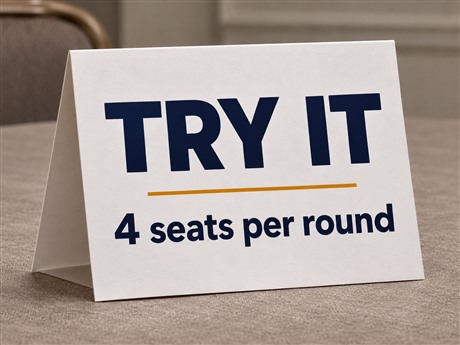
A sign can say “Try It” and show “4 seats per round” once the staffing and workspace have been tested. Use a reusable clip or separate timetable for details that may move. The pictured example links to a 5 × 7-inch table tent in 14pt card stock. If you already have a holder and a legible printed insert, use those. For other materials connected to the event, see career and skills expo supplies.
Close with one next step
A station can point learners to a contact or a program overview they can revisit afterward. If the team also explains how to enroll, see the related advice on separating workshops from longer programs. A brief expo demonstration is a chance to explore one skill.
Hands-on career expo station questions
Can two volunteers double the number of learners?
Test it with the available space and equipment. If both volunteers have full sightlines and independent supplies, you can time two parallel rounds and count their combined seats.
How much material should I prepare?
Count pieces used per participant, then multiply by confirmed hands-on places. Stage a few replacement pieces at the reset table and keep demonstration stock separate.
What if the first round runs long?
Use the reserve time if you allowed it. Tell the next group the new start time and offer the observation option when you cannot add another hands-on round.