Publish separate times and directions for a quieter entry period and a quiet room. Visitors should be able to tell when to arrive, where to take a break, and how to get back to the fair. Confirm those details with the venue and the people staffing the event before you print signs.

Say what is different during the quiet hour
Visitors need enough detail to choose when to arrive. State the time, entry door, and what the event team has confirmed. For example, organizers might pause music, ask exhibitors to mute demo audio, or limit admissions during a specified period. If the room is still shared with a busy activity, explain the actual arrangement.
UCLA's HIRE Job Fair Sensory Hour is one example with a set time, reduced announcements and music, a capacity limit, and a named entry route. CU Boulder's career fair guidance offers another approach by directing visitors to event staff and describing when and where crowds may be lighter. Use the option your team can deliver.
A quiet room serves a different purpose. Note where it is, how long it is open, and whether visitors can leave the main hall and re-enter. The Northwest Youth Careers Expo map marks a separate space for sensory breaks. Its room details apply to that event.
Put both sets of details in the event notice
Keep written and venue directions in sync. Here is an illustrative notice for an event that has confirmed both services.
Early entry and quiet room example
Quieter entry, 10–11 a.m. Use the north lobby doors. Music and recorded announcements are paused in the exhibit hall. Some demonstrations will still run without amplified sound. General entry begins at 11 a.m.
Quiet room, 10 a.m.–2 p.m. From the north lobby, follow the Room 104 signs past the information desk. You can step out of the exhibit hall and return through the same entrance during the fair. Ask the information desk if you would like directions or need another way to reach a participating employer.
Use the same room name and times on the event page, welcome desk script, and hallway signs. Include the contact route in the invitation so a visitor can ask before arriving.
Walk from the entrance to the room before doors open
- Start at the door you told people to use. Check that it is open and that a first-time visitor can spot the information desk.
- Walk the route to the room and back during setup. Agree with the venue on a clear, usable route, sightlines and alternatives if a corridor closes or a sign needs to move.
- Tell the general-entry shift when the quieter period ends and when the room closes. Give them an exact door and room name to use when answering questions.
Assign one person to update the map, welcome script and entry signs if plans change. Collect or cover the outdated version. If the room moves, put the updated route at the actual entrance and the previous room while attendees are still using the old directions.
Help first-time visitors know what to expect
A first-time college career fair attendee in a public discussion described feeling overwhelmed by the crowd and the recruiter conversation. An organizer can help by telling visitors where they can ask questions before joining a line, where they can step away, and what changes after early entry. Keep the notice focused on the event rather than what a visitor has to disclose.
Name the room on signs at actual turning points
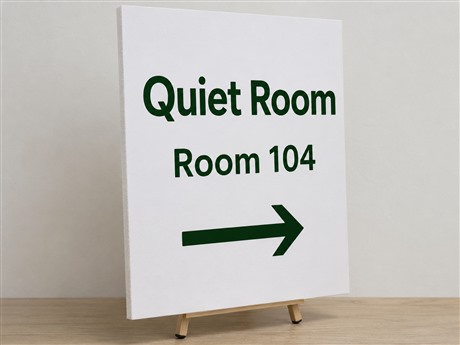
Use large, plain wording such as “Quiet Room • Room 104” and a direction cue that matches the way people approach. A reusable venue sign with a clear insert can work. For a confirmed location, the pictured example links to a 5 mm matte foam board printed on one side. Check the venue's placement rules and the planned viewing distance, and use the event's approved wording. Browse career and skills expo supplies if you need other specific materials.
Keep the program usable after early entry
When general admission begins, keep the quiet-room directions visible until that room closes. If visitors come back to try a demonstration, the hands-on station capacity guide shows how to post each round's participation limit and offer an observation option.
Quiet hour and quiet room questions
Can the quiet room stay open after the quiet hour?
Yes, if the venue and staff have confirmed the longer hours. Publish the two times separately.
What if we cannot offer a separate room?
State what you can provide, such as a staffed information point or a quieter time. Include a contact who can explain the available arrangements.
Should I put the full event schedule on a direction sign?
Use the sign to name the destination and direction. Keep changing or detailed times on an updatable notice and in the briefing for staff.