Promotional products can get an average of 1,000 impressions each month. This is more than many digital ads can achieve. This fact shows how important they are for marketing strategies1. A study by the Advertising Specialty Institute (ASI) found that people react better to promotional items than traditional ads2. This proves that branded giveaways are key for marketing.
I once helped a small tech startup that was losing ground in a crowded market. They tried online ads but they were too expensive and didn't work well. They then chose to use custom merchandise like personalized USB drives with their logo. This change greatly helped their brand and made customers more loyal. People kept these USB drives for about eight months, always seeing the brand2.
Big companies like GoPromotional also see big benefits from using promotional products. They say these items help increase ROI and keep customers coming back. The CEO of GoPromotional believes that useful items can keep getting attention for seven months if they meet customer needs3. Promotional products are very affordable, costing much less than digital ads, which can be $3 to $10 per impression2.
Key Takeaways
Promotional products can yield an average of 1,000 impressions per month1.
Well-made promotional items are kept for an average of eight months, providing prolonged brand exposure2.
Promotional products are nearly 2.5 times more likely to garner positive responses compared to traditional ads2.
The cost per impression for promotional products is as low as 1/10 of a cent, significantly lower than digital marketing costs2.
Using branded giveaways can dramatically improve both brand recognition and customer loyalty1.
Introduction to Promotional Products
Promotional products are key in marketing, boosting brand recognition and loyalty. In the U.S., they bring in over $23 billion a year, showing their big role in marketing4. Items like T-shirts and hats, along with everyday items like pens and notebooks, help spread the brand far and wide. For example, T-shirts can get up to 3,400 views over their lifetime, while hats and pens also make a big impact4.
These items do more than just show off your brand; they're cheaper than ads on TV or online. Companies spend 5% to 10% of their income on marketing, making these items a smart choice5. People keep these items for about seven months, keeping your brand in their minds for a long time5.
Promotional products make a big impression. Studies show people remember a brand for up to two years after getting something from it6. They work better than ads, making people feel good about a brand nearly 2.5 times more often5. Plus, 81% of people keep these items over a year, showing they're useful and valuable4.
Promotional products work well with all age groups, beating out other types of ads4.
It's important to know what your audience likes when picking promotional items. Some items, like custom reusable bags wholesale, work better in certain situations. Jackets can get up to 6,100 views, and bags around 3,300, showing the power of the right choice4. These numbers highlight the need to pick items that will work best for your campaign. Giving out items at events or through online contests can also boost your brand and get people talking5.
The mix of being cost-effective, keeping your brand in sight for a long time, and making a positive impression makes promotional merchandise a top choice for marketing. As brands aim to connect with people, personalized items become a key way to build loyalty and recognition.
Defining Promotional Products and Their Purpose
Promotional products, also known as logoed items, are items with a company's logo or slogan. They help promote brand awareness and keep the company in consumers' minds7. Every year, American businesses spend $20 billion on these products, showing how important they are in advertising7. The Promotional Products Association International (PPAI) found that 85% of people remember the advertiser who gave them a promotional item8. Also, 88% of people see the company in a better light after getting a promotional item8.
These items aim to make a lasting impression and keep people engaged with the brand. High-quality, appealing logoed products, like corporate gifts, are often kept for a long time by consumers. In fact, 50% of people in the PPAI 2021 Consumer Study Report kept their company swag for over five years7. This means promotional products are a cost-effective way to keep your brand in front of people9.
Promotional merchandise helps build a strong fan base by making people happy when they receive free items9. In fact, 76% of people remember the brand on a promotional item, making it a top form of advertising7. Companies use these products to show they care about things like innovation or protecting the environment9. This makes the company look better and builds loyalty among customers and employees.
Using corporate gifts in marketing can really help a business grow by turning people into loyal customers. For example, giving new hires branded desk accessories can make them feel more loyal to the company7. Since 85.4% of consumers prefer getting a promotional product over a marketing email7, the smart use of these items is key to a successful marketing plan.
Data Analysis About Benefits of Using Promotional Products in Marketing
Promotional products are key to a strong marketing strategy. They boost brand recognition, customer loyalty, and are cost-effective. Studies show that 89% of people remember a brand for up to 24 months after getting a promotional item10. This shows how well a good branding strategy works. Also, 91% of people have a promotional item in their kitchen10, which means the brand gets seen often.
Improved Brand Recognition
Promotional products help make a brand more recognizable. They leave a lasting impression on customers11. Most people own between 1 and 10 promotional items10, which means a lot of people see the brand. Items like mugs and water bottles are used a lot, keeping the brand in mind11. This keeps the brand strong and memorable.
Loyalty & Retention
Promotional products also help keep customers coming back. Giving out branded items shows customers you care, which can lead to more business12. A big 83% of people like getting promotional products10. This shows how it helps with customer relationships and keeping them around. Plus, giving gifts to employees can make them happier and more loyal12.
Cost-Effective Marketing Strategy
Promotional products are a smart choice for companies with small budgets. They're cheap, with an average cost per item around a dollar10. The cost to get someone's attention is just about $0.00410. Buying in bulk can make them even cheaper and spread the word far and wide12. This way, you can work on branding, get more leads, and keep customers loyal without spending a lot.
Product
Lifespan (Months)
Impressions
Outerwear
16
6,000
Bags
11
3,000
T-shirts
14
3,400
Pens
9
3,000
In short, promotional products are a smart choice. They're affordable and make a big impact. They help make your brand more recognizable and keep customers coming back.
Types of Promotional Products
Promotional products come in many forms, offering great ways to get your brand noticed. They range from wearables to tech accessories, making them powerful marketing tools.
Writing supplies like bulk order business pens are part of the top promotional product categories. They are simple yet long-lasting, perfect for bulk orders1314. T-shirts and hats are also popular, turning people into walking ads at events and elsewhere13. These items fit every industry and are very versatile.
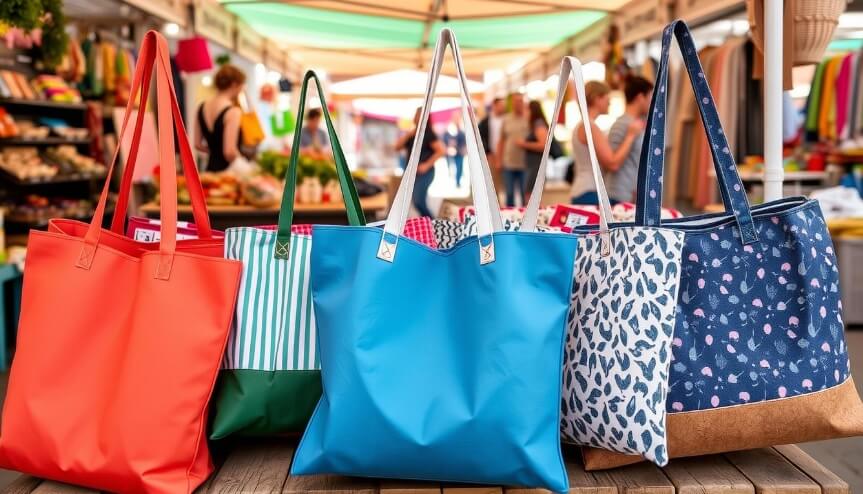
Custom tote bags are now a hit thanks to their eco-friendliness and ability to be seen everywhere. They're a smart pick for brands that care about the planet1314. Stickers and decals are cheap but powerful for promoting, boosting loyalty and getting your brand out there on cars and more14.
Drinkware like logo mugs and personalized water bottles keep your brand in sight with every sip or sip1314. Custom banners at events grab attention and share your message clearly14.
Tech accessories like charger cords and wireless earbuds are big in the 2020s for being useful and relevant. Power banks are also a hit, keeping devices powered up on the go1314.
Don't forget about notepads and sticky notes, which keep your brand on desks and in offices. They help tell your brand story1314. Journals and calendars are also favorites for their daily use and brand exposure.
Importance of Customization in Promotional Merchandise
Customizing promotional items is key to engaging customers and keeping them loyal. By making products that reflect the brand's values, companies can create lasting memories for their audience. This makes the product more valuable and likely to be kept and used.
Aligning Design with Brand Identity
It's vital to match the brand's look with promotional items. This means logos and colors should match the brand's style. Companies like AT&T, Pfizer, and GM spend a lot on promotional items every year15. This shows how important it is to keep the design consistent.
Such consistency makes the product look good and helps people remember the brand better.
Ensuring Usefulness to Target Audience
Choosing the right promotional items means thinking about what the audience will find useful. The more practical the item, the more likely people are to keep it. For instance, 6 out of 10 people keep these items for up to two years15.
Also, trendy items that customers like can be shared, spreading the brand's message further16. This shows how useful and engaging promotional gifts can be for a brand.
Effective Distribution Strategies for Promotional Products
Having a good plan for giving out promotional products is key. Using different ways to share them helps reach more people and make a bigger impact.
Trade Shows and Events
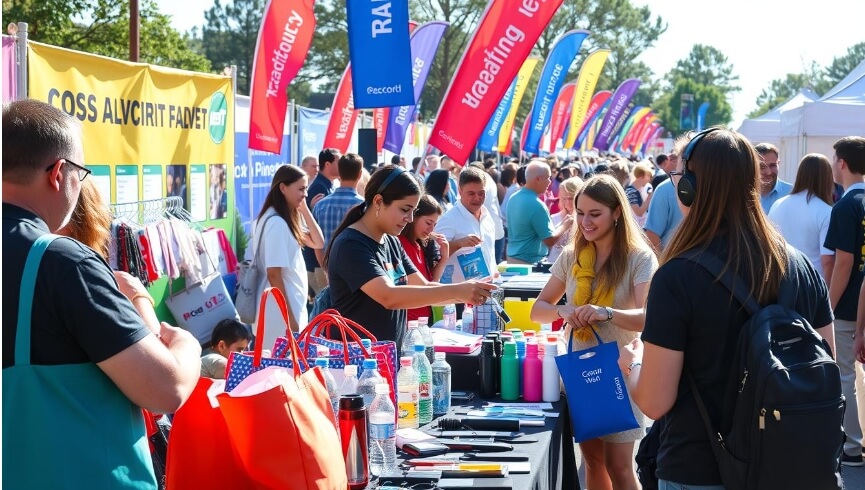
Handing out promotional items at trade shows and events gets a lot of attention. People at these events love getting free stuff, which makes them more likely to remember your brand. For example, trade shows can bring in about 400 leads per exhibitor, with 15% of those leads turning into sales17. But, you need to plan well and make sure it fits the event18.
Social Media Giveaways and Contests
Using social media to share promotional items can really help get your brand noticed. Running contests and giveaways on sites like Instagram and Facebook can grow your followers and get people talking. Social media can increase brand awareness by 40%, especially when working with influencers17. This way, your message can reach a lot of people anytime, but you'll need to compete with others and know how to market online18.
Using Brand Ambassadors
Working with brand ambassadors to share promotional items is a smart move. It helps get your products seen by more people and makes your brand look trustworthy. By partnering with influencers, brands can reach 30% more people and keep 25% more customers17. But, you have to make sure the ambassador fits your brand well.
The Psychology Behind Promotional Products
Understanding how promotional products affect us is key to making marketing work better. By using the idea of giving back and feeling accomplished, companies can build a stronger emotional connection with customers. This can make people more likely to support the brand.
Principle of Reciprocity
The principle of reciprocity says that when we give something to someone, they feel they should give back. This is very true for promotional products. For example, 85% of people remember the advertiser who gave them a free item19. This memory can lead to more loyalty and business with that brand, with 83% of people more likely to choose that brand19.
These items also feel more valuable because we can hold them. They make us feel good about the brand and ourselves20.
Sense of Accomplishment
Promotional products make people feel like they've achieved something. This feeling is part of what companies aim for with their branding. For instance, 79% of people feel valued when they get a promotional item19. This makes them feel like they belong and have done something special.
In the tech world, 85% of people think more highly of a company after getting a free item21. This shows how strong emotional bonds can form between a brand and its customers. Plus, items like calendars and mouse pads are used every day, keeping the brand in our minds20.
These items also connect us to the past and to others, making the brand a part of our lives20.
How Promotional Products Complement Digital Marketing
Using promotional products with digital marketing helps boost brand awareness online. The U.S. promotional products market is worth $23 billion, showing their big role in ads22. Adding physical items to digital campaigns can lead to more people taking action.
The Advertising Specialty Institute (ASI) found that 85% of people remember where they got a promotional item from. This shows how well promotional products work in making brands more recognizable22. Together with online efforts, these items help build loyalty and spread the word about a brand.
Promotional products are a budget-friendly way to advertise, costing about $0.004 per impression. This is cheaper than many other ads like magazines, newspapers, and TV22. When used with digital marketing, they can make a big impact, helping to get a brand noticed more often23.
A study by the Promotional Products Association International (PPAI) shows that 81% of people keep promotional items like custom double wall coffee cups for over a year. This means brands get to stay in front of people for a long time22. Thanks to new printing and production methods, businesses can now make products that really match their brand23.
Promotional products bring real value by making people think better of a company, getting the brand out there more, and engaging customers better22. When combined with digital marketing, they offer a full brand experience. This makes marketing stronger and more effective23.
Case Studies: Success Stories with Promotional Products
Promotional products have been key to brand promotion for big and small companies. AT&T and Pfizer are great examples of how these items boost marketing efforts. They show how well these products work for brand success.
Corporate Success: AT&T and Pfizer
AT&T uses promotional products to keep customers interested and loyal. They give out things like Bluetooth speakers and phone accessories at events. This helps them reach more people24.
Promotional items from AT&T are not just useful but also keep the brand in people's minds. This leads to more business for them24.
Pfizer also uses promotional items to make their brand more personal. Their campaigns have made customers more loyal and likely to buy more24. After getting a Pfizer product, people bought 20.9% more often than with other ads24.
A study showed that 89% of people remember the brand of a promotional product they got in the last two years. This shows how well these items work for keeping a brand in mind24. Pfizer and AT&T have seen big improvements in their brand visibility and customer interaction thanks to these items24.
Small Business Examples
Small businesses also gain a lot from promotional products. A local spa gave out spa-quality items to make their customers happy and loyal25. A golf association gave out Golf Mesh Shoe Bags to promote the sport and attract new fans25.
In the pet care field, companies target vets and pet owners with pet-themed items. This approach helps them connect with their audience25. During the pandemic, oil & gas companies gave out special gifts to their employees, keeping them motivated and connected25.
Looking at these stories, it's clear that big and small companies can grow and get noticed with the right promotional items. By matching their products with their brand and customer needs, companies like AT&T and Pfizer, and small businesses, see big marketing wins.
Choosing the Right Vendor-Decentcustom.com for Your Custom Promotional Items
When picking a vendor for custom items, it's key to find one with a wide range of quality products. Decentcustom.com stands out by offering custom clothing, drinkware, and office & stationery. This ensures your items match your brand perfectly.
Choosing decentcustom.com is smart because they customize products for your brand. For instance, their custom embroidered keychains come in many fabric colors. This can boost your brand and keep customers loyal26.
Custom drinkware is great for restaurants. A bistro in Austin saw more customers after giving out custom water bottles27. Custom office items also help in corporate settings, making your brand more visible and valuable.
Speed and flexibility in ordering are important too. Many suppliers let you order custom keychains without a big order, and they ship fast. This means you get your items quickly for marketing26.
Choosing eco-friendly options matters too. Suppliers with green custom drinkware attract customers who care about the planet27.
With decentcustom.com, businesses can customize their promotional items well. They offer a wide range of products, from clothing to drinkware and office items. This helps improve marketing and strengthens the brand.
Impact of Eco-Friendly Promotional Products
Using eco-friendly promotional products is smart and shows a company cares about the planet. These items boost a company's green marketing, making customers think better of them.
One big plus of eco-friendly products is they save money over time. They last longer than usual items28. Plus, people are willing to pay more for things that are good for the earth, which makes them more loyal to the brand28.
These products also help make promotions better for the planet. For example, trade shows create a lot of waste, showing we need to be more sustainable28. By picking eco-friendly choices, companies can lessen their impact on the environment and promote their brand.
More and more people want to support brands that care about the planet. In fact, 45% look for brands that are good for the earth29. This shows how important it is to use green marketing. It helps a company look better and gain trust with customers28.
People who care about the planet like brands that do too. Using sustainable products shows a company's commitment to being socially responsible28. Products like stone paper, which breaks down easily, show a brand's dedication to being green29.
Using print on demand for promotional items also helps the environment. It means no extra inventory is made unless someone wants it30. This makes promotions more flexible and eco-friendly.
Companies that offer eco-friendly items get noticed more. Sites like Spreadshop let businesses add their logos and messages easily30. Giving out these items at events shows what a brand stands for and makes a good impression on others.
Adding sustainable products to marketing plans helps companies reach eco-aware customers. It also shows a brand's dedication to a healthier planet. For more eco-friendly promotional products, check out this guide28.
Integrating Promotional Products with Other Marketing Materials
Using promotional products with other marketing tools like flyers, banners, labels, and stickers can make your campaigns more effective. This approach helps create a strong brand experience. It also makes people more likely to remember and engage with your brand.
Combining with Flyers and Banners
Putting promotional products with flyers and banners helps keep your brand consistent across different platforms. For example, giving out branded pens or keychains with flyers at trade shows can make a big impression. Studies show that doing this can make your brand 25% more recognizable and increase responses by 50% in some fields31.
Incorporating Labels & Stickers
Labels and stickers on promotional items can make your brand's message stronger. They work well with other marketing tools, making your campaign well-rounded. This mix of items can be very effective since 85% of people remember the advertiser who gave them a promotional item31. Plus, these items can keep promoting your brand for about 7 months, keeping your brand in front of people31.
Promotional products are great for boosting brand visibility and are cost-effective. They allow for targeted marketing and create positive brand feelings. They also have a lasting effect and are seen as gifts, as noted by ArcProForma32.
Metrics to Measure the Success of Your Promotional Products Campaign
It's key to know how well your promotional products campaign is doing. This means looking at KPIs and ROI to make your strategy better and get more back. These tools help you see what's working and what's not.
Key Performance Indicators (KPIs)
Tracking KPIs is vital to see if your campaign is a hit. For instance, checking website traffic and social media reach shows how well your brand is getting out there. About 87 percent of people start looking for products online, so it's important to watch these numbers closely33.
Promotional products can really help get your brand noticed, with 88% of marketers thinking they work well34. It's also smart to keep an eye on how many people turn into customers, as these items can convert up to 2.5% of people, making them a smart marketing choice34. Plus, social media likes, shares, and comments can jump by up to 44% when you use promotional products34.
Email campaigns also bring in a good return on investment, making about $38 for every dollar spent, which shows why tracking open and click rates is key33. Keeping an eye on these KPIs helps you make better choices for your next campaign.
ROI Analysis
ROI analysis gives a full picture of how well your promotional products campaigns are doing financially. Companies using promotional items see a 20.9% boost in sales, showing their impact on making money34. ROAS, which looks at revenue for every ad dollar spent, shows how well ads are working35. CLV, or Customer Lifetime Value, measures how much value a customer brings over time, helping you understand customer loyalty and profits35.
CPA, or cost per acquisition, is also important for seeing how much it costs to get new customers. This is key for planning your budget. By looking at ROI, you can make sure your promotional campaigns are bringing in the returns you want. This helps you fine-tune your strategies.
Conclusion
Promotional products offer a big boost to marketing and advertising. In the U.S., 8 out of 10 people own between one to ten of these items. This shows they're effective in reaching many people and keeping customers loyal36. Also, 85% of people do business with the advertiser after getting a promotional item36.
Moreover, 83% of consumers like getting promotional products with ads36. And 82% of people think more highly of the brand after getting one37. This proves they have a big impact on advertising and can lead to more business.
Items like coffee mugs are memorable, with 57% of people remembering the advertiser36. Thoughtful campaigns can boost brand recognition a lot, leading to more referrals from happy customers36. So, choosing the right promotional product can make your brand more visible and strong in the market.
Using strategic promotional planning can greatly improve your ads and keep your brand in front of consumers. By focusing on items that are useful and memorable, your campaign can bring amazing results. This makes promotional products key tools for today's marketing.
FAQ
How can marketing and advertising benefit from promotional products?
Promotional products boost marketing and advertising by offering a strong return on investment (ROI). They act as free items that leave a lasting impression. This helps build a positive brand image.
What are promotional products?
Promotional products include items like pens, mugs, and eco-friendly options. They are given away to people to spark interest and buzz. These items reflect a company's brand and are useful, ensuring they have promotional value.
What is the purpose of promotional products?
The main goal of promotional products is to encourage action or help people remember a brand. Quality items drive successful marketing, offer a good ROI, and help keep customers by making the brand memorable.
How do promotional products improve brand recognition?
Promotional products greatly boost brand visibility and recognition by lasting up to two years. They keep showing the brand's name, logo, and values. This builds customer loyalty.
Are promotional products a cost-effective marketing strategy?
Yes, promotional products are a budget-friendly marketing approach. They increase impressions and reach without breaking the bank. They offer a direct way to connect with people and improve marketing success.
What types of promotional products can I choose from?
There's a wide variety of promotional products available, such as custom reusable bags, back window decals, bulk pens, and more. This variety lets you customize to fit any marketing need and audience preference.
Why is customization important in promotional merchandise?
Customization is key to making promotional merchandise memorable and true to the brand. It makes the product stand out and be useful to the audience. This increases the chance of retention and use.
What are effective distribution strategies for promotional products?
Good ways to distribute promotional products include giving them out at trade shows and events. You can also use social media for giveaways and contests. Brand ambassadors help spread the word further.
What is the psychology behind the success of promotional products?
The success of promotional products comes from the Principle of Reciprocity and the Sense of Accomplishment. Giving away free items makes customers feel valued. This encourages loyalty and engagement.
How do promotional products complement digital marketing?
Promotional products enhance brand awareness and conversion chances by combining physical items with digital presence. They add a tangible element that strengthens online marketing efforts.
Can you give examples of successful promotional product campaigns?
Companies like AT&T and Pfizer have used promotional products to boost brand awareness and attract new customers. Case studies show both big and small businesses gain from increased visibility and a bigger customer base.
How can I choose the right vendor for custom promotional items?
Choosing a vendor like Decentcustom.com ensures you can find a wide range of custom products. This helps businesses represent their brand accurately and appeal to their audience.
What is the impact of eco-friendly promotional products?
Eco-friendly promotional products show a company's commitment to the environment. They make a positive impact on how consumers view the brand. Using sustainable items can set a brand apart and attract eco-conscious customers.
How can promotional products be integrated with other marketing materials?
Combining promotional products with other marketing tools like flyers and banners creates a unified campaign. This ensures a consistent brand message and boosts marketing effectiveness.
How do I measure the success of my promotional products campaign?
It's important to track Key Performance Indicators (KPIs) and analyze ROI to see how well promotional products are doing. This helps refine strategies and ensure a good return on investment.